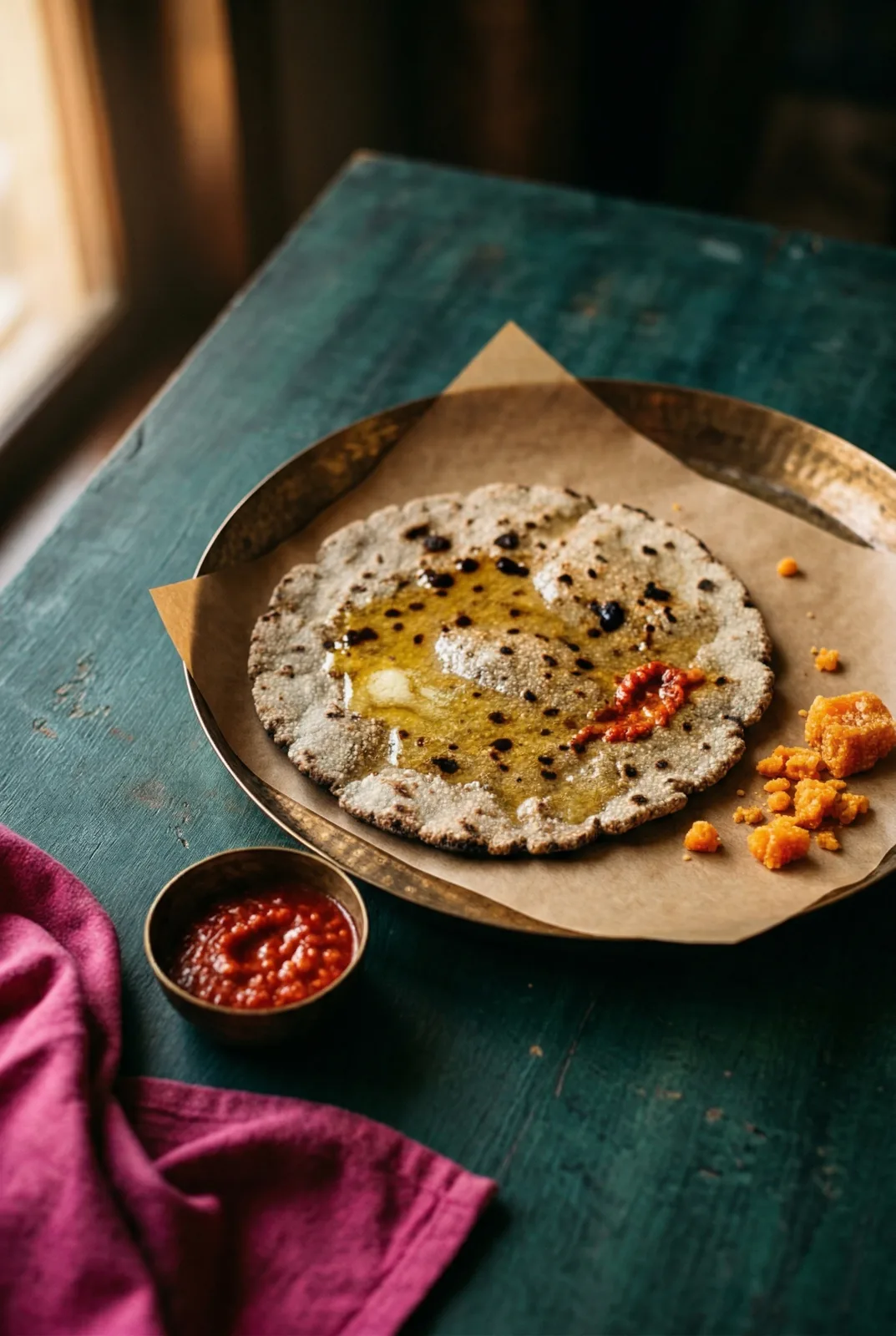
Every January, my nani’s kitchen smelled like winter. The tawa would be heating before the kites were even out, and by the time we’d tied the first manja, a stack of thick, smoky bajra rotlo was already waiting, glistening with white butter, with a bowl of lasan ni chutney on the side. No plates at first. Just standing around the kitchen, pulling off pieces while the rotlo was still warm enough to burn your fingers a little.
Bajra rotlo is Gujarat’s cold-weather flatbread: made from pearl millet flour, hand-patted thick, cooked on a hot tawa and finished directly over the flame. It’s different from the thin bajra roti you might have seen elsewhere, and very different from what you’d make with wheat. That’s what makes it special, and also what trips beginners up.
This recipe is for everyone who has tried bajra rotlo and watched it crack, or anyone making it for the first time and wanting to get it right. I’ll walk you through the dough, the shaping (with a beginner-friendly option if hand-patting feels intimidating), and the one thing that makes or breaks the whole rotlo: fresh flour.
What Is Bajra Rotlo? (And How Is It Different from Bajra Roti?)
If you’ve ever searched for bajra flatbread and come away confused by three different names (rotlo, roti, bhakri), you’re not alone.
Rotlo, Roti, and Bhakri: What’s the Difference?
Bajra rotlo is the Gujarati style: thicker (about 6–7mm), hand-patted between your palms, and traditionally finished over a direct flame after the tawa cook. The word “rotlo” (or “bajra na rotla” in Gujarati) specifically refers to this format. It’s rustic, earthy, and has a slightly charred edge that’s impossible to replicate any other way.
Bajra roti is the North Indian and Rajasthani version: thinner, rolled out with a belan, cooked on a tawa. Softer texture, more even, less char.
Bhakri is the Maharashtrian version: typically thicker than a roti but thinner than a rotlo, made with jowar or bajra, and usually rolled rather than patted.
All three are delicious. But if you grew up Gujarati or you’re trying to recreate that nani-ki-rasoi feeling, rotlo is what you’re after.
Why Gujaratis Eat Rotlo in Winter
Bajra is a warming grain. It raises body heat, which is why you almost never see rotlo at a Gujarati table in June. But from October through February, and especially around Uttarayan (Makar Sankranti, January 14th), it’s everywhere. On kite-flying days, families cook rotlo on angeethi (clay stoves) in the courtyard. The char from the flame and the cold air somehow make it taste better than any other time of year.
If you’re making this in January, you’re doing it exactly right.
Ingredients You’ll Need
Makes: 6–8 rotlas
Prep time: 10 minutes | Cook time: 20–25 minutes
- 2 cups bajra flour (pearl millet flour), plus extra for dusting
- 4–6 tablespoons wheat flour (atta), 2–3 tbsp per cup of bajra flour
- ¾ cup warm water (start here; you may need a little more)
- ½ teaspoon salt
- 1 teaspoon ghee or oil (optional, for softer dough)
To serve: ghee or white butter, lasan ni chutney, raw onion wedges
The most important tip: Add 2–3 tablespoons of wheat flour (atta) per cup of bajra flour. This is the secret that experienced Gujarati home cooks swear by. The small amount of gluten from the atta binds the dough just enough so the rotlo stays soft, holds together perfectly, and never cracks. It doesn’t change the flavor or make it taste like a wheat roti. It just makes it work every single time.
About Bajra Flour: The Most Important Ingredient
Bajra flour goes bitter and rancid faster than almost any other flour you’ll use. Fresh flour (ideally less than 2–3 weeks old) makes rotlos that are earthy and slightly sweet, pliable without cracking, and deeply satisfying. Old flour makes rotlos that taste bitter and crack no matter how much water you add.
Where to buy: Indian grocery stores usually stock it loose or in 1 kg bags. Look for Swad, Deep, or Laxmi brand. If you can smell the bag, it should smell nutty and mild, not musty. If you’re buying online, check the manufacture date. I’ve started buying small quantities (500g) more often rather than a big bag that sits in the pantry.
Store bajra flour in an airtight container in the refrigerator for up to 6 weeks, or freeze for up to 3 months.

How to Make Bajra Rotlo: Step by Step
Step 1: Make the Dough
Add the bajra flour, wheat flour (atta), and salt to a large bowl and whisk together. Heat your water until it’s warm to the touch, not boiling but clearly warm. This is non-negotiable for millet flour. Cold water makes a stiff, crack-prone dough. Warm water helps the flour hydrate evenly.
Pour the water in gradually, mixing with your fingers as you go. Bajra flour absorbs water differently than wheat: it can go from crumbly to sticky quickly, so add slowly. The dough is ready when it comes together into a smooth ball that doesn’t stick to your hands and doesn’t crumble when you press it. It should feel soft, like play-dough: not stiff, not wet.
If you’re adding ghee, work it in at this stage. It makes the dough a little more forgiving and the finished rotlo softer.
Cover the dough with a damp cloth and rest for 5 minutes.
Step 2: Shaping the Rotlo
Divide the dough into 6–8 equal portions. Each ball should be slightly larger than a golf ball.
Method A: Hand-patting (Traditional)
Wet your palms slightly with water. Place a dough ball in your left palm and begin patting it flat with your right hand, rotating it slightly with each pat. Work from the center outward. You’re aiming for a circle about 5–6 inches wide and 6–7mm thick. Don’t rush: steady, gentle pats are better than forceful ones. If cracks appear at the edges, press them together with damp fingers.
This takes practice. My first rotlos were uneven, cracked disaster circles. They still tasted good. Don’t get discouraged.
Method B: Rolling Pin with Parchment (Beginner-Friendly)
Place a dough ball between two sheets of parchment paper. Using a rolling pin, roll gently from the center outward into a 5-inch circle. Peel back the top parchment carefully. This gives you much more control and drastically reduces cracking. The texture is slightly different from hand-patted but still wonderful.
Step 3: Cook on the Tawa
Heat a cast iron or heavy tawa over medium-high heat until it’s very hot. A drop of water should sizzle and evaporate immediately.
Carefully slide the rotlo onto the tawa (a flat spatula or your hand works). Cook for 1.5–2 minutes, until the bottom has dry spots and the edges look set. Flip and cook the other side for another 1.5–2 minutes. You’re not looking for golden brown: bajra stays darker and matte. Look for dry, slightly textured surfaces and a few small dark spots.
Step 4: Finish Over Direct Flame (Optional, Traditional)
Using tongs, lift the rotlo directly onto the gas flame. Rotate every few seconds for about 30–40 seconds total, until you have small char spots on both sides. This is what gives authentic rotlo its smoky character.
Skip this step if you have an induction cooktop. The tawa cook alone is perfectly good.
Remove from heat and immediately apply a generous layer of ghee or white butter. Serve right away.

Beginner Troubleshooting: Why Does My Bajra Rotlo Crack?
Cracking is the #1 problem beginners face, and it almost always has one of five causes:
1. Dough is too dry
Add water one teaspoon at a time and knead until it reaches the soft, play-dough consistency described above. The dough should not crumble when you press it together.
2. Flour is too old
Old bajra flour doesn’t hydrate properly and will crack no matter what you do. If your flour has been sitting in the pantry for more than a month at room temperature, just buy a fresh bag. It makes that much difference.
3. Skipped the wheat flour
The single most effective fix: add 2–3 tablespoons of atta (wheat flour) per cup of bajra flour. Bajra has no gluten of its own. The small addition of atta gives it just enough binding to stay together without cracking. This is how experienced Gujarati cooks have always done it.
4. Rolled or patted too thin
Even with atta in the dough, go too thin and it will crack. Keep it at 5–6mm: that’s traditional thickness anyway.
5. Cooked too quickly over high heat
Too-high heat sets the outside before the inside is cooked through, causing surface cracks. If your rotlo is cracking on the tawa, reduce heat slightly and cook a little longer.
Nutrition & Health Benefits of Bajra Rotlo
Gluten-Free Millet Flatbread for Modern Diets
Bajra (pearl millet) is naturally gluten-free, making rotlo a genuinely gluten-free bread option, not a compromise but a delicious one. It’s one reason I think bajra rotlo deserves to be part of every Indian kitchen year-round, not just in winter.
Iron, Magnesium & Fiber: What’s in a Single Rotlo
One medium bajra rotlo (without added ghee, approximately 40g) gives you roughly:
- Calories: 116–140 kcal
- Protein: 3.5–4g
- Fiber: 2.5–3g
- Iron: ~10–15% RDA, one of the best plant-based iron sources in Indian cooking
- Magnesium: ~15% RDA, supports muscle function and insulin sensitivity
For vegetarians, bajra is one of the easiest ways to boost iron intake without supplements. Pair with a vitamin C-rich side (like raw onion or tomato chutney) to maximize absorption.
Is Bajra Rotlo Good for Diabetes and Weight Loss?
Yes, with one caveat. Bajra has a lower glycemic index than wheat (~54 for bajra vs. ~69 for white wheat flour), meaning it raises blood sugar more slowly. The high fiber content also helps with satiety, which is useful for blood sugar management and staying full longer.
For weight management: watch the ghee, not the rotlo. The flatbread itself is a wholesome, nourishing choice. It’s the white butter you put on top that adds up quickly.
What to Serve with Bajra Rotlo
The traditional Gujarati rotlo thali is simple and perfect:
- Lasan ni chutney + ghee or white butter: the non-negotiable classic. Raw garlic chutney with roasted peanuts, chili, and lemon. The sharpness of the chutney is everything against the earthy rotlo.
- Ringan no olo (roasted eggplant): smoky, spiced baingan bharta, Gujarati style. This is the rotlo’s best companion in winter.
- Guvar nu shaak: spiced cluster beans, another Gujarati winter staple. Bitter-earthy beans with rotlo is a combination that tastes like someone’s dadi made it.
- Toor dal or urad dal: a simple dal alongside rotlo is comfort food at its most honest. Round it out with fluffy Instant Pot Jeera Rice for a complete warming thali.
- Raw onion and green chili: this is how my nana ate it. Nothing else.
Meetho Bajra Rotlo (The Sweet Version)
Less well-known outside North Gujarat and Kutch, meetho rotlo is a sweet variation made with jaggery kneaded into the dough. Use the same base recipe but replace the salt with 2–3 tablespoons of grated jaggery. The dough will be slightly stickier, so reduce water slightly to compensate.
Cook the same way. The jaggery caramelizes on the tawa and gives the rotlo a beautiful bittersweet flavor. Serve with a smear of ghee. No chutney needed: it’s a meal and a dessert in one.
Storage & Make-Ahead Tips
Bajra rotlo is best eaten immediately off the tawa, within 5 minutes, with the ghee still melting on top. This is not a make-ahead flatbread.
That said:
- Refrigerator: Wrap cooled rotlos in foil or a clean cloth. Store up to 2–3 days. Reheat on a dry tawa over medium heat for 1–2 minutes per side. They’ll be drier than fresh but still good.
- Freezer: Stack with parchment between each rotlo, seal in a zip-lock bag. Freeze up to 15 days. Thaw at room temperature, then reheat on tawa.
- Dough: The dough can be made 2–3 hours ahead and stored covered at room temperature. Don’t refrigerate raw dough: it gets stiff.

Bajra Rotlo (Gujarati Pearl Millet Flatbread)
Ingredients
Equipment
Method
- Combine bajra flour, wheat flour (atta), and salt in a large bowl. Whisk together. Make a well in the center.
- Add warm water gradually, mixing with your fingers. Add slowly: bajra flour hydrates quickly.
- Knead into a smooth, soft dough that does not crumble or stick. It should feel like soft play-dough.
- Work in the ghee if using. Cover with a damp cloth and rest 5 minutes.
- Divide dough into 6 equal balls, slightly larger than a golf ball.
- Hand-patting method — wet your palms. Place a ball in one palm and pat flat, rotating with each pat, until 5–6 inches wide and 6–7mm thick.
- Rolling pin method — place ball between two sheets of parchment. Roll gently to a 5-inch circle. Peel top parchment carefully.
- Heat a cast iron tawa over medium-high heat until very hot. A drop of water should sizzle and evaporate immediately.
- Slide rotlo onto tawa. Cook 1.5–2 minutes until bottom is dry with set edges.
- Flip. Cook another 1.5–2 minutes. Both sides should look matte and dry with small dark spots.
- Using tongs, hold rotlo directly over gas flame for 30–40 seconds, rotating, until small char spots appear. Skip if using induction.
- Transfer to a plate and apply ghee immediately. Serve hot.
Notes
Fresh flour matters: Use bajra flour under 3 weeks old. Old flour is the #1 cause of cracking and bitter flavor.
Warm water is non-negotiable. Cold water makes stiff, cracking dough.
No gas flame? Skip the flame-finishing step. The tawa cook alone gives excellent results.
Vegan option: Use oil instead of ghee. Brush with vegan butter to serve.
Storage: Best fresh. Refrigerate up to 3 days (reheat on tawa). Freeze up to 15 days. Do not refrigerate raw dough: it gets stiff.
FAQs
Q1. What is the difference between bajra rotlo and bajra roti?
Bajra rotlo is the Gujarati style: thicker (6–7mm), hand-patted between the palms, and often finished directly over a flame for a smoky char. Bajra roti is the North Indian and Rajasthani version: thinner and usually rolled with a belan (rolling pin). Bhakri is the Maharashtrian variant. Rotlo is specific to Gujarat and has a heartier, more rustic character.
Q2. Why does my bajra rotlo keep cracking?
The most common reason people miss: not adding wheat flour (atta) to the dough. Add 2–3 tablespoons of atta per cup of bajra flour: this provides just enough gluten to hold the rotlo together. After that, the usual suspects are: dough too dry, flour too old, rotlo patted too thin, or cooked over too-high heat. See the troubleshooting section above for the full breakdown.
Q3. Can I make bajra rotlo with a rolling pin?
Yes, and I recommend it for beginners. Place the dough ball between two sheets of parchment paper and roll gently to a 5-inch circle. The parchment prevents sticking and cracking. The texture is slightly different from hand-patted but equally delicious.
Q4. Is bajra rotlo gluten-free?
Yes. Bajra (pearl millet) flour contains no gluten. Bajra rotlo is a naturally gluten-free flatbread, no modifications needed. It’s a good option for those with celiac disease or gluten sensitivity, provided your flour hasn’t been processed in a shared facility with wheat.
Q5. What do you eat bajra rotlo with?
Traditionally: lasan ni chutney (garlic chutney) and generous ghee or white butter. Also wonderful with ringan no olo (Gujarati-style roasted eggplant), guvar nu shaak (cluster beans), toor dal, or simply with raw onion and green chili. For the sweet version (meetho rotlo), serve with extra ghee. No chutney needed.
Q6. How do I keep bajra rotlo soft?
The single biggest thing: add 2–3 tablespoons of wheat flour (atta) per cup of bajra flour in your dough. This is the tip most recipes leave out. The small amount of gluten from the atta keeps the rotlo pliable and prevents it from breaking. Beyond that: apply ghee immediately after cooking, serve within 5 minutes, and cover the stack with a clean kitchen cloth while you cook the rest. Add a splash more warm water to the dough if it stiffens mid-batch.
Q7. Is bajra rotlo good for diabetes?
Bajra has a lower glycemic index (~54) than white wheat flour and is high in fiber, which helps slow glucose absorption. It’s a better option than white roti for blood sugar management. However, monitor the ghee added at the table, which affects the overall caloric load. Always check with your doctor or dietitian for personalized advice.
Q8. How many calories are in one bajra rotlo?
Approximately 116–140 calories per medium rotlo (about 40g), without added ghee. Each tablespoon of ghee adds roughly 120 calories. The rotlo itself is nutritionally dense: rich in iron, magnesium, and fiber for the calorie count.
There is something deeply satisfying about making bajra rotlo from scratch, from kneading the warm dough to watching the char spots appear over the flame. It’s one of those recipes that connects you to a tradition, to a season, and for many of us, to someone’s kitchen we grew up in.
Whether this is your first rotlo or your hundredth, I hope the tips in this post make the process feel approachable. Bajra deserves a permanent spot in your kitchen: not just in winter, not just at Uttarayan, but any time you want something wholesome, real, and deeply Gujarati.
If you try this bajra rotlo recipe, I’d love to know: do you prefer it the traditional way with ghee and lasan chutney, or are you a meetho rotlo person? Leave a comment below and tell me!
Made this? Share a photo and tag @petitepaprika on Instagram. I love seeing your kitchen creations!

One thought on “Bajra Rotlo (Gujarati Pearl Millet Flatbread)”