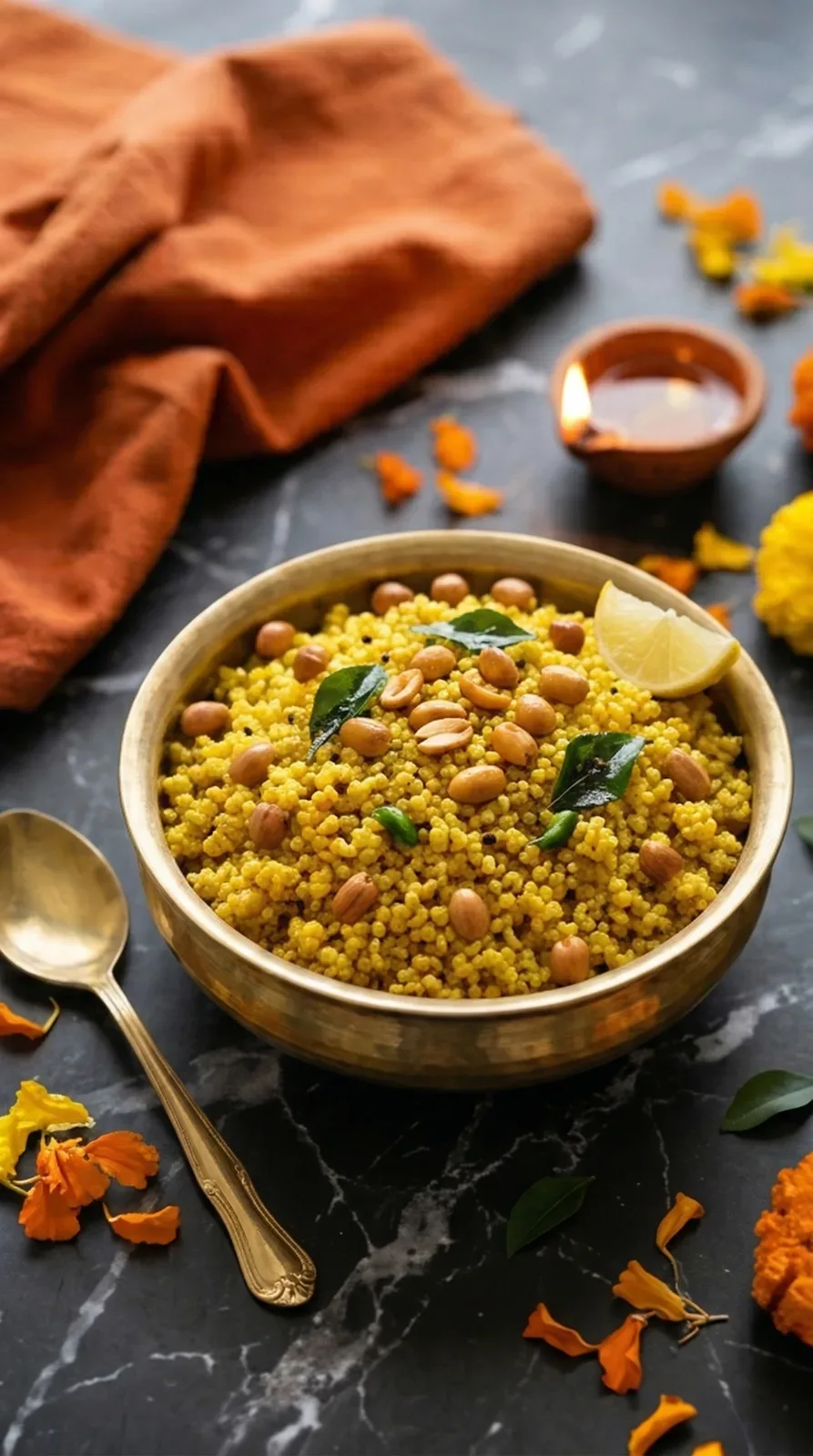
By day three of Navratri, I will admit it: the aloo sabzi and sabudana khichdi rotation starts to feel heavy. Not just physically. Fasting is supposed to feel light. One Chaitra Navratri a few years ago, I was craving something bright and tangy, the kind of dish that feels like a celebration rather than a restriction. I thought of a lemon rice I had eaten at a South Indian colleague’s potluck once. Turmeric-golden grains, mustard seeds popping in hot oil, the sharp clean hit of lemon. Could I translate that into something vrat-friendly?
Barnyard millet lemon rice (sama chawal nimbu bhat) turned out to be exactly what I was looking for. It takes 20 minutes, uses one pan, and honestly tastes nothing like fasting food. It is bright, tangy, a little nutty, and filling enough to carry you through a full day. Let me show you how I make it.
What Is Sama Chawal (Barnyard Millet)?
Sama chawal is the vrat staple you have probably been eating for years without knowing its English name. It is barnyard millet, the seed of Echinochloa frumentacea, a grass native to the Indian subcontinent. Despite the word “chawal” (rice) in its Hindi name, sama is not rice at all. It just looks and behaves like rice when cooked, which is exactly why it became a fasting substitute.
When cooked, sama has a mild, slightly nutty flavor and a soft, subtly chewy texture that sits somewhere between rice and broken wheat. It absorbs flavors beautifully, making it a perfect base for the tangy, aromatic lemon tempering we are building here.
The Many Names of Sama
One of the most confusing things about sama chawal is how many names it goes by. If you are searching for it at your local grocery store, knowing the regional name for your area makes all the difference:
| Regional Name | Region | Language |
|---|---|---|
| Sama / Samak / Samvat | North India, Gujarat, UP | Hindi / Gujarati |
| Bhagar / Varai | Maharashtra | Marathi |
| Kuthiraivali | Tamil Nadu | Tamil |
| Jhangora | Uttarakhand | Kumaoni |
| Oodalu | Karnataka | Kannada |
In our Gujarati household, we always called it samvat or samvat ke chawal. Whatever name it goes by in your kitchen, the grain is the same.
Why Barnyard Millet Is Allowed During Navratri Fasting
Barnyard millet is classified as a seed rather than a cereal grain in the Ayurvedic fasting framework, which is why it is permitted during Navratri while wheat, regular rice, and legumes are not. It is considered sattvic: light, pure, and easy on digestion.
For this recipe to be fully Navratri-compliant, keep three things in mind:
- Use sendha namak (rock salt) only. Regular iodized salt is not permitted during vrat.
- No onion, no garlic. This recipe has neither. The flavor comes entirely from ginger, curry leaves, and lemon.
- Chana dal and urad dal in the tempering are optional. For a strict Navratri fast, skip them. For a less strict approach or a regular weekday lunch, they add a wonderful crunch to the tadka. I have noted both options clearly in the recipe.
Why This Recipe Works for Vrat Days
Nutrition That Sustains a Fast
One of the genuine reasons to reach for sama chawal during fasting days is what it does to your energy levels. White rice has a glycemic index of around 70. Barnyard millet sits between 41 and 52, significantly lower, which means a slower, steadier glucose release. On a day when your next meal might be 6 or 8 hours away, that difference is real and noticeable.
Beyond GI, sama chawal is genuinely nourishing:
- Iron: up to 18.6 mg per 100g raw, the highest iron content among all commonly consumed millets, making it especially valuable for women fasting through Navratri
- Dietary fiber: 12-16% crude fiber, which keeps you full through long fasting hours and supports gut health
- Protein: approximately 10.5% with high digestibility, better than rice, maize, and finger millet
- Calcium and magnesium: support bone density and nerve function, both important during extended fasting periods
For vegetarian diets in particular, the iron figure is the one worth noting. Sama chawal is one of the few fasting foods that actively replenishes rather than depletes you.
The Lemon Rice Technique That Makes It Special
Most vrat ke chawal recipes use a simple ghee-and-jeera (cumin) tadka. This recipe borrows the South Indian lemon rice technique instead: mustard seeds spluttered in hot oil, curry leaves crisped until fragrant, a hit of fresh ginger, peanuts toasted golden, and then lemon juice added off the heat to preserve its sharp, bright punch.
That last detail is the one most people skip, and it makes all the difference. Cooking lemon juice reduces its fresh acidity into something flat and muted. Adding it after the pan comes off the heat keeps that citrus brightness alive in every bite.

Ingredients for Barnyard Millet Lemon Rice

Millet Base
- 1 cup sama chawal (barnyard millet), washed and soaked 20-30 minutes
- 2 cups water
- 1/2 tsp sendha namak (rock salt)
Lemon Tempering
- 2 tbsp oil or ghee (ghee adds richness; oil keeps it vegan)
- 1 tsp mustard seeds
- 1 sprig curry leaves (about 10-12 leaves)
- 2 green chillies, slit lengthwise
- 1 tsp fresh ginger, grated
- 1/2 tsp chana dal (optional, skip for strict Navratri vrat)
- 1/2 tsp urad dal (optional, skip for strict Navratri vrat)
- 3 tbsp roasted peanuts
- 1/4 tsp turmeric powder
- 3 tbsp fresh lemon juice (about 1.5 lemons)
- Sendha namak to taste
Garnish
- 2 tbsp fresh coriander, roughly chopped
- Lemon wedges for serving

Barnyard Millet Lemon Rice (Sama Chawal Nimbu Bhat)
Ingredients
Equipment
Method
- Rinse the sama chawal under cold water until the water runs clear. Soak in fresh water for 20-30 minutes. This step shortens the cooking time and keeps the grains separate.
- Drain the soaked millet. Add to a saucepan with 2 cups fresh water and 1/2 tsp sendha namak. Bring to a boil over medium-high heat.
- Reduce the heat to low, cover with a tight lid, and cook for 10-12 minutes until the water is fully absorbed and the grains are tender but not mushy.
- Remove from heat. Spread the cooked millet onto a large plate or tray in an even layer. Let it cool for 8-10 minutes. Cooling before mixing keeps the grains from clumping and turning pasty.
- Heat oil or ghee in a kadai over medium heat. Once hot, add the mustard seeds and let them splutter completely, about 30 seconds.
- Add the curry leaves. They will crisp up quickly, so stand back as they spatter in the oil.
- Add the slit green chillies and grated ginger. Stir for 30 seconds until fragrant.
- If using, add the chana dal and urad dal. Stir continuously for 1 minute until they turn light golden (not dark, as they burn fast).
- Add the peanuts. Stir and toast for 1-2 minutes until they are lightly golden and smell nutty.
- Add turmeric powder, stir once to bloom it, then remove the pan from heat.
- Add the lemon juice to the off-heat pan. It will sizzle lightly. Stir to combine.
- Add the cooled millet to the pan. Using a wide spatula, fold gently to coat the grains with the tempering. Fold rather than stir to keep the texture intact.
- Taste and adjust sendha namak and lemon juice. Fold in fresh coriander.
- Serve warm, with extra lemon wedges on the side.
Serving Suggestions for Navratri
This dish is filling enough to eat on its own, but a few simple additions make it a complete Navratri thali:
- Cucumber raita is my first choice alongside. The cool, creamy yogurt balances the tanginess of the lemon rice beautifully. It takes 5 minutes to put together.
- Roasted makhana (fox nuts) on the side add crunch and are a traditional vrat snack.
- Sliced cucumber and a banana round it out into a proper vrat meal without any extra cooking.
- For a fuller Navratri spread, pair it with sabudana khichdi for lunch and save this lemon rice for the evening.
- A bowl of millet kheer made with sama or little millet makes a wonderful Navratri dessert: sweet, warm, and naturally fasting-friendly.
Tips, Variations, and Make-Ahead Notes
Tips for Perfect Sama Chawal Every Time
A few things I have learned through trial and error:
- Soaking is not optional. I know it adds 20 minutes, but it is what prevents the millet from turning into a sticky clump. Unsoaked sama chawal often needs more water and extra cooking time, which makes it gummy.
- Cool before mixing. Hot millet has more starch on the surface. Spreading it on a plate to cool for 8-10 minutes gives you cleaner, separate grains after mixing.
- Taste the lemon before you commit. Lemon juice varies a lot in acidity: some lemons are sharper, some milder. Add two tablespoons first, taste, then add the rest. You can always add more; you cannot take it back.
- Keep the heat medium, not high. Curry leaves and green chillies at high heat go from fragrant to burnt in seconds.
Variations
- Boiled potato addition: A small diced potato, boiled and added during the mixing step, is a popular vrat addition that makes the dish more substantial. Alu-sama is a very common Navratri combination.
- Coconut version: Add 2 tbsp freshly grated coconut to the tempering after the peanuts. This is closer to the South Indian kuthiraivali lemon rice tradition and adds a gentle sweetness.
- Cashew instead of peanut: A handful of cashews toasted in ghee instead of peanuts gives a richer, slightly buttery note. Good for a festive version.
- Tomato-free: This recipe is already tomato-free, which is useful for people who avoid tomatoes during certain fasting traditions (like some Ekadashi fasts).
Make-Ahead for Navratri’s 9 Days
Nine days of fasting means nine days of cooking, which can be exhausting. Here is how I manage it:
Cook the millet in a larger batch (3 cups at a time) and refrigerate it in an airtight container. It keeps well for up to 2 days. Each day, prepare a fresh tadka (this takes just 5 minutes) and mix it with the pre-cooked millet. The lemon juice always goes in fresh. Never add it to stored millet, as it makes the grains taste sharp and oxidized by the next day.
Barnyard Millet vs Foxtail Millet vs Regular Rice
Since I already have a lemon foxtail millet rice recipe on the site, I get asked often: what is the difference, and which one should I make?
| Barnyard Millet (Sama) | Foxtail Millet (Kangni) | White Rice | |
|---|---|---|---|
| Navratri vrat | Allowed | Not typically allowed | Not allowed |
| Glycemic index | 41-52 (low) | 50-67 (low-medium) | ~70 (high) |
| Iron (mg/100g) | Up to 18.6 | 2.8 | 0.8 |
| Fiber content | 12-16% | 6-8% | 0.6% |
| Texture (cooked) | Soft, slightly chewy | Fluffy, slightly firm | Soft, sticky |
| Best for | Fasting days, light meals | Everyday nutrition boost | Everyday cooking |
| Cook time | 10-12 minutes | 15-20 minutes | 15-20 minutes |
The short answer: use sama chawal during Navratri fasting. Use foxtail millet for the everyday non-fasting version. Both deserve a place in your kitchen.
FAQs
Q1. Is barnyard millet (sama chawal) allowed during Navratri fast?
Yes. Barnyard millet is permitted during Navratri because it is botanically classified as a seed, not a cereal grain. In Ayurvedic fasting rules, seeds like sama chawal, singhara atta (water chestnut flour), and rajgira (amaranth) are considered sattvic and vrat-friendly. As long as you use sendha namak and avoid onion and garlic, this recipe is fully compliant for both Chaitra Navratri and Sharad Navratri.
Q2. What is the difference between sama chawal and sabudana?
Both are common Navratri vrat ingredients, but they are very different foods. Sama chawal is barnyard millet, a whole grain seed that cooks like rice. Sabudana is tapioca pearls made from the starch of the cassava root. Sabudana is stickier, higher in carbohydrates, and mainly starch; sama chawal has significantly more fiber, protein, and iron. For sustained fasting energy, sama chawal is the better nutritional choice.
Q3. Can I use regular salt instead of sendha namak?
During a Navratri fast, no. Sendha namak (rock salt) is the only form of salt permitted during vrat. The tradition is rooted in Ayurvedic principles: sendha namak is considered more pure and easier to digest than processed iodized salt. Outside of fasting context, you can absolutely use regular salt in this recipe.
Q4. Can I make barnyard millet lemon rice in an Instant Pot or pressure cooker?
Yes. Use a 1:1.5 ratio of millet to water in the Instant Pot (less water than stovetop because there is no evaporation). Cook on high pressure for 4 minutes with a 10-minute natural release. Spread and cool as usual before mixing with the tempering. The pressure cooker method is faster but less forgiving. Watch the water ratio carefully the first time.
Q5. Is barnyard millet lemon rice gluten-free?
Yes, completely. Barnyard millet is naturally gluten-free. This recipe contains no wheat, no barley, no rye, and no cross-contamination risk, as long as your peanuts are certified gluten-free (most plain roasted peanuts are, but double-check if you have celiac disease).
Q6. How is barnyard millet lemon rice different from regular lemon rice?
Traditional South Indian lemon rice is made with cooked white rice, a mustard-curry leaf tadka, and lemon juice, sometimes with chana dal, urad dal, and peanuts in the tempering. This recipe uses the exact same tempering technique but swaps white rice for sama chawal (barnyard millet). The result is lighter, nuttier, and lower GI than rice-based lemon rice, and it is the only version that works for Navratri fasting.
Ready for Your Navratri Thali
This barnyard millet lemon rice has become one of those recipes I genuinely look forward to during fasting season. It is proof that vrat food does not have to mean eating the same two dishes on rotation for nine days. One pan, 20 minutes, and you have something that tastes like a proper meal.
If you are cooking through Navratri and want more fasting recipe ideas, my sabudana khichdi is another easy one to keep in rotation. And if you love the millet lemon rice idea but want a non-fasting everyday version, try my lemon foxtail millet rice: a slightly different grain, a slightly different texture, equally good.
Now tell me: are you cooking for Chaitra Navratri this year, or are you saving this one for Sharad Navratri in October? Leave a comment below and let me know.
Made this? Share a photo and tag @petitepaprika on Instagram. I love seeing your kitchen creations!
