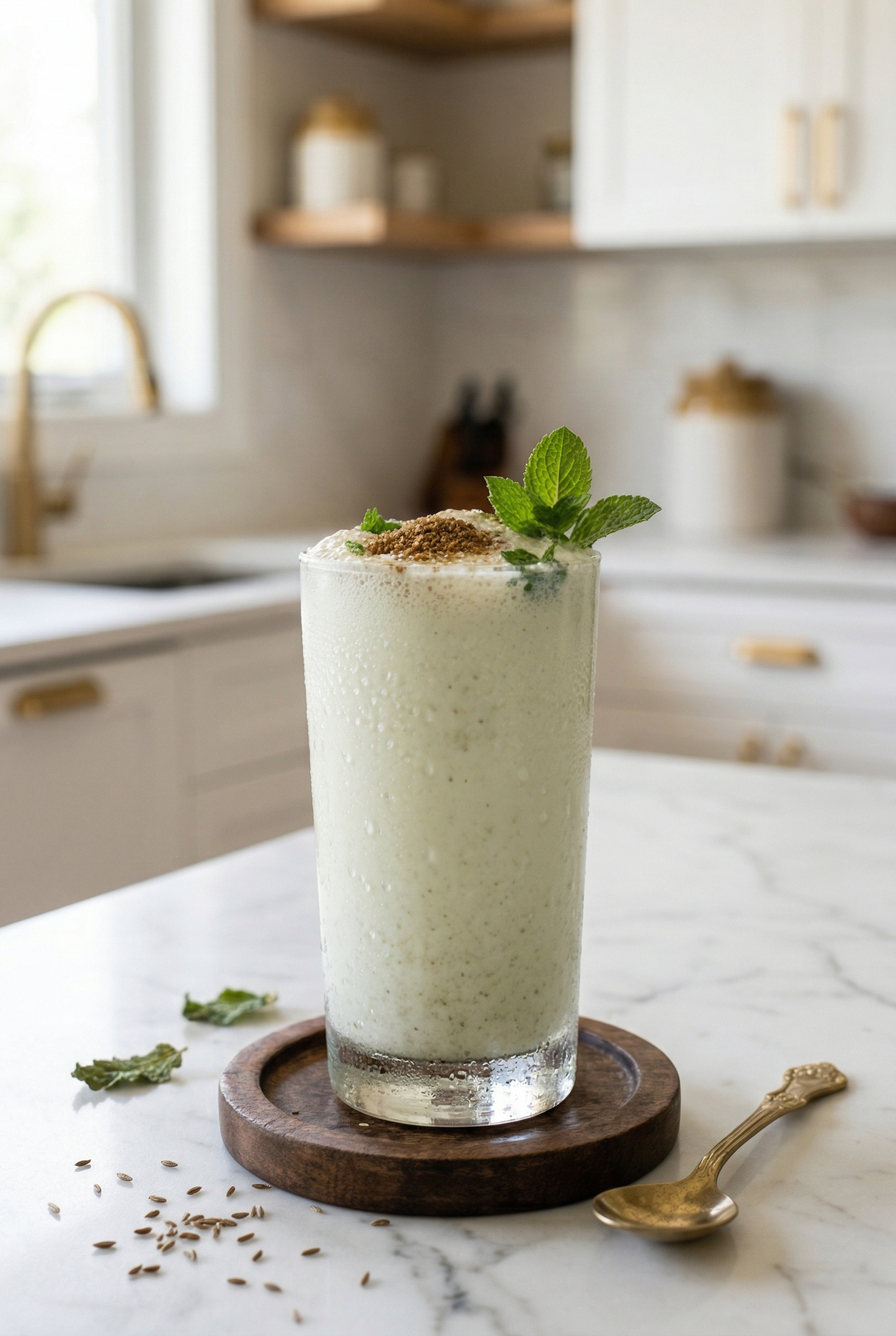
Every summer, the most reliable thing in our house was not the ceiling fan or the cooler. It was the tall steel glass of ice-cold chaash that appeared after lunch. My mom would whisk it up while I was still at the table, and the sound of the madani (the wooden hand churner) scraping the inside of the matka is the clearest food memory I have from childhood. No recipe felt simpler. No drink felt better.
Masala chaas (chaash, or છાશ in Gujarati) is spiced Indian buttermilk made by whisking yogurt with water, fresh herbs, and a handful of aromatics. This post gives you two recipes in one: the masala chaas itself, and the homemade chaas masala powder I now keep in a jar all season. Once you have that spice blend ready, a glass of chaas takes two minutes, flat.
What is Chaash?
Chaash is the Gujarati word for chaas: Indian buttermilk made from yogurt, not cream. It is thinner than Western buttermilk, tangier than lassi, and almost always savory. In Gujarat, it is a post-meal ritual as much as a drink, a cool digestive sip that rounds out a spicy dal-sabzi-roti meal.
Across India it goes by different names:
- Chaash / Chaas (Gujarati and Hindi)
- Mattha (Punjab, North India): salted and thinner than sweet lassi
- Taak (Maharashtra): tempered with mustard seeds and curry leaves
- Moru (Tamil Nadu, Kerala): often seasoned with dried red chilli and ginger
If you have yogurt and water, you have the base. The spices are what make it yours.
Chaas vs. Western Buttermilk
Store-bought buttermilk in the US is a byproduct of butter churning: thicker, richer, and more acidic than chaas. Indian chaas is yogurt thinned with water. They are not interchangeable in this recipe. Stick with yogurt and water for the right consistency and tang.
Why Chaas is Good for You
Chaas is one of those rare things that tastes indulgent and is genuinely nourishing. A few reasons I feel good about drinking it every day in summer:
- Probiotics from fermented yogurt support gut health and ease post-meal bloating
- Black salt (kala namak) and roasted cumin are natural carminatives that reduce gas and acidity
- Naturally low in fat, high in calcium, and rich in B vitamins
- In Ayurveda, chaas is called Takra and prescribed after heavy meals to aid digestion and pacify Vata
- High water content helps with hydration and electrolyte balance on hot days
The cumin and black pepper in chaas masala are not just for flavor. Both are traditional digestive spices used in Ayurvedic cooking to support gut motility after meals.
Homemade Chaas Masala Powder
This is the part most recipes skip, and it makes all the difference. A jar of chaas masala in your pantry means you are always one scoop away from a perfect glass. I roast a batch every April before the heat really sets in, and it lasts all the way through July.
The spice blend takes about 8 minutes and keeps for up to 3 months in an airtight jar.
Chaas Masala Powder — Ingredients
- 2 tablespoons cumin seeds
- 1 teaspoon black peppercorns
- 4 cloves
- 1/2 inch cinnamon stick
- 1½ tablespoons black salt (kala namak)
- 1 tablespoon dried mint leaves
- 1 teaspoon dried coriander powder
- 1/4 teaspoon asafoetida (hing)
- 1/2 teaspoon dry mango powder / amchur (optional, for extra tang)
Chaas Masala Powder — Instructions
- Heat a dry pan on medium-low. Add cumin seeds, black peppercorns, cloves, and the cinnamon stick.
- Dry-roast for 3 to 4 minutes, stirring often, until the cumin turns a shade darker and smells deeply nutty. Do not let it scorch.
- Remove from heat and let the spices cool completely on a plate, about 5 minutes.
- Add the cooled spices to a spice grinder along with the black salt, dried mint, coriander powder, hing, and amchur if using.
- Grind to a fine powder. Sieve once to remove any coarse husks.
- Store in an airtight glass jar at room temperature for up to 3 months.
Yield: approximately 4 tablespoons of chaas masala powder (enough for 24 glasses of chaas)


Masala Chaas (Spiced Indian Buttermilk)
Ingredients
Equipment
Method
- Add the green chilli, ginger, coriander leaves, and mint leaves to a blender with 2 tablespoons of yogurt.
- Blend until completely smooth, about 30 seconds. This ensures no herb chunks in the final drink.
- Add the remaining yogurt to the blender. Pour in the chilled water.
- Add the chaas masala powder, black salt, and regular salt.
- Blend for 20 to 30 seconds until frothy and well combined.
- Taste and adjust salt. Pour over ice into glasses.
- Heat ghee in a small tadka pan over medium-high heat until shimmering.
- Add cumin seeds and let them crackle for 15 seconds.
- Add the dried red chilli and curry leaves. Stand back, the curry leaves will splutter.
- Immediately pour the hot vaghar over the cold chaas and serve at once.
Notes

The Gujarati Vaghar Variation
If you grew up in a Gujarati household, you know that a sizzling vaghar (tempering) can turn any ordinary dish into something memorable. Chaas is no exception.
Pour your plain chaas into a glass. In a tiny tadka pan, heat 1 teaspoon of ghee until shimmering. Add 1/4 teaspoon of cumin seeds and let them crackle for 15 seconds. Add one dried red chilli and 4 to 5 curry leaves and stand back, because the curry leaves will splutter loudly. Pour this vaghar directly over the cold chaas and serve immediately.
The contrast of the hot, fragrant ghee hitting the ice-cold drink is genuinely special. My mom always said the vaghar “wakes the chaas up,” and I have never found a better way to describe it.
The vaghar is entirely optional. Plain masala chaas without tempering is equally good, especially if you are in a hurry or serving a crowd.
Tips and Variations
Consistency: Reduce the water for a thicker, creamier chaas (closer to a thin lassi). Add more water for a very light, drinkable style. I use a 1:2 yogurt-to-water ratio for a medium texture.
Mint chaas: Skip the coriander and double the mint. Fresh and clean, great with spicy food.
Plain salted chaas: Just yogurt, water, and a pinch of black salt. No blending needed, just whisk with a fork. This is the everyday version for when you need it in 60 seconds.
No blender: Use a traditional madani (hand churner) or simply whisk vigorously in a tall bowl. The hand-churned version has a slightly frothier texture.
Batch prep for summer: Mix a double or triple batch of chaas masala powder and keep it in a labelled jar. Guests love being told there is “a house blend” involved.
What to Serve with Chaas
In a Gujarati meal, chaas is the final act. It follows the main courses, settles the spices, and signals that the meal is complete. My favorite pairings:
- Methi Thepla: the classic tiffin flatbread that practically demands a glass of cold chaas alongside
- Karela Nu Shaak: the bitterness of karela and the cool tang of chaas are made for each other
- Mag Ni Chutti Dal: serve at the end of a Gujarati dal-roti meal
- Cucumber Raita: equally cooling, pairs well with the same Gujarati thali meals
FAQs
Is chaas the same as lassi?
Both are yogurt-based drinks, but lassi is typically thicker and can be sweet or salty. Chaas is always savory, thinner, and more diluted. It is specifically meant as a post-meal digestive, not a standalone drink. Lassi is richer; chaas is lighter.
Can I make chaas vegan?
Yes. Use thick coconut yogurt or cashew-based yogurt in place of dairy yogurt. The flavor will be slightly different, as coconut yogurt adds mild sweetness, but it works well. Increase the black salt and cumin slightly to compensate.
Can I use store-bought buttermilk instead of yogurt?
For traditional Indian chaas, no. Western buttermilk (the carton variety) has a different texture and much stronger sourness. It also skips the probiotic benefit of fresh homemade yogurt. Use yogurt (dahi / curd) thinned with water for the authentic base.
How long does masala chaas keep?
Drink it fresh, ideally within 1 to 2 hours of making. The herbs begin to separate and lose flavor quickly. To prep ahead, whisk the yogurt and water base and refrigerate it. Blend in the herbs just before serving. The chaas masala powder keeps for 3 months in an airtight jar.
My chaas tastes flat. What went wrong?
Nine times out of ten, it is under-seasoned. Chaas needs more salt than you think. Black salt (kala namak) is the key: its sulphury depth is what gives masala chaas its distinctive savory bite. Start with 1/4 teaspoon, taste, and adjust. A small squeeze of lemon juice also brightens everything if it still tastes dull.
Ready to Make Masala Chaas?
Masala chaas is one of those recipes that takes five minutes to make and immediately makes your table feel more complete. I love that it is nourishing, endlessly adjustable, and deeply tied to where I come from.
Whether you make it plain and salted for a quick weekday lunch or go all out with the vaghar for Sunday guests, I hope this becomes a summer staple in your kitchen the way it has always been in mine.
Do you prefer chaas plain or tempered with a vaghar? Leave a comment below!
Made this? Share a photo and tag @petitepaprika on Instagram — I love seeing your kitchen creations!
