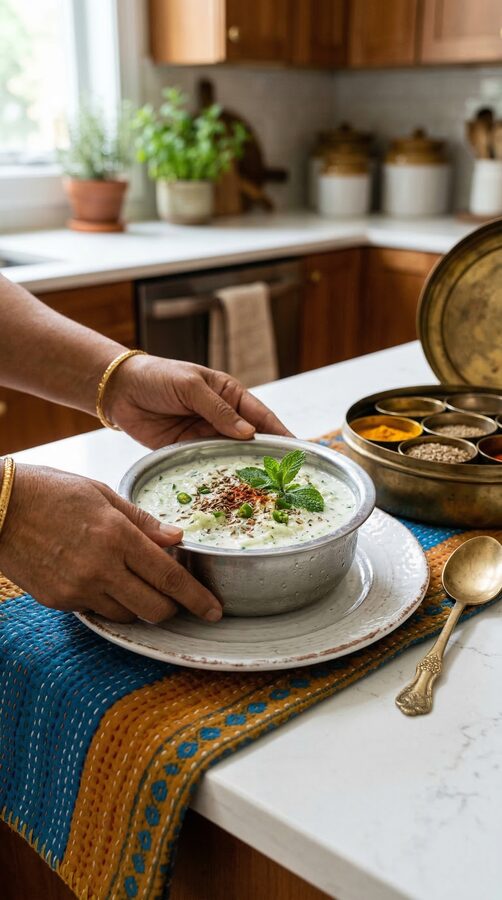
Summer in our house means one thing at the dinner table: a cold bowl of Cucumber Raita sitting right next to whatever we’ve cooked. This cucumber raita recipe is one of the first things I reach for when the weather heats up — it doesn’t matter if it’s a simple dal-rice or a more elaborate biryani night, that little bowl of cool, creamy yogurt is always there.
I grew up watching my mom make this in under five minutes. No cooking, no fuss. Just thick yogurt, freshly grated cucumber, a pinch of roasted cumin, and a handful of fresh coriander. She called it kheera raita (kheera is the Hindi/Gujarati word for cucumber), and it was her secret weapon for balancing any spicy meal.
My version keeps all of that but swaps in Greek yogurt for extra protein and a thicker, creamier texture. The probiotic benefits are the same — actually even more concentrated — and the result is a raita that works as a side dish, a dip, or honestly, something I’ve been known to eat straight from the bowl with a spoon.
If you’ve never made raita from scratch before, this is the best place to start. It takes 10 minutes, uses ingredients you probably already have, and goes with almost everything.
What is Raita? 🥣
Raita is a traditional Indian condiment made with yogurt (dahi) as the base, mixed with vegetables, fruits, or spices. It’s served chilled alongside spiced dishes to provide cooling contrast — think of it as India’s answer to tzatziki or a cooling yogurt sauce.
Kheera raita (cucumber raita) is one of the most common versions across Indian households. In Gujarat, it’s a staple alongside dal-rice and rotis. In North India, you’ll find it next to biryani and pulao. It’s one of those dishes that crosses regional lines because it’s simply that useful.
The cooling effect comes from two things: the high water content of cucumber and the natural probiotics in yogurt that support digestion. When you eat something spicy, raita doesn’t just cool your mouth — it actually helps your gut process the meal.
Why Greek Yogurt? 🌿
Traditional raita uses regular full-fat dahi (Indian curd), which is wonderful. But I’ve been making mine with Greek yogurt for the past couple of years and here’s why I won’t go back:
- ✅ Higher protein — Greek yogurt has roughly 2x the protein of regular yogurt (about 10g per 100g vs 5g)
- ✅ Thicker texture — holds up better, especially if you’re making it ahead
- ✅ More concentrated probiotics — the straining process concentrates the live cultures
- ✅ Creamier mouthfeel — no watery separation even after an hour in the fridge
You can absolutely use regular dahi if that’s what you have. The flavor will be slightly tangier and the texture thinner — both perfectly delicious.
Health Benefits Worth Knowing 💡
Gut health note: Both Greek yogurt and regular dahi contain live Lactobacillus cultures that support a healthy gut microbiome. Eating probiotic-rich foods regularly has been linked to better digestion, reduced bloating, and improved immunity — especially important in summer when digestion tends to slow down.
- Hydration: Cucumber is about 95% water, making this raita genuinely hydrating on hot days
- Protein: Greek yogurt adds a meaningful protein boost to an otherwise light meal
- Calcium: One serving provides a good chunk of your daily calcium needs
- Low calorie: The entire bowl is under 150 calories per serving
- Gluten-free: Naturally, no modifications needed


Cucumber Raita (Kheera Raita)
Ingredients
Method
- Wash and peel the cucumber. Grate it on the coarse side of a box grater.
- Place the grated cucumber in a clean kitchen towel or cheesecloth and squeeze out as much water as possible. This step is important — skipping it makes the raita watery within minutes.
- Set aside.
- Heat a small dry pan over medium heat. Add the cumin seeds.
- Toast for 60–90 seconds, stirring constantly, until they turn a shade darker and smell nutty and fragrant. Watch carefully — they go from toasted to burnt quickly.
- Remove from heat and let cool for 1 minute, then roughly crush with the back of a spoon or in a mortar and pestle.
- In a mixing bowl, whisk the Greek yogurt until smooth. If it feels very thick, add 1–2 tablespoons of cold water and whisk again.
- Add the squeezed cucumber, salt, black salt, roasted cumin powder, and chaat masala (if using). Stir to combine.
- Fold in the chopped coriander and mint.
- Taste and adjust salt.
- Transfer to a serving bowl. Top with the toasted cumin seeds, a pinch of red chili powder, and a few mint sprigs.
- Refrigerate for at least 15 minutes before serving — the flavors come together beautifully when cold.
Notes
Perfect For… ✔
- Serving alongside One-Pot Dal Tadka and rice
- A cooling side with Methi Thepla or any spiced flatbread
- Pairing with Spinach Khichdi for a complete, nourishing meal
- Summer lunchboxes — it stays fresh and cold for hours
- A quick dip for vegetable crudités or pita chips
- Biryani nights, pulao dinners, or any time you need a cooling contrast
FAQs
Q1. Can I make cucumber raita ahead of time?
Yes, but with one important note: squeeze the cucumber very well before adding it to the yogurt. If you do that, the raita stays fresh and not watery for up to 24 hours in the fridge. I often make it the night before and it’s perfect the next day.
Q2. Can I make this vegan?
Absolutely. Swap the Greek yogurt for thick coconut yogurt or a plain cashew-based yogurt. The texture will be slightly different but the cooling, herby flavor is still there. Avoid sweetened plant-based yogurts — you want the plain, unsweetened kind.
Q3. Why is my raita watery?
Almost always because the cucumber wasn’t squeezed enough. Cucumber holds a surprising amount of water. After grating, place it in a clean cloth and squeeze firmly — you’ll be amazed how much liquid comes out. Do it twice if needed.
Q4. What’s the difference between raita and tzatziki?
Both are yogurt-cucumber condiments, but they have distinct flavor profiles. Tzatziki uses olive oil, lemon, and garlic. Raita uses cumin, coriander, and Indian spices like chaat masala or kala namak. Raita is also typically thinner and served as a side dish rather than a dip, though this Greek yogurt version is thick enough for both.
Q5. Can I use flavored yogurt?
No — always use plain, unflavored yogurt. Flavored or sweetened yogurt will completely change the taste. For the best results, use full-fat plain Greek yogurt or full-fat dahi.
Q6. Is cucumber raita good for digestion?
Yes, genuinely. The live probiotic cultures in yogurt support gut health and aid digestion. Cucumber adds hydration and a mild cooling effect. Together, they’re particularly helpful after a spicy or heavy meal. Eating raita regularly as part of a balanced diet can support a healthy gut microbiome over time.
Closing
Cucumber Raita is one of those recipes that sounds too simple to write about — and yet I find myself reaching for it constantly, especially as the weather warms up. It takes 10 minutes, it makes any meal feel more complete, and there’s something genuinely satisfying about a bowl of cold, creamy, herb-flecked yogurt sitting next to a plate of hot food.
This summer, I hope this cucumber raita recipe earns a permanent spot in your fridge rotation. Make a big batch on Sunday and it’ll carry you through the week — alongside dal, with thepla, stirred into a grain bowl, or just eaten with a spoon.
If you try it, I’d love to know your favorite way to serve it. Do you keep it classic, or do you add your own twist — maybe boondi, pomegranate, or a hit of ginger? Drop a comment below and tag me @petitepaprika so I can see your version! 🌸
