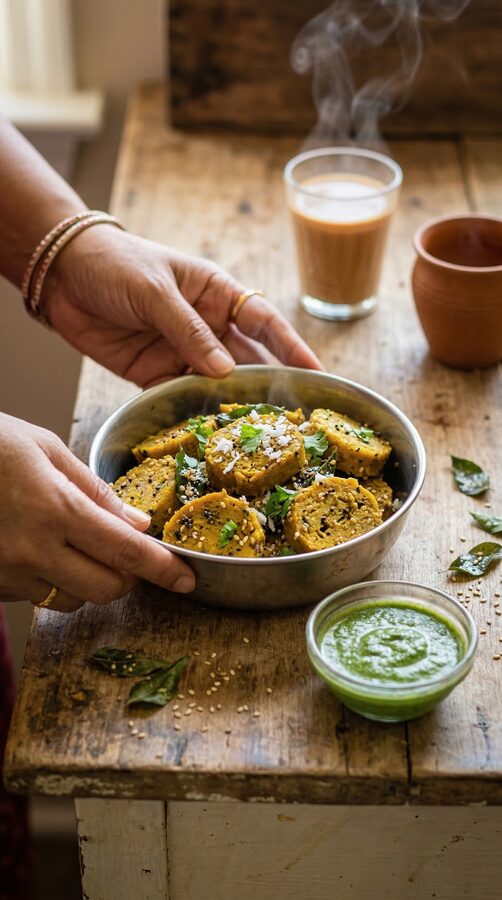
There are some recipes that immediately take me back to my nani’s kitchen, and Dudhi Muthiya is one of them. She would grate fresh dudhi in the afternoon, mix the dough by feel, and steam soft muthiyas that filled the whole house with that warm, homely aroma.
Now I make this recipe in my own kitchen when I want something nourishing but still comforting. It is light because we steam first, flavorful because of the tempering, and practical enough for busy weekdays.
If you have bottle gourd in your fridge and are wondering what to cook beyond sabzi, this is such a lovely way to use it. Let us make this together.
The Gujarati Comfort Food We Grow Up With
In many Gujarati homes, muthiya is more than just a snack. It is a smart, no-waste recipe that uses seasonal vegetables like dudhi (bottle gourd) and turns them into something everyone enjoys, from kids to grandparents.
The name “muthiya” comes from “muthi”, meaning fist, because these are traditionally shaped by pressing the dough in your palm. You can make them long and cylindrical for slicing, or small oval shapes for quick steaming.
I especially love this recipe during warmer months when we crave lighter meals. A plate of tempered muthiya with chai in the evening, or with plain dahi for breakfast, always feels just right.
Why You Will Love This Recipe
- ✔ Steamed first, so it is light yet satisfying
- ✔ A great way to use up extra dudhi in the fridge
- ✔ Perfect for tea-time, lunchboxes, or make-ahead breakfast
- ✔ Easy to make gluten-light with flour swaps
- ✔ Kid-friendly when served with mild green chutney or ketchup
Nutrition Highlights
Dudhi is hydrating and gentle on digestion, which is why I reach for this recipe when we want something lighter. Whole wheat flour and chickpea flour (besan) add fiber and plant protein, making these muthiyas filling without feeling heavy.
If you add sesame seeds and a little curd, the texture improves and the flavor becomes deeper. For vegetarian families like ours, small recipes like this are an easy way to build balanced everyday meals with grains, vegetables, and protein.


How to Make Dudhi Muthiya

Dudhi Muthiya (Steamed Gujarati Bottle Gourd Dumplings)
Ingredients
Method
- Grate the dudhi and lightly squeeze out excess water. Keep the squeezed water aside instead of discarding it.
- In a wide bowl, add grated dudhi, whole wheat flour, besan, semolina, curd, ginger-chili paste, turmeric, red chili powder, coriander-cumin powder, sugar, salt, and oil.
- Mix everything into a soft dough. Use dudhi moisture first, then add 1 to 3 tbsp water only if the dough feels too dry.
- Just before shaping, add eno and gently mix for 10 to 15 seconds. Do not overwork after adding eno.
- Grease your palms and shape the dough into 3 to 4 logs, about 1.5 inches thick.
- Place the logs in a greased steaming plate, keeping small gaps between them.
- Steam on medium heat for 18 to 22 minutes, or until a knife inserted in the center comes out clean.
- Cool for 10 minutes, then slice into bite-sized rounds.
- Heat oil in a broad pan. Add mustard seeds and let them crackle.
- Add sesame seeds, curry leaves, slit green chilies, and hing. Saute for 20 to 30 seconds until aromatic.
- Add sliced muthiya and toss gently for 2 to 3 minutes on low heat so they absorb the tempering without breaking.
- Finish with coriander, coconut, and a squeeze of lemon. Serve warm.
Notes
Easy Dudhi Muthiya for Busy Weekdays
One thing I love about dudhi muthiya is how well it fits real life. I often steam a batch in the evening, then quickly temper and reheat portions the next morning for breakfast boxes.
- A light dinner side with dal and salad
- A tea-time snack with hari chutney
- A travel-friendly snack for short road trips
- A post-school snack for kids when you want something homemade
If you enjoy practical Indian vegetarian recipes like this, you might also like my Mixed Veg Cutlet for evening snacks and Lemon Foxtail Millet Rice for a light weekday meal.
FAQs
Q1. Can I make dudhi muthiya without eno?
Yes. Use 1/2 tsp baking soda plus 1 tsp lemon juice. The texture may be slightly denser than eno, but still soft if you do not overmix.
Q2. Why did my muthiya turn hard?
This usually happens when the dough is too dry or overworked. Keep the dough soft and steam only until cooked; over-steaming can also make it firm.
Q3. Can I make this gluten free?
You can try a mix of chickpea flour and sorghum flour (jowar / sorghum), but the texture will be more delicate. Shape gently and steam in smaller portions.
Q4. What can I use instead of dudhi?
Try grated zucchini, grated cabbage, or finely chopped methi leaves. Moisture levels vary, so adjust flour as needed.
Q5. Can I make it ahead for meal prep?
Absolutely. Steam and slice ahead, then refrigerate. Add fresh tempering before serving for best taste and texture.
Q6. How should I store leftovers?
Store in an airtight container in the refrigerator for up to 3 days. Reheat by steaming briefly or sauteing with a little oil and sesame.
If you are looking for a wholesome Gujarati snack that is practical, flavorful, and family-approved, this dudhi muthiya recipe is such a good one to keep in rotation. I keep coming back to it because it is forgiving, nourishing, and always satisfying with a cup of chai.
If you try this recipe, leave a comment below and tell me: do you enjoy your muthiya plain, or with extra sesame tempering and lemon?