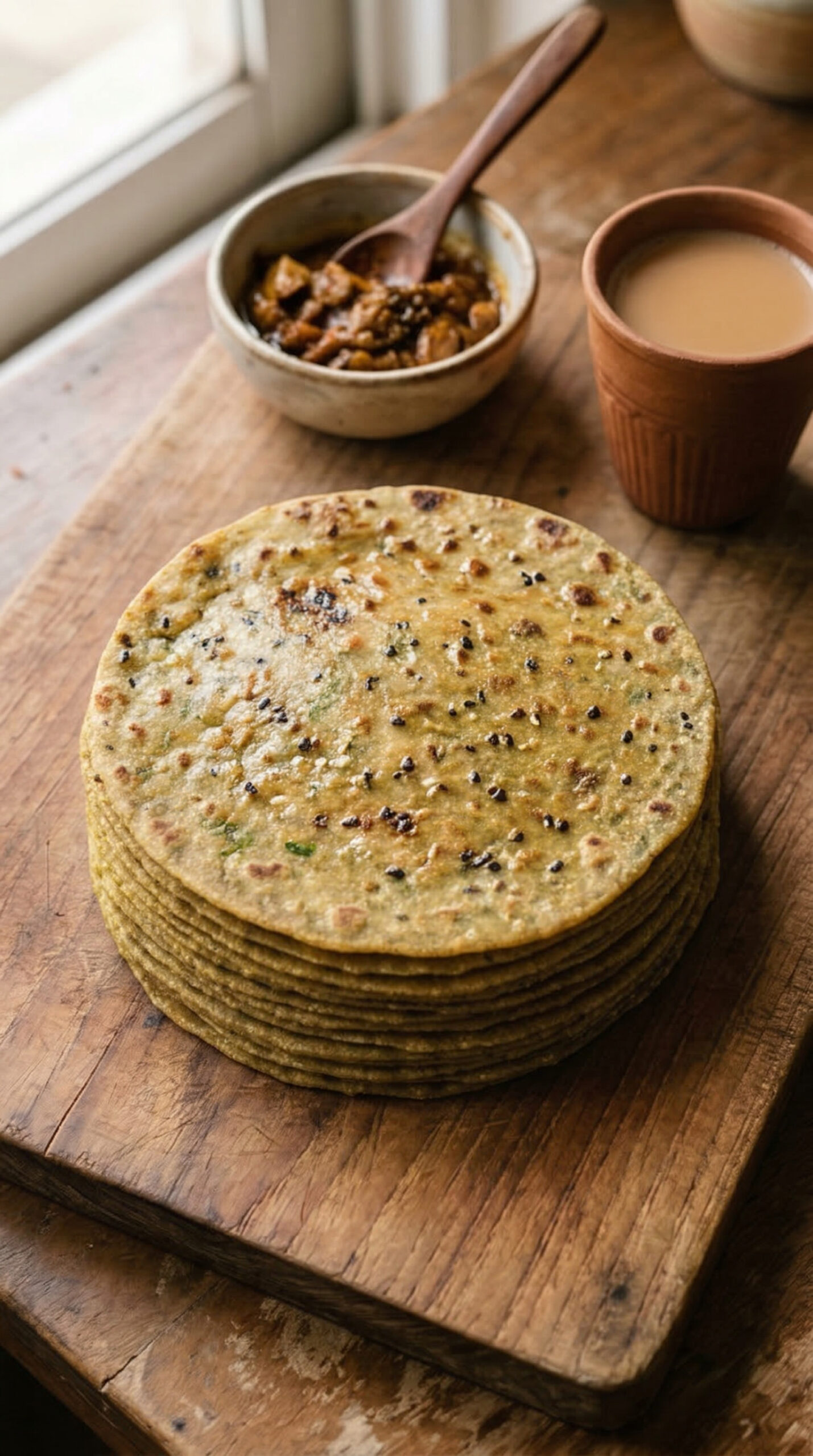
There are a few recipes I pack without even thinking when we are heading somewhere. Long train ride, road trip, or just a full day when lunch will be eaten at a desk. Dudhi thepla is always one of them.
I started making these because my daughter is suspicious of bottle gourd in any obvious form. Hidden inside a spiced flatbread, she has eaten it happily since she was four. That quiet win still makes me smile every time I grate the dudhi.
Dudhi Thepla (also called lauki thepla or dudhi na thepla in Gujarati) is a soft, spiced flatbread made with grated bottle gourd, whole wheat flour, besan, and everyday spices. The moisture from the dudhi keeps these theplas softer for longer than plain roti. That is exactly what makes them so good for tiffin boxes and travel.
If you like methi thepla, you will love this version too. Same ease, same Gujarati soul, and a gentler flavor that works well with everyone at the table.
What Is Dudhi Thepla?
Dudhi is the Gujarati word for bottle gourd, called lauki in Hindi. It is a pale green, mild-tasting gourd with very high water content, and that water is what makes these theplas special.
When you mix grated dudhi directly into the dough, the moisture from the gourd does the work for you. The dough stays soft without needing much added water, and the finished theplas hold that softness for hours, even after they cool.
Thepla is deeply rooted in Gujarati home cooking. It was designed to travel. Unlike a plain roti that starts to firm up quickly, theplas made with some fat and moisture from vegetables or yogurt stay pliable and delicious at room temperature. My grandmother wrapped them in a bit of newspaper for train journeys, and they were still good the next morning.
Why You Will Love This Recipe
- ✔ Softer than plain roti and stays that way for hours
- ✔ Perfect for tiffin boxes, lunchboxes, and travel
- ✔ Great way to include bottle gourd without it being the star of the show
- ✔ Kid-friendly with adjustable spice level
- ✔ One-bowl dough, ready in 30 minutes
- ✔ Easily vegan with a simple yogurt swap
Health Benefits of Dudhi (Bottle Gourd)
Bottle gourd does not get enough credit. It is one of those quietly nourishing vegetables that fits into a vegetarian diet without demanding attention.
- High water content (around 90%): keeps you hydrated and makes the thepla naturally moist
- Low in calories: one medium dudhi has very few calories, which means even a couple of theplas are a light meal
- Iron + Vitamin C: bottle gourd contains a small amount of iron, and when paired with wheat flour it adds up; the Vitamin C in the gourd helps your body absorb that iron more efficiently
- Supports digestion: the fiber in bottle gourd and whole wheat flour together help keep digestion steady
- Good for blood pressure: the potassium and sodium balance in bottle gourd makes it supportive for people managing blood pressure
For vegetarian families, combining greens or vegetables into flatbreads is one of the best ways to pack in nutrients at a meal without adding a separate dish.

How to Make Dudhi Thepla
Step 1: Prep the Dudhi
- Peel the bottle gourd and taste a small raw piece. If it is even slightly bitter, discard it — a bitter dudhi is unsafe to eat.
- Grate finely using the smallest holes on your grater. Fine grating keeps the dough smooth and prevents tearing when you roll.
- If the grated dudhi looks very watery, squeeze out a little excess moisture with your hands before adding to the flour.

Step 2: Make the Dough
- In a wide mixing bowl, combine whole wheat flour, besan, turmeric, red chili powder, coriander-cumin powder, ajwain, sesame seeds, jaggery, and salt.
- Add the grated dudhi, yogurt, oil, and ginger-chili paste. Mix everything together.
- The moisture from the dudhi should bring the dough together. Add water only a tablespoon at a time if needed — the dough should be soft and non-sticky.
- Do not over-knead. Once the dough comes together smoothly, stop. Do not rest it — roll and cook right away.


Step 3: Roll and Cook
- Divide the dough into 10–12 equal portions. Keep them covered while you work.
- Lightly dust a portion with dry flour and roll into a thin circle, about 5–6 inches across. Thin rolls cook evenly and stay soft.
- Heat a tawa on medium-high. Place the rolled thepla on the tawa.
- When small bubbles appear on the surface, flip it and drizzle a little oil or ghee on the cooked side.
- Flip again, drizzle oil on the second side, and press gently with a spatula. Cook until both sides have light golden patches.
- Transfer to a cloth-lined plate and stack. Keeping theplas covered while warm helps them stay soft.


Dudhi Thepla (Gujarati Bottle Gourd Flatbread)
Ingredients
Method
- Peel the bottle gourd and taste a small piece. If it tastes bitter, discard it. A bitter dudhi can be unsafe to eat.
- Grate finely using the smallest holes on your grater, or use a food processor with the fine shredding plate. Fine grating helps the thepla roll without tearing.
- If the grated dudhi looks very watery, squeeze out a little excess moisture with your hands before adding to the flour.
- In a wide mixing bowl, combine whole wheat flour, besan, turmeric, red chili powder, coriander-cumin powder, ajwain, sesame seeds, jaggery, and salt.
- Add the grated dudhi, yogurt, oil, and ginger-chili paste. Mix everything together.
- The moisture from the dudhi should bring the dough together. Add water a tablespoon at a time only if needed, until you have a soft, non-sticky dough.
- Do not over-knead. Once the dough comes together smoothly, stop. Do not rest the dough: the dudhi will continue releasing moisture and the dough gets sticky if left to sit.
- Divide the dough into 10–12 equal portions. Keep them covered while you work.
- Lightly dust a portion with dry flour and roll into a thin circle, about 5–6 inches across. Thin is better than thick. It helps the thepla cook evenly and stay soft.
- Heat a tawa on medium-high. Place the rolled thepla on the tawa.
- When small bubbles appear on the surface, flip it and drizzle a little oil or ghee on the cooked side.
- Flip again, drizzle oil on the second side, and press gently with a spatula. Cook until both sides have light golden patches.
- Transfer to a cloth-lined plate and stack. Keeping theplas covered while they are still warm helps them stay soft.
Notes
Tips for Soft, Tear-Free Dudhi Thepla
A few things I have learned from making these often:
Grate finely. The coarser the grate, the harder it is to roll the dough without it tearing. A fine grater does not pull the dough apart mid-roll.
Do not add water right away. Mix the flour with the grated dudhi and wait a few minutes before judging the moisture. The gourd releases water as you work the dough.
Roll thin. Thick theplas are harder to cook through evenly and have a doughy texture in the middle. Aim for around 2–3mm thickness.
Medium-high heat. Too low and the thepla dries out before cooking through. Too high and it burns. Medium-high with steady attention gives the best result.
Oil generously. The oil while cooking, along with the moisture from the dudhi, is what keeps theplas soft after they cool. Do not skimp on this step if you are packing for a tiffin.
Serving Suggestions
Dudhi thepla is one of those recipes that pairs well with almost anything. Here are my favorites:
- Mango pickle + plain curd: the classic Gujarati combo, nothing beats it
- Green chutney + curd: fresh and cooling, especially in summer
- Alongside batata nu shaak: potato sabzi makes this a full meal
- With masala chai: a standard Gujarati evening snack plate
- With cucumber raita: a calm, cooling contrast to the spiced thepla
If you enjoy a lighter meal, serve these alongside my spinach khichdi on the side. Or for a full Gujarati-style breakfast spread, pair with my cucumber raita or Kadak Ginger chai
FAQs
Q1. Can I skip the besan?
Yes. Use 1¾ cups of whole wheat flour in total. The besan adds a little elasticity to the dough which helps rolling, but the theplas will still be good without it.
Q2. How long does dudhi thepla keep?
3 to 4 days in the refrigerator in an airtight container. At room temperature, they keep for 1 to 2 days, which makes them genuinely travel-friendly.
Q3. Can I freeze dudhi thepla?
Yes. Cool them completely, stack with parchment paper in between, and freeze in a zip-lock bag for up to a month. Reheat directly on a tawa from frozen.
Q4. What if my lauki tastes bitter?
Throw it away. Do not use a bitter bottle gourd in this recipe. Bitter bottle gourd can cause nausea and should not be eaten. Always taste a small raw piece before grating.
Q5. Can I make dudhi thepla vegan?
Yes. Replace the yogurt with 1 tbsp lemon juice plus 1 extra tbsp oil. The texture stays soft and the theplas cook the same way.
Q6. Why is my thepla hard after it cools?
Usually one of two things: the dough was too stiff (add a little more oil next time), or the theplas were over-cooked. Medium-high heat and pulling them off the tawa while they are still slightly pliable keeps them soft as they cool.
Dudhi thepla has become one of those recipes I reach for when I want to feed people something nourishing without any fuss. I made a batch last Sunday, packed half for the week’s lunchboxes, and the theplas were still soft and good two days later. That kind of reliability is hard to beat.
If you have bottle gourd sitting in the fridge and you are not sure what to do with it, this is your answer. If you already make methi thepla regularly, you will find this just as straightforward and maybe even more versatile.
Try it and let me know in the comments: do you pack dudhi thepla with pickle or curd, or do you have another favorite combination?
