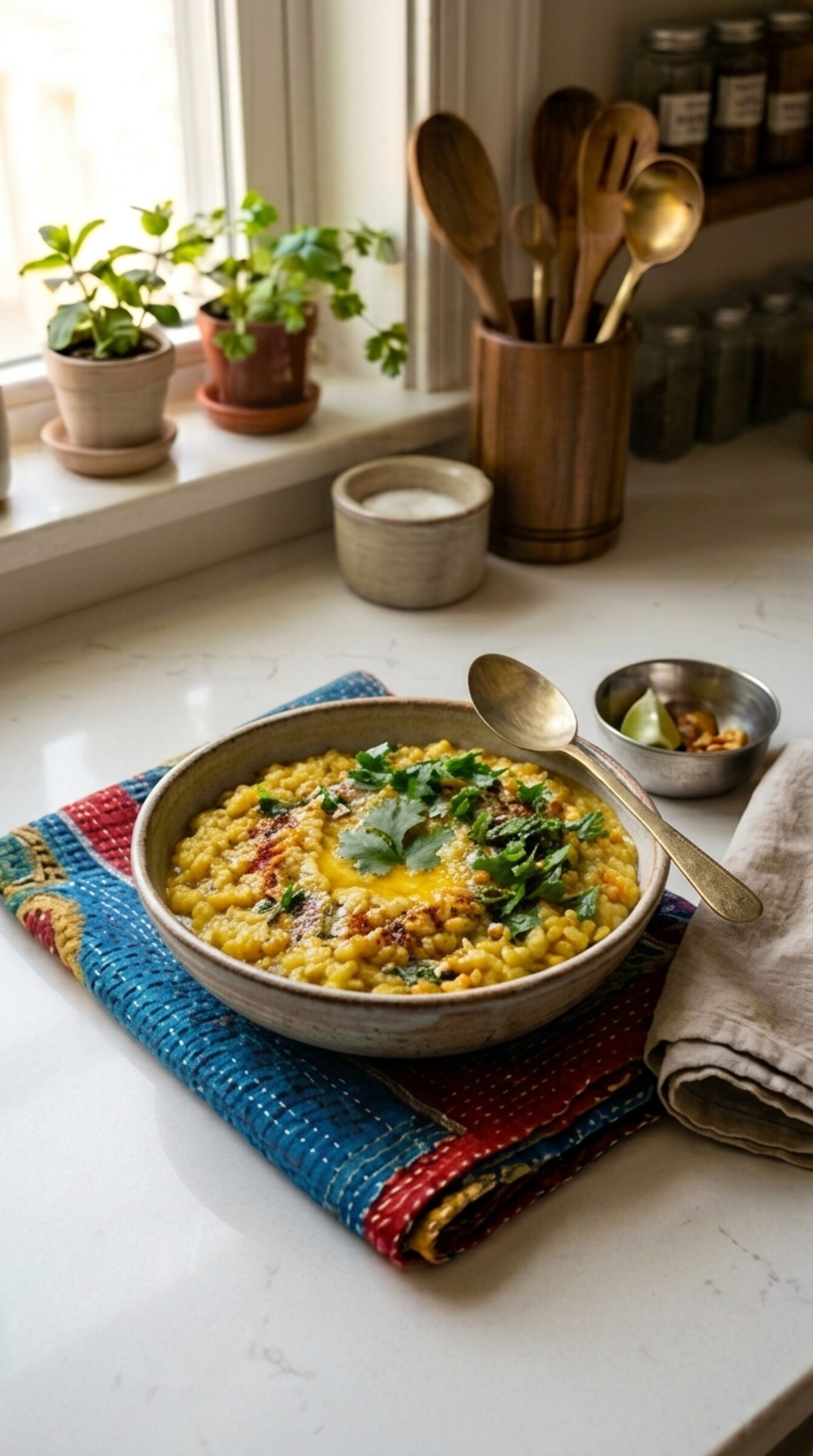
When my family wants something simple and comforting, the answer is almost always Gujarati khichdi. No long ingredient list, no heavy spices, just rice and moong dal cooked soft with a little turmeric and ghee. It is the meal I make when someone is under the weather, when I am too tired to fuss, or when we all just want a warm bowl that feels like home.
This Gujarati khichdi recipe gives you equal parts rice and yellow moong dal, a simple tadka of cumin and hing, and a generous spoon of ghee on top. In Gujarat, it is the ultimate everyday comfort food, served with kadhi, papad, and pickle. I have included both stovetop and pressure cooker methods so you can make it however you prefer.
Let us make it together.
What Is Gujarati Khichdi?
Gujarati khichdi is a one-pot dish of rice and split yellow moong dal cooked together until soft and porridge-like. The tempering is minimal: ghee, cumin seeds, a pinch of asafoetida (hing), and sometimes ginger and green chilli. The result is mild, easy to digest, and deeply satisfying.
The word “khichdi” comes from the Sanskrit “khicca,” meaning a dish of rice and legumes cooked together. It has been eaten across India for centuries and is a staple in Gujarati homes. In Ayurvedic tradition, khichdi is considered tridoshic — gentle on the gut and balancing for all body types — which is why it is traditionally recommended when someone is unwell or needs light, nourishing food. It is also one of the first solid foods many Indian families introduce to babies.
What makes the Gujarati version distinct is its simplicity. No onions, no tomato-heavy masala, no long list of spices. Just rice, dal, turmeric, and a fragrant tadka. Pair it with methi thepla for a full Gujarati spread, or serve it with kadhi, ghee, papad, and a tangy pickle for the iconic combination that so many Gujaratis grow up with.
Why You’ll Love This Khichdi
- One pot, done in about 30 minutes (stovetop or pressure cooker)
- Easy to digest: perfect for sick days, light dinners, or when you want something gentle
- Minimal ingredients: rice, moong dal, a few spices, and ghee
- Kid-friendly and naturally gluten free
- Easy to make vegan: swap ghee for oil


Gujarati Khichdi
Ingredients
Equipment
Method
- Rinse the rice and moong dal together until the water runs mostly clear. Soak for 15–20 minutes if you have time, then drain.
- Heat ghee in a heavy-bottomed pot (or pressure cooker) over medium heat.
- Add cumin seeds and let them sizzle for 20–30 seconds until fragrant.
- Add hing, ginger, and green chilli (if using). Stir for 30 seconds.
- Add the drained rice and dal. Stir to coat with the tadka for 1 minute.
- Add turmeric, salt, and 3 to 3½ cups water. Bring to a boil.
- Reduce heat to low, cover, and simmer for 25–30 minutes, stirring occasionally. The khichdi is done when the rice and dal are soft and the mixture is thick and creamy.
- If it gets too thick before the grains are tender, add a splash of hot water and stir.
- After adding water in the tadka step, pressure cook for 3–4 whistles on medium heat (stovetop cooker), or set Instant Pot to High pressure for 8 minutes.
- Let the pressure release naturally for 10 minutes, then open.
- If too thick, add a splash of hot water and stir.
- Drizzle the remaining ghee over the khichdi.
- Garnish with fresh coriander and serve hot with kadhi, papad, and pickle.
Notes
- Vegan option: replace ghee with coconut oil or any neutral oil.
- Water ratio: use 3 cups for firmer grains, 3½ cups for a looser, porridge-like consistency.
- Soaking the rice and dal for 15–20 minutes shortens cook time and improves digestibility.
- Storage: refrigerate in an airtight container for up to 2 days. Reheat on the stovetop with a splash of water, stirring until smooth.
- For babies: skip salt, hing, and green chilli. Cook until very soft and mashable.

How to Make Gujarati Khichdi (Stovetop & Pressure Cooker)


Serving Suggestions
The classic way to eat Gujarati khichdi is with kadhi (a thin, tangy yogurt curry), a spoon of ghee, papad, and a sharp pickle. A simple cucumber raita or plain curd works too if you do not have kadhi. If you want to add a green twist to your bowl, try my spinach khichdi for a version with palak that is perfect for all ages, including babies and toddlers.
Tips for the Best Gujarati Khichdi
- Water ratio: For a looser, more porridge-like khichdi, use 3½ cups water. For slightly firmer grains, use 3 cups. Khichdi always thickens as it sits; add a splash of hot water when reheating.
- Soaking: Soaking the rice and dal for 15 to 20 minutes shortens cooking time and improves digestibility — especially helpful if you are making this for babies or anyone with a sensitive stomach.
- Do not skip the hing: Asafoetida (hing) is what gives this Gujarati khichdi its distinctive aroma and helps with digestion. A small pinch goes a long way.
- Ghee matters: A final drizzle of ghee after cooking is not optional in a traditional Gujarati home. It adds richness and a nutty flavour that takes the khichdi from simple to special.
- Storage & reheating: Store in an airtight container in the fridge for up to 2 days. Reheat on the stovetop with a splash of water, stirring until smooth. The khichdi will look very thick when cold — that is normal. The water loosens it right back up.
Gujarati Khichdi Variations
The classic plain khichdi is just the beginning. Here are a few easy ways to change it up:
- Vaghareli khichdi — the same base but with added vegetables like peas, potatoes, or green beans, and a slightly spicier tadka. It is a heartier, more filling version of this recipe.
- Millet khichdi — swap the rice for foxtail millet or little millet for a higher-fibre, lower-glycemic twist. The cooking time and water ratio stay roughly the same.
- Spinach khichdi — stir in a handful of chopped spinach (palak) during the last 5 minutes of cooking. Or check out my dedicated spinach khichdi recipe, which is especially popular for babies, toddlers, and postpartum.
- Moong dal khichdi (no rice) — cook only moong dal with turmeric and a simple tadka for an even lighter, higher-protein bowl. Great for sick days.
FAQs
Can I make Gujarati khichdi vegan?
Yes. Replace ghee with coconut oil or any neutral oil. The flavour is slightly less rich but still delicious and nourishing.
How do I get the right consistency?
Khichdi thickens as it cools. For a looser, porridge-like texture, use 3½ cups water and add a splash of hot water when reheating. For slightly firmer grains, use 3 cups.
What is the difference between plain khichdi and vaghareli khichdi?
Plain Gujarati khichdi is just rice, dal, and a simple tadka. Vaghareli khichdi is the same base but with added vegetables (peas, potatoes, beans) and sometimes a bit more masala. This recipe is the classic plain version.
Can I make this ahead of time?
Yes. Store in an airtight container in the refrigerator for up to 2 days. Reheat on the stovetop with a splash of water, stirring until warm. Khichdi thickens when cold; the extra water brings it back to a nice consistency.
Is Gujarati khichdi good for babies and toddlers?
Yes — plain khichdi is often one of the first solid foods in Indian weaning. For babies, skip salt, hing, and green chilli; use only ghee, cumin, and a pinch of turmeric, and cook until very soft and mashable. For a green, iron-rich version perfect for babies and postpartum recovery, see my spinach khichdi recipe.
My khichdi is too thick. What do I do?
Khichdi always thickens as it sits. Add a splash of hot water and stir over low heat until it loosens to your preferred consistency. This is completely normal.
This Gujarati khichdi recipe is one I keep coming back to — for sick days, busy weeknights, and every time someone in the family needs something warm and nourishing without any fuss. One pot, thirty minutes, and a bowl that genuinely feels like home.
Serve it with kadhi, a drizzle of ghee, and papad and you have the full Gujarati experience. If you try it, leave a comment below — I’d love to know: thick and porridge-like, or a little more loose? Tag me @petitepaprika on Instagram so I can see your bowl.
