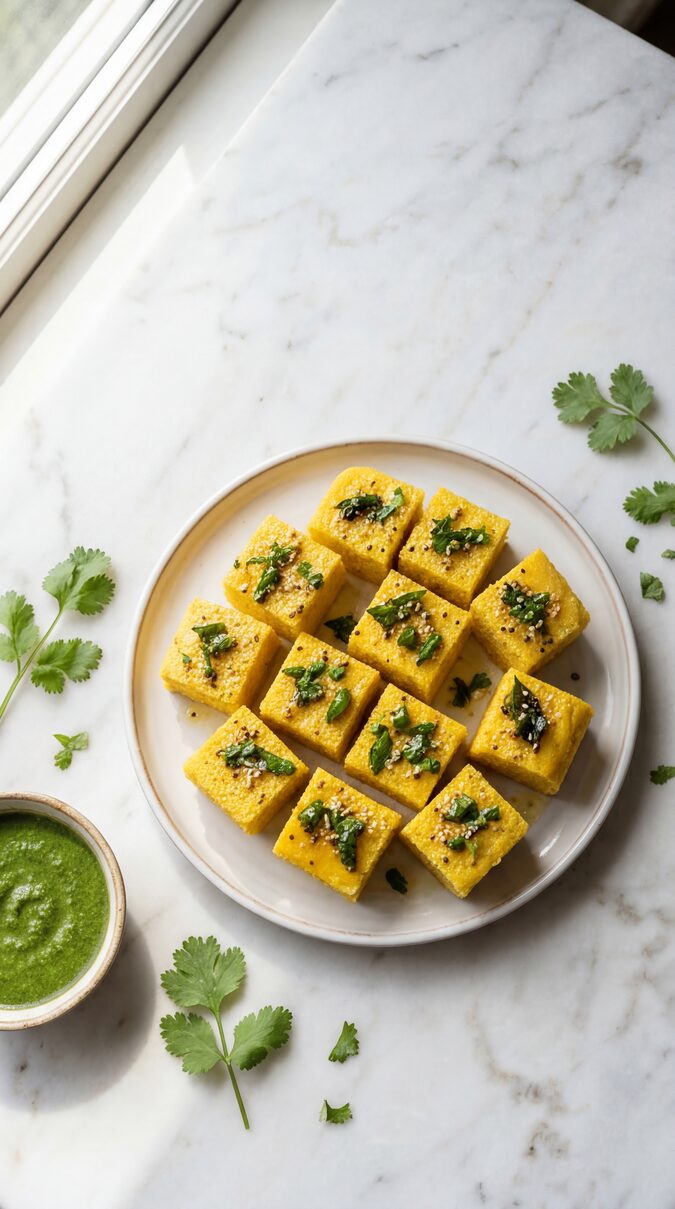
There are some recipes that feel less like cooking and more like muscle memory. This khaman dhokla recipe is one of those for me. Growing up watching my mom and masi move through the kitchen on Sunday mornings, there was always a plate of this golden, cloud-soft dhokla on the table before anyone else was even awake. The smell of the mustard seeds popping in hot oil, the hiss of steam, the glitter of sesame seeds over a perfectly spongy surface. That’s a Sunday in a Gujarati kitchen.
Khaman dhokla is a beloved Gujarati steamed cake made from besan (chickpea flour), leavened with a little Eno fruit salt, and finished with a bright, sweet-sour tempering. It’s light, fluffy, completely vegan, and ready in under 30 minutes. No fermentation needed. If you’ve only had dhokla from a box mix or a wedding buffet, this homemade version will completely change your expectations.
I’ve been making this recipe for years, and the only tweak I’ve made from my mom’s version is a slightly more generous tempering, because honestly, the tempering is where all the magic lives. Let’s make it together.
What is Khaman Dhokla?
Khaman dhokla is one of Gujarat’s most iconic snacks, found everywhere from home kitchens and chai tapris to tiffin boxes and festive thalis. It belongs to the broader family of dhokla, a category of steamed savory cakes that are central to Gujarati cuisine.
Here’s a distinction that often confuses people: khaman and dhokla are technically different things. Traditional dhokla is made from fermented batter (usually soaked and ground rice and chana dal), giving it a slightly tangy, complex flavor that develops overnight. Khaman, on the other hand, is made fresh from besan (no soaking, no fermentation) and relies on Eno or baking soda for its lift. It’s softer, more pillowy, and faster to make.
Over time, the names have blended together in everyday use, and most people (including in Gujarat!) say “khaman dhokla” to mean exactly what this recipe is: the instant besan version. So that’s what we’re making here.
The dish traces its roots to Gujarat’s deeply vegetarian, often Jain-influenced food culture, where steamed and fermented foods have always been valued for their digestibility and lightness. It’s everyday food that also shows up at every celebration. And that’s the best kind.
Why You’ll Love This Recipe
- Ready in 30 minutes: no soaking, no fermentation, no waiting
- Completely vegan: no dairy, no eggs, nothing to swap
- Light and protein-rich: chickpea flour gives you a solid protein hit in a snack that doesn’t feel heavy
- Perfect texture: follow the Eno technique below and you’ll get that signature sponginess every time
- Versatile: breakfast, snack, party starter, or lunchbox addition


Khaman Dhokla (Soft & Spongy Instant Gujarati Chickpea Cake)
Ingredients
Method
- Fill your steamer or a large pot with 2-3 inches of water. Bring to a rolling boil over high heat.
- Grease an 8-inch round cake tin generously with oil, making sure to coat the sides.
- In a large mixing bowl, sift the besan to remove any lumps. Add turmeric, salt, and sugar; whisk the dry ingredients together first.
- Add the ginger-green chili paste and lemon juice. Pour in the warm water gradually while whisking, until you have a smooth, lump-free batter. The consistency should be thick but pourable, similar to a thick pancake batter. Add an extra tablespoon of water if it feels too stiff.
- Taste the batter: it should be pleasantly tangy, slightly sweet, and well-salted. Adjust if needed.
- Working quickly: sprinkle the Eno fruit salt over the batter. Stir briskly for about 10 seconds. The batter will foam and increase in volume. Do not over-mix.
- Immediately pour the foamy batter into the greased tin. Tap the tin gently once on the counter to level it.
- Place the tin in the steamer, cover tightly with a lid, and steam on medium-high heat for 15-17 minutes. Do not open the lid in the first 12 minutes.
- Check doneness by inserting a toothpick into the center. It should come out clean and dry.
- Remove the tin from the steamer and let it rest uncovered for 5 minutes before cutting.
- While the dhokla rests, heat oil in a small pan over medium heat.
- Add mustard seeds and let them splutter fully, about 30-40 seconds.
- Add sesame seeds, curry leaves, and green chilies. Sauté for 30 seconds, stirring constantly.
- Pour in the water, sugar, and lemon juice. Bring to a boil, then immediately remove from heat.
- Cut the rested dhokla into squares or diamond shapes directly in the tin.
- Pour the tempering evenly over the entire surface, making sure every piece gets coated. Let it sit for 2-3 minutes to absorb.
- Garnish with fresh coconut and coriander. Serve warm with green chutney.
Notes
The Secret to Perfectly Spongy Dhokla
After years of making this recipe, and watching a few batches come out more like dense bread than cloud-soft dhokla, I can tell you that the sponge comes down to three things:
1. Eno, not baking soda (when possible)
Eno fruit salt reacts faster and more dramatically than baking soda alone, creating a larger and more stable foam that translates directly to an airy texture. It’s widely available in Indian grocery stores.
2. Speed after adding Eno
The moment Eno hits the batter, a CO₂ reaction begins. You have a narrow window of about 60 seconds to get that batter into the tin and into the steamer before the air escapes. Have everything ready before you open the Eno packet.
3. Don’t open the steamer lid early
Premature lid-lifting lets in cold air, which collapses the structure before it sets. Set a timer and resist the urge to peek until at least 12 minutes have passed.
Follow these three rules and you’ll have the kind of dhokla that springs back when you press it gently. That’s the gold standard.
Serving Ideas
Khaman dhokla is a meal in itself with the right accompaniments, but here’s how we serve it at home:
- Classic: Warm dhokla + green coriander-mint chutney + tamarind chutney
- Gujarati breakfast spread: Alongside methi thepla and a cup of masala chai
- Thali snack plate: As part of a Gujarati thali with karela nu shaak, mag ni chutti dal, and cucumber raita
- Lunchbox: Pack pieces at room temperature with chutney on the side; holds well for 4-5 hours
FAQs
Is khaman dhokla vegan?
Yes, completely. The batter is besan (chickpea flour) and water, and the tempering uses oil. There’s no dairy or eggs in this recipe. The yogurt mentioned in the tips is optional and can be skipped entirely for a strictly vegan version.
What’s the difference between khaman and dhokla?
Traditional dhokla is made from a fermented batter of rice and chana dal: it’s tangier, denser, and takes overnight to prepare. Khaman is the instant besan version: same steamed, spongy result but ready in 30 minutes. Most people use “khaman dhokla” to refer to this instant besan recipe, which is what this recipe is.
Can I make khaman dhokla without Eno fruit salt?
Yes. Substitute with ¼ tsp baking soda + ¼ tsp citric acid powder. The result is slightly less airy but still very good. Do not use baking soda alone without an acid; it will leave a soapy aftertaste.
Why did my dhokla turn out dense or rubbery?
Three common culprits: (1) batter was too thick, so add a splash more water next time; (2) Eno was added too early before the steamer was ready, so the air bubbles collapsed; (3) the steamer lid was opened too soon. Re-read the Eno timing section above before your next batch.
Can I make khaman dhokla ahead of time?
The dhokla is best fresh, but it keeps well in the fridge for up to 3 days. The key: store it without the tempering if possible, and add a fresh batch of tempering (or at least a drizzle of oil + lemon + water) before serving. This revives the texture and moisture.
Can I make this in a microwave instead of a steamer?
Steaming gives the best texture by far. But if you’re in a pinch: pour batter into a greased microwave-safe bowl, cover loosely with a plate, and microwave on high for 4-5 minutes. Check with a toothpick. The result is slightly denser but still edible and great for a weekday craving when the steamer isn’t worth the fuss.
This khaman dhokla has become one of those recipes I make on autopilot: I start the steamer, mix the batter, and thirty minutes later there’s a plate of something genuinely beautiful on the table. It’s the kind of food that reminds me why I love Gujarati cooking: deeply flavored, surprisingly simple, and always made with warmth.
If you’re building a Gujarati recipe collection at home, this is the one to start with. It pairs beautifully with almost everything: a thali, a chai morning, a party starter platter, or just a Sunday when you want to cook something that actually feels like home.
Made this? Share a photo and tag @petitepaprika on Instagram. I love seeing your kitchen creations! And leave a comment below letting me know: do you prefer your dhokla warm straight from the steamer, or room temperature the next morning? (I’m firmly in the warm camp, for the record.)
