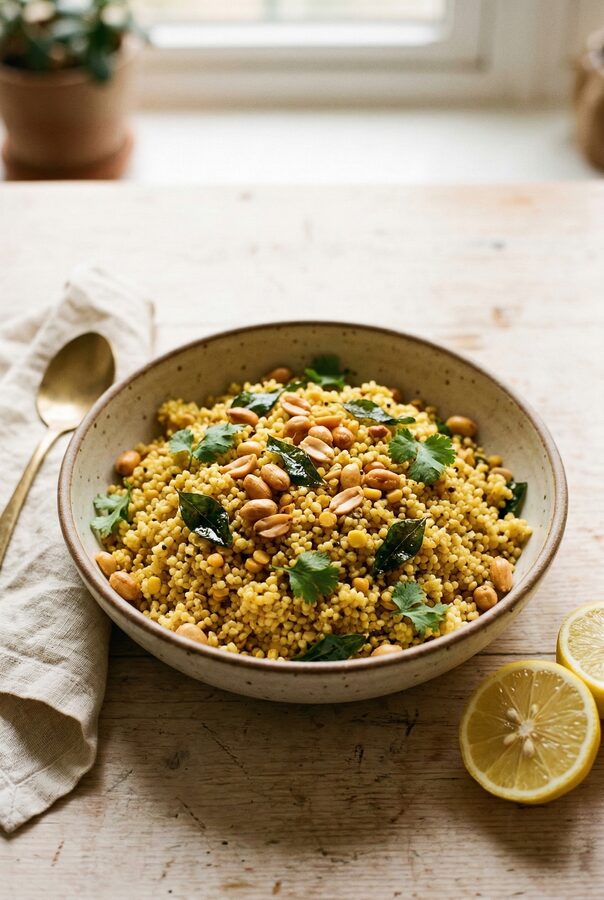
Some recipes feel like they have always been in my kitchen. Lemon rice is one of those. Growing up in a Gujarati household, my mom’s version was the go-to for busy weekday lunches, temple prasad boxes, and those “what do I make with leftover rice?” evenings. It came together fast, tasted bright, and nobody ever complained.
When I started cooking more with millets, Lemon Foxtail Millet Rice was one of the first things I tried. Foxtail millet cooks just like rice, the grains stay fluffy and separate, and that tangy, nutty tempering tastes even better against the mild sweetness of the millet. I actually prefer it to the rice version now.
This recipe is naturally Jain-friendly: no onion, no garlic, no root vegetables. If you follow a Jain diet or cook for someone who does, you can make this exactly as written. And for everyone else, it is still just a really good bowl of lemon rice that happens to be packed with nutrients.
🌾 The Humble Genius of South Indian Lemon Rice
Lemon rice, known as Chitranna in Karnataka and Nimmakaya Pulihora in Andhra Pradesh, is one of the most practical recipes in South Indian cooking. It was originally designed as a temple food and travel meal because the citric acid in lemon acts as a natural preservative, keeping the rice fresh for hours without refrigeration.
Every state has its own version. In Tamil Nadu, they add a generous pour of sesame oil. In Karnataka, the tempering gets a handful of fried gram dal. My mom’s Gujarati spin always included a pinch of sugar to balance the tartness, a habit I have kept.
Foxtail millet, called Kangni or Kakum in Hindi and Kang in Gujarati, is one of the oldest cultivated grains in India. It looks like tiny golden beads and cooks in about the same time as white rice. Unlike rice, it holds its shape beautifully even after cooling, which makes it ideal for lemon rice-style preparations where you want every grain distinct. If you have tried our Thandai Foxtail Millet Kheer, you already know how versatile this grain is.
The Jain connection is worth noting too. Many Jain families already eat foxtail millet during fasting periods (upvas), so this recipe fits into an existing tradition rather than inventing something new.
Why Foxtail Millet Belongs in Your Lunchbox
- ✔ Rich in iron and B vitamins — supports energy levels, especially important for vegetarian diets
- ✔ High in dietary fibre — keeps you full longer than white rice
- ✔ Low glycaemic index — a steadier energy release, no post-lunch crash
- ✔ Naturally gluten-free — safe for those with wheat or gluten sensitivities
- ✔ Cooks like rice — no special equipment or soaking needed; rinse, boil, fluff
💡 Millet Tip: The key to fluffy foxtail millet is the water ratio. Use 1 part millet to 2 parts water, and resist the urge to stir while it simmers. Treat it exactly like basmati rice and you will get perfect, separate grains every time.


How to Make Lemon Foxtail Millet Rice

Lemon Foxtail Millet Rice (Jain-Friendly)
Ingredients
Method
- Rinse the foxtail millet in cold water 2 to 3 times until the water runs mostly clear.
- In a saucepan, bring 2 cups of water to a boil. Add the rinsed millet, salt, and oil (if using).
- Stir once, reduce heat to low, cover with a tight-fitting lid, and simmer for 12 to 14 minutes.
- Turn off the heat and let it sit covered for 5 minutes. Do not peek or stir during this time.
- Uncover and fluff gently with a fork. Spread the cooked millet on a wide plate or tray and let it cool for 5 to 10 minutes. This prevents it from turning mushy when you add the tempering.
- Heat peanut oil in a wide pan or kadhai over medium heat.
- Add mustard seeds and wait for them to pop, about 30 seconds.
- Add chana dal and urad dal. Stir until they turn light golden, about 1 minute.
- Add peanuts and cashews (if using). Fry until the peanuts are lightly browned, about 2 minutes. Keep stirring so nothing scorches.
- Add the broken red chillies, slit green chillies, and curry leaves. Let them sizzle for 15 to 20 seconds until the curry leaves turn crisp. Stand back slightly, they do splatter.
- Add turmeric and asafoetida. Stir for just 5 seconds to bloom, then immediately turn off the heat. Turmeric burns quickly and turns bitter.
- Add the cooled foxtail millet to the tempering pan. Toss gently with a fork or spatula, folding rather than stirring, to coat the grains evenly without mashing them.
- Squeeze in the lemon juice. Add salt and sugar. Fold again to distribute.
- Taste and adjust: more lemon if you like it tangier, a pinch more sugar if it is too sharp, extra salt if it tastes flat.
- Garnish with fresh coriander, extra peanuts, and lemon wedges on the side.
Notes
FAQs
Q1. Is foxtail millet the same as regular millet?
No. “Millet” is a family of small-seeded grains, and each variety is different. Foxtail millet (kangni) has a mild, slightly sweet flavour and cooks to a fluffy, rice-like texture. It is one of the best millets for rice-style dishes. Other millets like pearl millet (bajra) or finger millet (ragi) have stronger flavours and different textures that are better suited to rotis or porridges.
Q2. Can I use leftover cooked millet for this?
Yes, and it actually works brilliantly. Day-old millet from the fridge is drier and holds its shape even better in lemon rice. Bring it to room temperature, break up any clumps gently with your fingers, and add it directly to the tempering.
Q3. What makes this recipe Jain-friendly?
It contains no onion, no garlic, and no root vegetables (like potatoes, carrots, or beets). These are the main restrictions in a Jain vegetarian diet. The one ingredient to watch is asafoetida (hing): some commercial brands use garlic extract or wheat starch as a base. Look for brands labelled “Jain hing” or “compounded with rice flour” to be safe.
Q4. Can I make this vegan?
It already is. The base recipe uses oil (not ghee) and contains no dairy or animal products. If you use ghee to cook the millet, simply swap it for any neutral oil.
Q5. My millet turned out mushy. What went wrong?
The most common reasons are too much water or stirring during cooking. Stick to the 1:2 ratio (1 cup millet to 2 cups water), keep the lid on, and resist stirring until it is done. Also, make sure you are using foxtail millet and not a broken/cracked millet, which absorbs water differently.
Q6. Can I add vegetables to this?
Absolutely. Green peas, finely diced bell pepper, or fresh corn kernels all work well. Add them to the tempering after the peanuts and fry for 2 to 3 minutes before adding the millet. If you follow a Jain diet, stick to above-ground vegetables and avoid potatoes, carrots, and beets.

This Lemon Foxtail Millet Rice has quietly become one of my most-cooked weekday lunches. It takes 30 minutes, fills the kitchen with the smell of curry leaves and mustard seeds, and lands on the table looking bright and cheerful without any effort. My daughter picks out the peanuts first (every single time), and I have learned to throw in extra just for her.
If you have been wanting to try millets but were not sure where to start, this is your recipe. It tastes like the lemon rice you already know and love, just with a grain that is a little kinder to your body. And if you are looking for more millet ideas, try our Rose Millet Ladoo for a sweet counterpart.
If you make this, I would love to hear: do you like your lemon rice tangy or mild? Drop a comment below and tag me @petitepaprika so I can see your version! 🌾
10 thoughts on “Lemon Foxtail Millet Rice | Easy Jain-Friendly Lunch”