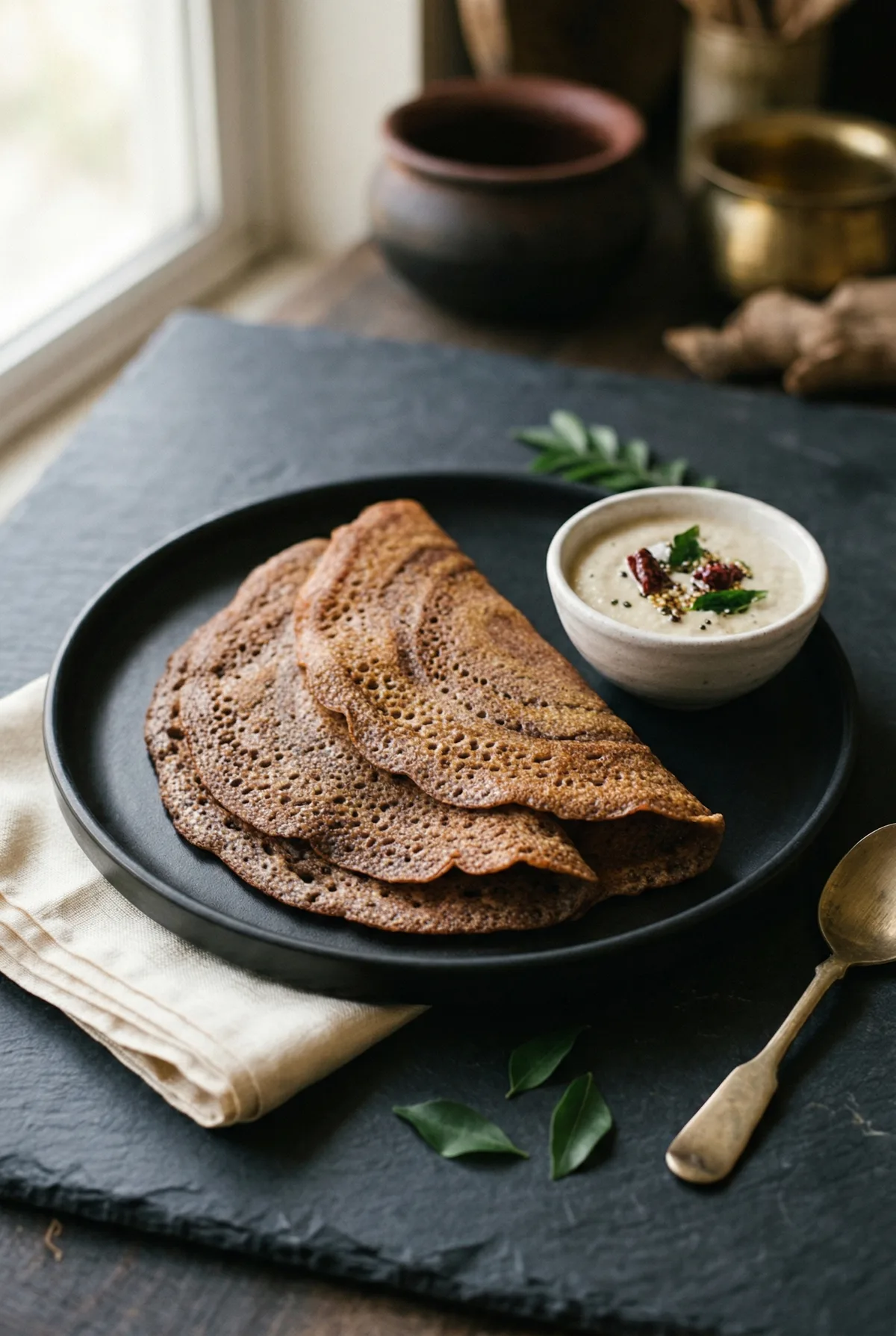
Ragi has always had a quiet place in our kitchen. My mother-in-law keeps a big jar of ragi flour tucked beside the jowar and bajra: not labeled, not fancy, just there the way essentials always are. She makes ragi rotis on cold mornings and a warm ragi porridge whenever anyone is under the weather. I grew up in a Gujarati household where ragi was less common, so when I first tasted ragi dosa at her home, I was genuinely surprised at how crispy and satisfying something so wholesome could be.
Since then, this has become one of my favorite breakfast swaps. The batter takes five minutes to mix, there is no soaking overnight, no fermentation, no planning ahead. On a busy weekday, I can have hot, crispy dosas on the table in under 30 minutes. That is the kind of recipe that earns a permanent spot in a rotation.
If you are new to cooking with finger millet, this finger millet dosa recipe is the place to start. And if ragi is already a regular in your kitchen, you know exactly why this belongs on your breakfast table.
What is Ragi (Finger Millet)?
Ragi is a whole grain also known as finger millet in English and nachni (नचनी) in Marathi and Hindi. It has been cultivated in India for thousands of years, particularly across Karnataka, Andhra Pradesh, and Tamil Nadu, where it is a staple grain in traditional cooking.
In Karnataka alone, ragi is used to make mudde (steamed balls served with sambar), rotti, kadubu, and of course, dosa. The grain has a dark reddish-brown color and a mild, earthy flavor that pairs beautifully with coconut chutney, tomato chutney, or a simple sambar.
What sets ragi apart nutritionally is its remarkably high calcium content: around 344 mg per 100g, making it one of the richest plant-based calcium sources available. For vegetarian households, this matters. It is also naturally gluten-free, rich in iron and dietary fiber, and has a low glycemic index of approximately 54, which makes it a considered choice for diabetics and those managing blood sugar.
Why Ragi Belongs in Your Kitchen
- One of the best plant-based sources of calcium (344 mg per 100g)
- Good source of iron (3.9 mg per 100g), which matters for vegetarians who rely on plant sources to meet daily iron needs
- Naturally gluten-free, making it a reliable choice for gluten-sensitive and celiac households
- Low glycemic index (~54), meaning it raises blood sugar more slowly than white rice
- Rich in dietary fiber that supports digestion and keeps you full through the morning
- A great ingredient for growing children and during pregnancy
For more iron-rich recipe ideas for vegetarian diets, take a look at our iron-rich vegetarian recipes collection.
Why You’ll Love This Ragi Dosa Recipe
- Ready in under 30 minutes, start to finish
- No fermentation, no soaking. Just mix and cook
- Crispy, lacy texture that holds up even as it cools
- Naturally gluten-free and dairy-free
- Easy to make kid-friendly with a few small adjustments
- Batter keeps all day in the fridge, so you can mix it once and make fresh dosas for both breakfast and a quick lunch
Ragi Dosa Recipe Ingredients
Here is what you need for a batch of about 6–8 dosas:
The batter:
- Ragi flour: the base of the recipe. Any store-bought ragi flour works well; just make sure it is finely ground.
- Rice flour: adds structure and helps the dosa hold its shape and crispness. Do not skip this.
- Fine semolina (rava): gives the dosa its characteristic lacy, porous edges. Use unroasted semolina for the best result.
- Water: the batter should be very thin and free-flowing, thinner than regular dosa batter.
For flavor:
- Onion: finely chopped; adds sweetness and texture. Skip for toddlers.
- Green chili: finely minced; use as much or as little as you like. Black pepper works as a milder substitute.
- Ginger: freshly grated; a small amount goes a long way.
- Curry leaves: chopped fine. If you do not have them, fresh coriander (cilantro) works.
- Coriander leaves (cilantro): adds a fresh, herby note.
- Cumin seeds: for a subtle warmth; crush them lightly before adding.
- Salt: to taste.
Substitution tip: If you do not have semolina, just increase the rice flour by the same amount. The dosa will be slightly less lacy but still crispy.


Ragi Dosa Recipe (Instant & Crispy)
Ingredients
Equipment
Method
- Combine ragi flour, rice flour, semolina, salt, and cumin seeds in a wide mixing bowl.
- Pour in half the water and whisk until completely lump-free.
- Add the remaining water gradually, mixing as you go, until you have a very thin, runny batter that flows easily off the ladle.
- Stir in the chopped onion, green chili, ginger, curry leaves, and coriander.
- Rest the batter for 15-20 minutes. The semolina absorbs the water and swells slightly, which helps create the lacy holes in the dosa.
- Heat a cast iron tawa or non-stick dosa pan on medium-high flame until very hot. Test by sprinkling a few drops of water — they should sizzle and evaporate immediately.
- Stir the batter well from the bottom before each dosa, as the flours settle quickly.
- Pour a large ladle of batter onto the hot tawa from a slight height, moving in a wide circular motion from the edges inward. Do not go over the same spot twice — this creates the lacy, porous texture.
- Drizzle 1 tsp of oil or ghee around the edges and over any dry patches.
- Cook on medium-high for 3-4 minutes until the edges begin to lift from the pan and the surface looks dry and set.
- Flip the dosa and cook for another 30-60 seconds on the other side, or skip the flip for a crispier single-sided dosa.
- Fold in half, transfer to a plate, and serve immediately with coconut chutney or sambar.
Notes
How to Make Instant Ragi Dosa (Step-by-Step)
Make the Batter
In a wide mixing bowl, combine the ragi flour, rice flour, and semolina. Add the salt and crushed cumin seeds. Pour in about half the water and whisk until there are no lumps. Add the remaining water gradually, mixing as you go, until you have a very thin, runny batter.
Stir in the chopped onion, green chili, ginger, curry leaves, and coriander. The batter should flow easily off the ladle, thinner than regular dosa batter or even rava dosa batter. If in doubt, add a splash more water.
Rest the Batter
Let the batter sit for 15–20 minutes. This step matters: the semolina absorbs the water and swells slightly, which helps the dosa develop those lacy holes. Do not skip it.
Cook on the Tawa
Heat a cast iron tawa or a non-stick dosa pan on medium-high flame. The pan needs to be very hot before you pour the batter. Test it by sprinkling a few drops of water: they should sizzle and evaporate immediately. Reduce the flame slightly once it reaches this heat.
Give the batter a good stir from the bottom, as the flours settle as the batter sits. Using a large ladle, pour the batter in a circular motion from the edges inward, or all around the pan from a height. The key is to pour it all at once and not go over the same spot twice. This is what creates the porous, lacy texture.
Drizzle a teaspoon of oil or ghee around the edges and over any dry patches. Cook on medium-high for 3–4 minutes until the edges start to lift from the pan and the surface looks dry and set.
If you like, flip the dosa and cook for another 30–60 seconds on the other side. Or leave it single-sided for a crispier base. Fold in half, transfer to a plate, and serve immediately with chutney.
Before making each dosa: Always stir the batter again before ladling. The ragi flour settles quickly at the bottom, and if you pour just the watery top layer, the dosa will have large holes and be difficult to remove from the pan.

Tips for the Best Ragi Dosa Recipe
Getting a crispy ragi dosa comes down to two things: heat and batter consistency. I have made this dozens of times, and these are the six things that made the biggest difference:
- The tawa must be hot. This is the single most important step. A lukewarm pan leads to thick, unevenly cooked dosas that stick. If the water test does not sizzle on contact, wait longer.
- Batter consistency: very thin. Ragi dosa batter should be thinner than regular dosa batter. When you pour it, it should spread and settle on its own without any help.
- Pour from a height. Lift the ladle slightly above the pan and pour in one continuous motion. This distributes the batter thinly and creates those characteristic pores.
- Do not spread with a ladle. Unlike regular dosa, you do not swirl ragi dosa batter with the back of a ladle. Tilt the pan gently to guide the flow, or leave it as is.
- Cook patiently. Give each dosa a full 3–4 minutes. Rushing it leads to tearing when you try to flip. Wait until the edges visibly lift before touching them.
- Stir the batter before every single dosa. The flours settle fast. Skip this and the first few ladles will be mostly water.
Ragi Dosa for Babies and Toddlers
This is a recipe I have made for my toddler with a few small changes. The base method is the same, but I adjust the seasonings and texture.
For toddlers (8 months and older):
- Skip the onion, green chili, and ginger entirely
- Use a slightly thicker batter (less water) so the dosa is softer and easier to pick up
- Add 2–3 tablespoons of plain yogurt to the batter for a softer texture and mild tang that kids tend to enjoy
- Cook on medium flame (not high) so the outside does not get too hard
The yogurt version takes a minute longer to cook but holds together well and is a genuinely good finger food for little ones.
What to Serve with Ragi Dosa
Ragi dosa is traditionally served with chutney or sambar. My favorites:
- Coconut chutney: the classic pairing; the cooling sweetness balances the earthy ragi
- Peanut chutney: a bit heartier, great if you want a more filling breakfast
- Tomato chutney: a tangier option that works especially well with the crispy edges
- Sambar: perfect for a full South Indian breakfast plate
Variations
Ragi Rava Dosa: Increase the semolina to equal parts ragi flour, rice flour, and semolina. This produces an even lacier, crunchier dosa with more visible pores. A popular version in Karnataka darshini-style restaurants.
Fermented Ragi Dosa: Soak whole ragi grain and rice together for 8 hours, grind with soaked urad dal, and ferment the batter for 6–8 hours. The result is softer and more digestible, closer to a traditional idli-dosa batter. This method takes planning but is worth it if you eat ragi regularly.
Onion Ragi Dosa: Double the chopped onions and add a pinch of black pepper. The onions caramelize slightly as the dosa cooks and add a light sweetness.
More Millet Recipes to Try
If ragi dosa has you curious about cooking with millets, here are some of my favorites from the Millet Series:
- Foxtail Millet Upma (Thinai Upma): a light, savory upma that comes together in 20 minutes
- Lemon Foxtail Millet Rice | Easy Jain-Friendly Lunch: bright, citrusy, and great for lunchboxes
- Barnyard Millet Lemon Rice (Sama Chawal Nimbu Bhat): a lighter take on a South Indian classic
- Pearl Millet Kheer (Bajra Payasam): a creamy, nourishing dessert from the millet series
- Jowar Sabudana Khichdi: hearty, fasting-friendly, and one of our most-saved recipes
Storage and Make-Ahead
Batter: The batter keeps in the fridge for up to 1 day. If you are making it ahead, leave out the onions and add them just before cooking. The onions tend to make the batter slightly sour after a few hours.
Cooked dosas: Best eaten fresh off the tawa. Like most dosas, ragi dosa loses its crispness as it cools and does not reheat well. Make them to order rather than in a big batch.
FAQs
Q1. Can I make ragi dosa without rice flour?
You can, but the dosa will be softer and more prone to tearing. Rice flour provides structure and is key to the crispy texture. If you do not have it, substitute with an equal amount of wheat flour or a bit more semolina. The result will be different but still tasty.
Q2. Why is my ragi dosa not crispy?
Two most common reasons: the pan was not hot enough before pouring, or the batter was too thick. For a crispy dosa, the tawa needs to be very hot (the water-drop test), and the batter should be thin and free-flowing. Also, make sure you are stirring the batter before each dosa so the ragi flour does not settle to the bottom.
Q3. Can I use store-bought ragi flour?
Yes, absolutely. Any finely milled ragi flour from the store works well. I usually pick up whichever brand is available at my local Indian grocery. Just check that it is fresh and has no off smell before using.
Q4. Is ragi dosa good for diabetics?
Ragi has a low glycemic index (around 54), which means it causes a slower rise in blood sugar compared to white rice. It is generally considered a good choice for people managing diabetes, but portion size and accompaniments still matter. Always check with your doctor or dietitian for specific guidance.
Q5. Can I make ragi dosa for babies?
Yes, with a few modifications. Skip the onion, chili, and ginger. Use a slightly thicker batter and add a couple tablespoons of plain yogurt for softness. Cook on medium (not high) heat. Ragi is actually an excellent weaning food because of its calcium and iron content, but introduce it gradually and check for any sensitivities.
Q6. What is the difference between ragi dosa and regular dosa?
Regular dosa uses a fermented batter of rice and urad dal. Ragi dosa replaces some or all of the rice with ragi flour and does not require fermentation. The flavor is earthier, the color is darker (grayish-brown), and the texture is similar when made well. The nutrition profile is higher in calcium and iron and lower on the glycemic index.
This ragi dosa has become one of those recipes I genuinely look forward to making on a weekend morning: quick enough for a weekday, satisfying enough that it feels like a proper breakfast. The crispy edges, the warm coconut chutney on the side, and the knowledge that I am starting the day with something genuinely nourishing. That is what keeps me coming back to it.
If you are just getting started with millets, I hope this recipe makes the beginning easy. And if ragi has been in your kitchen for years, I would love to know how your family makes it.
Try this ragi dosa recipe this week and let me know how it goes. Do you prefer yours crispy and thin, or softer and thicker? Drop a comment below. I read every one.
Made this? Share a photo and tag @petitepaprika on Instagram. I love seeing your kitchen creations!
