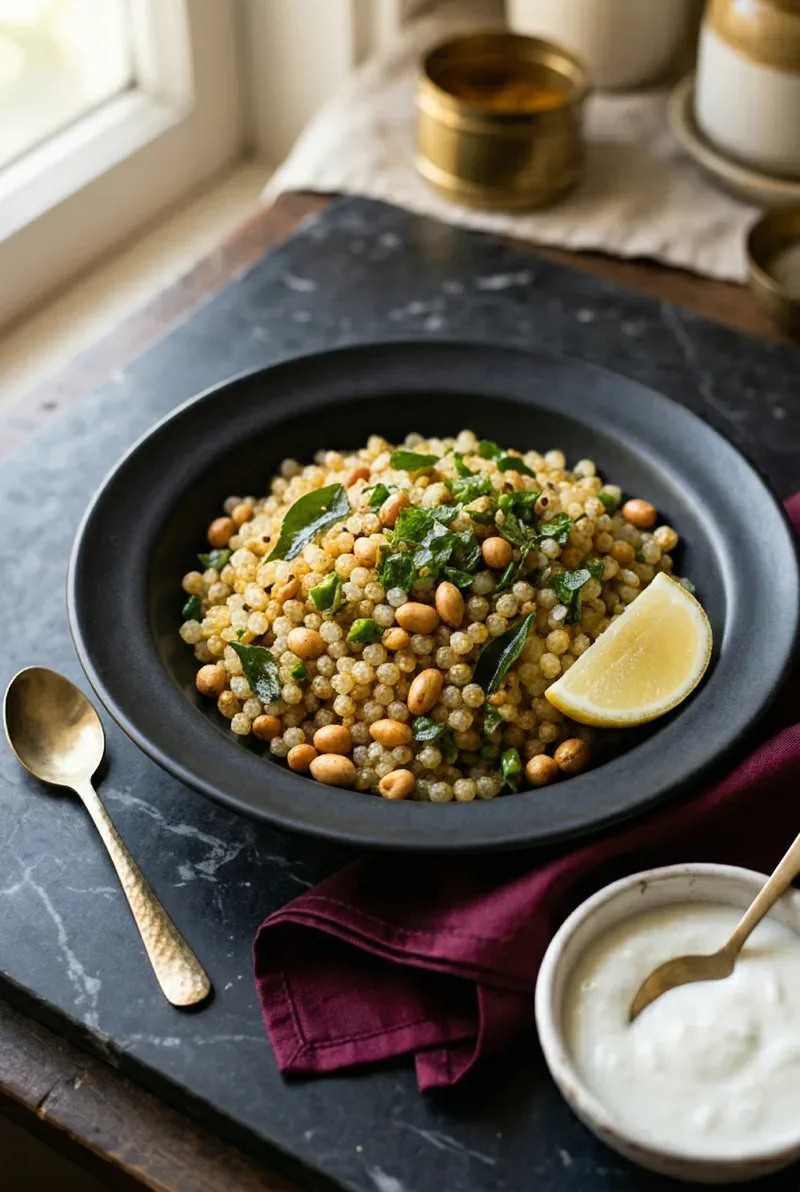
Every Navratri growing up, the first morning of the fast started with this. My mom would have the sabudana soaking from the night before, and by the time we woke up, the kitchen smelled like ghee, curry leaves, and toasted peanuts. I thought she had some secret skill I’d never crack.
I was wrong. My first three attempts at sabudana khichdi produced a sticky, gluey mass that clumped together the moment it hit the pan. After the fourth batch, the one where I finally got the soaking ratio right, I understood: this recipe rewards patience, not talent.
Now it’s the first thing I make on every Ekadashi, every Navratri morning, and on weekdays when I want something light and comforting in under 20 minutes. A few focused tricks around soaking and cooking time are all it takes to get fluffy, perfectly separated pearls every single time.
What is Sabudana?
Sabudana (also called sago or tapioca pearls) is a processed starch extracted from the cassava root. It’s shaped into small pearly balls and is almost entirely carbohydrate — which makes it ideal as a fasting food. It provides quick energy without taxing digestion, which is why it’s been a staple in Hindu fasting traditions across Maharashtra, Gujarat, and North India for generations.
In Maharashtrian and Gujarati homes, sabudana is used during Navratri, Ekadashi, and Mahashivratri to make khichdi, vada, kheer, and papad. It’s naturally gluten-free and, when made with oil instead of ghee, fully vegan.
Why Does Sabudana Khichdi Turn Sticky?
This is the question every home cook asks after their first failed batch. The answer comes down to starch.
Sabudana is coated in powdery starch. If you don’t rinse it away, and if you soak the pearls in too much water, they absorb far more moisture than they can hold. When that oversoaked sabudana hits a hot pan, the excess starch turns into a paste that glues everything together.
The fix is entirely in the prep: rinse properly, use the right water ratio, and cook quickly at high heat. Nothing about the dish itself is difficult once you understand the starch.
Tips for Non-Sticky Sabudana Khichdi
These are the six things that made the difference for me, learned batch by batch:
- Rinse until the water runs clear. Rub the pearls gently in 2-3 changes of water to strip the surface starch. This single step prevents most of the clumping.
- Use 3/4 cup water per 1 cup sabudana. Not more. The pearls should be just barely covered. Too much water = oversaturation = sticky mess.
- Soak for at least 4-6 hours, preferably overnight. The pearls need time to absorb fully. If they’re still firm in the center after soaking, give them another hour.
- Drain well and rest if needed. Spread on a plate for 15-20 minutes if the khichdi still turns sticky for you. This dries out any surface moisture before cooking.
- Crush half the peanuts into a coarse powder. This tip changed everything for me. The peanut powder clings to each soaked pearl and creates a dry, starchy barrier between them. Without it, the pearls press against each other and fuse in the pan’s heat.
- Cook on high heat for 2-3 minutes only. Once sabudana hits the hot pan, move quickly. The moment most of the pearls turn translucent, take it off the heat. Every extra minute increases stickiness.
Pro tip: If your sabudana does clump slightly, squeeze fresh lemon juice over it and gently run a fork through the khichdi. The acid breaks up small lumps immediately.
Ingredients
Here’s what goes into a classic sabudana khichdi recipe: everything already in an Indian pantry, nothing more.
Sabudana (sago pearls): Use the medium-sized pearls. Tiny pearls can turn mushy faster; jumbo pearls take longer to cook through. Look for them at any Indian grocery store.
Peanuts: Raw peanuts are preferred so you can roast them fresh and control the texture. Roast half whole for crunch, crush the other half to a coarse powder for coating.
Ghee or oil: Ghee gives this khichdi its classic flavor, but refined oil works perfectly if you prefer. For vegan, use a neutral oil.
Potatoes: I use boiled potatoes rather than raw for two reasons: they cook faster in the pan, and they don’t crowd out the sabudana’s cook time. Dice them small after boiling.
Sendha namak (rock salt): For fasting, this is non-negotiable. It’s the only salt permitted during Hindu fasts. If making outside of a fast, regular salt is perfectly fine.
Cumin seeds, curry leaves, green chili: These three form the flavor backbone. Keep the chili count moderate — this dish should be mildly spiced, not hot.
Lemon juice + fresh cilantro: Added at the very end, off the heat. The lemon loosens any stuck pearls; the cilantro brightens everything.

How to Make Sabudana Khichdi
Step 1 — Soak the Sabudana (The Night Before)
Rinse 1 cup sabudana in 2-3 changes of water, rubbing gently each time, until the water no longer looks milky. Transfer to a wide bowl and add 3/4 cup fresh cold water. The pearls should be just covered — do not add more.
Soak for 4-6 hours or overnight. In the morning, press a few pearls between your fingers: they should mash completely with no hard center. If they’re still firm, let them soak longer or add a few teaspoons of water and wait another 30 minutes.
Drain completely using a colander. If you have extra time, spread them on a plate for 15-20 minutes before cooking.
Step 2 — Roast the Peanuts
Heat a dry pan over medium flame. Add 4 tablespoons raw peanuts and roast, stirring often, for 5-6 minutes until golden and fragrant. Remove and cool completely.
Once cool, crush about half the peanuts in a small blender or with a rolling pin to a coarse, sandy powder. Set both the whole peanuts and the powder aside separately.
Step 3 — The Tempering
In a wide non-stick pan, heat 1.5 tablespoons ghee (or oil) over medium heat. Add 1/2 teaspoon cumin seeds and let them sizzle for 30 seconds until fragrant.
Add 1-2 slit green chilies and 8-10 fresh curry leaves. Stand back — the curry leaves will sputter in the hot oil. Sauté for 1 minute.
Add the diced boiled potato and sauté for 2 minutes until lightly coated in the tempered oil.

Step 4 — Cook the Khichdi
Turn the heat to high. Add the drained sabudana and the peanut powder directly to the pan. Season with sendha namak (rock salt for fasting) and a small pinch of sugar if you like. Toss well to coat everything evenly.
Cook on high heat for 2-3 minutes, stirring once or twice. Watch the pearls — when most of them turn from white to translucent, the khichdi is done. Do not keep cooking past this point.
Pull the pan off the heat. Add the whole roasted peanuts, squeeze of lemon juice, and a handful of chopped cilantro. Gently toss with a fork.
Serve immediately with a bowl of chilled yogurt.

Sabudana Khichdi (Classic)
Ingredients
Equipment
Method
- Rinse sabudana in 2-3 changes of water, rubbing gently each time, until the water runs clear.
- Place in a wide bowl and add 3/4 cup cold water. The pearls should be just covered — do not add more.
- Soak for 4-6 hours or overnight. Drain completely through a colander before cooking.
- Test readiness by pressing a pearl between your fingers — it should mash easily with no hard center.
- Heat a dry pan over medium flame. Add peanuts and roast for 5-6 minutes, stirring often, until golden and fragrant.
- Remove from heat and cool completely.
- Crush half the peanuts to a coarse, sandy powder using a blender or rolling pin. Keep the rest whole.
- Heat ghee or oil in a wide non-stick pan over medium heat. Add cumin seeds and let them sizzle for 30 seconds until fragrant.
- Add slit green chilies and fresh curry leaves. Stand back — the curry leaves will sputter. Sauté for 1 minute.
- Add diced boiled potato and sauté for 2 minutes until lightly coated in the tempered oil.
- Turn heat to high. Add drained sabudana and peanut powder. Season with sendha namak and sugar if using. Toss well to coat evenly.
- Cook on high heat for 2-3 minutes, stirring once or twice, until most pearls turn translucent. Do not overcook.
- Remove from heat immediately. Add whole roasted peanuts, lemon juice, and cilantro. Toss gently with a fork.
- Serve hot with a bowl of chilled yogurt.
Notes

Serving Suggestions
Sabudana khichdi is most often served with chilled yogurt — the cool, tangy yogurt is the perfect contrast to the warm, mildly spicy khichdi. It’s a combination you’ll see at every Navratri table.
For breakfast, I love it with a cup of masala chai on the side. On fasting days, this combination keeps me satisfied for several hours thanks to the carbs from the sabudana and protein from the peanuts.
You can also pair it with:
- Cucumber raita for a cooling, refreshing side
- A fresh squeeze of pomegranate or a few slices of banana for a complete fasting meal
Variations to Try
With Fresh Coconut: A Maharashtrian touch. Add 2 tablespoons of grated fresh coconut along with the sabudana. It adds a subtle sweetness and keeps the pearls even more separate.
Jowar Sabudana Khichdi: If you want a millet-forward version with more fiber and protein, try our jowar sabudana khichdi — it uses jowar (sorghum) pearls alongside sabudana and has become a weekday favorite in our home. Pair it with easy rice kheer for a complete Navratri fasting menu.
Kid-friendly version: Skip the green chili entirely and add a tiny pinch of freshly ground black pepper instead. The mildness of the dish makes it a hit with toddlers — the soft, chewy texture is easy to eat.
FAQs
Q1. Can I add onion and garlic to sabudana khichdi?
Yes, if you’re not making it for fasting. Sauté the onion in the oil before adding the potato, and add minced garlic with the curry leaves. The dish transforms into a heartier, more aromatic version.
Q2. What is sendha namak and can I substitute it?
Sendha namak is rock salt, a minimally processed form of salt traditionally used during Hindu fasts because it’s considered pure and permissible. It has a slightly milder, cleaner taste than table salt. If you’re not fasting, regular table salt or sea salt works perfectly well.
Q3. Is sabudana khichdi gluten-free?
Yes, completely. Sabudana is a starch derived from cassava, which is naturally gluten-free. This recipe contains no wheat, barley, or rye.
Q4. Is this recipe vegan?
It is when made with oil. Traditional recipes use ghee, which contains dairy. Simply swap ghee for refined coconut oil, sunflower oil, or any neutral oil for a fully vegan dish.
Q5. Can I make sabudana khichdi without potatoes?
Yes. Many people skip potatoes or replace them with boiled sweet potato for a slightly sweeter version. You can also add raw peanuts in larger quantity to compensate for the bulk.
Q6. My sabudana turned sticky — what went wrong?
Most likely one of three things: too much water during soaking, pearls were oversoaked and too wet, or cooked too long in the pan. Next time, check the 3/4 cup water ratio strictly, drain really well (rest on a plate if needed), and take the pan off the heat the moment the pearls turn translucent.
Closing
Sabudana khichdi is one of those dishes that looks simple but reveals its technique slowly. Once you understand the soaking ratio and trust the 3-minute high-heat cook, it becomes one of the most reliable and comforting things in your kitchen rotation.
Whether you’re making it for Chaitra Navratri this April, for an Ekadashi fast, or just for a light wholesome breakfast, this classic version will not let you down.
If you try this recipe, I’d love to hear from you: what’s your secret to making it non-sticky? Has something here changed how you make it? Leave a comment below and let me know.
Made this? Share a photo and tag @petitepaprika on Instagram — I love seeing your kitchen creations!
