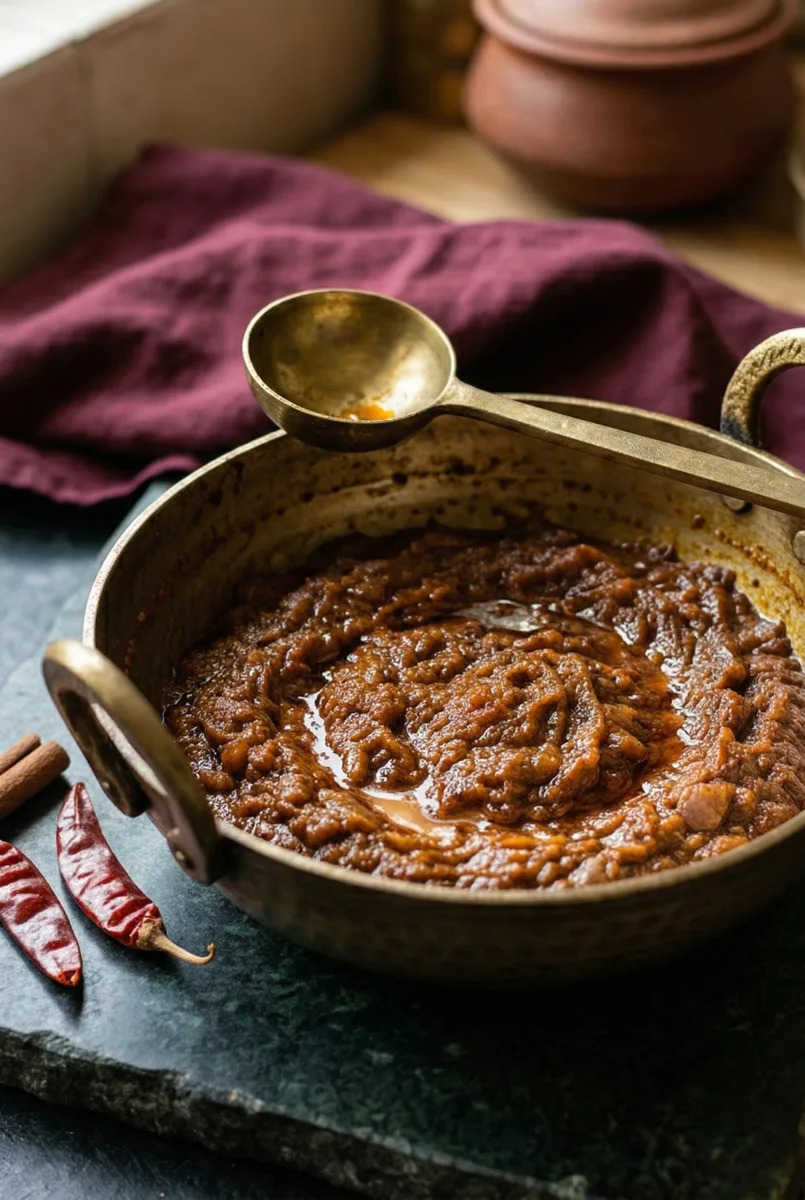
Every Sunday, I make a big pot of this onion tomato masala and my whole week transforms. Tuesday dinner — done in 20 minutes. A last-minute guest on Thursday — sorted. The kind of cooking that feels effortless because the hardest part is already done.
This is the base that sits quietly in my freezer, doing all the heavy lifting. It’s behind our ringan bateka nu shaak, our rajma, the palak dal that’s become this site’s most loved recipe. Once you start batch-cooking this, you won’t go back.
What Is Onion Tomato Masala?
Onion tomato masala — or pyaz tamatar masala in Hindi — is the foundational curry base used in Indian home kitchens across the country. Think of it as a mother sauce: one deeply flavored paste made from slow-cooked onions, tomatoes, ginger, garlic, and a handful of whole and ground spices.
Unlike restaurant-style gravies that lean on cashew cream or butter, this is genuine homestyle cooking. No heavy cream, no shortcuts. Just patient stovetop cooking that builds real depth. The result is a vibrant, reddish-brown paste that smells like a full Indian kitchen on a weekend morning.
You might also hear it called bhuna masala (named after the bhuno frying technique), Indian curry base, or simply tamatar masala. Whatever you call it, the idea is the same: cook it once, use it all week. It’s the closest thing Indian home cooking has to a flavor shortcut that doesn’t feel like a shortcut.
Why Make It in Batches?
The single most time-consuming part of making any Indian curry is building the masala base — caramelizing onions, cooking down tomatoes, blooming spices. When you make a big batch once, you skip that 30-minute step for the rest of the week.
Here’s how I portion mine:
- 2 tablespoons = enough for one sabzi (side dish) for 2-3 people
- ¼ cup = base for a full dal or curry for 4
- ½ cup = a big pot of rajma or chole for the whole family
I freeze it in silicone muffin trays (each cup holds about ¼ cup), pop them out once solid, and transfer to a zip-lock bag. Eight cubes in the freezer and I have a month of weeknight dinners waiting.

How to Make Onion Tomato Masala
Step 1: Caramelize the Onions
Heat oil in a heavy-bottomed pot over medium heat. Add the whole spices — bay leaf, cinnamon, cardamom, cloves, cumin seeds — and let them sizzle for 30 seconds until fragrant. Don’t rush this; burning the spices here will make the whole batch bitter.
Add the chopped onions and a pinch of salt. Cook on medium-low heat, stirring every few minutes, for 20-25 minutes. This is the step you cannot shortcut. The onions need to go from raw to translucent to pale golden to a deeper amber-brown. That caramelization is what gives the masala its sweetness and body.

Step 2: Add Ginger, Garlic, and Ground Spices
Once the onions are deep golden, add the ginger and garlic. Cook for 2 minutes until the raw smell disappears. Then lower the heat and add all the ground spices. Add a splash of water (2-3 tbsp) to prevent burning. Stir constantly for 1-2 minutes until the spices are toasted and fragrant.
Step 3: Add the Tomatoes
Add the chopped tomatoes and salt. Stir everything together and cover with a lid. Cook on medium-low heat for 10 minutes until the tomatoes soften and start to break down.

Step 4: Bhuno Until the Oil Separates
Remove the lid and increase heat to medium. Now comes the bhuno step — the slow, active frying that builds the final flavor. Mash the tomatoes with the back of your spoon as you stir. Cook for another 8-10 minutes, stirring regularly, until the mixture thickens and you see little pools of oil appearing around the edges and on the surface. That oil separation is your signal: the masala is done.
The color should be a deep reddish-brown, not orange. If it still looks bright orange, keep cooking.

Step 5: Finish and Cool
Add the garam masala, stir for 30 seconds, and turn off the heat. Remove the cinnamon stick and bay leaf. Let the masala cool for 10 minutes before blending or portioning.
For a smooth texture: blend to a paste. For chunky, rustic curries: leave it as-is.
Instant Pot / Pressure Cooker Method
If you want to skip the stovetop babysitting, the Instant Pot makes a very respectable version — not quite as deeply caramelized as stovetop, but excellent for weekly meal prep.
- Set Instant Pot to Sauté — High. Add oil and let it heat up.
- Add whole spices and sizzle for 30 seconds.
- Add onions with a pinch of salt. Sauté, stirring occasionally, for 15-20 minutes until golden-brown. Don’t skip this step.
- Add ginger and garlic, stir-fry for 1-2 minutes.
- Add ground spices and 2-3 tbsp water, stir for 1 minute.
- Add tomatoes. Scrape the bottom of the pot well to lift any stuck bits. Add ¼ cup water and stir.
- Cancel Sauté. Secure the lid, set valve to Sealing, pressure cook on High for 5 minutes.
- Natural pressure release (about 10-15 minutes).
- Open, remove cinnamon stick and bay leaf. Blend to your preferred texture.
Burn error tip: If using canned tomatoes, they release less liquid than fresh. If you get a burn notice, add an extra ½ cup water before sealing. You can always simmer after pressure cooking to thicken back up.

10 Recipes You Can Make with This Base
This masala is the quiet engine behind some of the most-loved recipes on this site. Here’s exactly how much to use for each:
- Palak Dal — stir in ¼ cup while the dal simmers. This is genuinely how I make our most popular recipe every single time.
- Ringan Bateka Nu Shaak (brinjal and potato sabzi, Gujarati style) — 2-3 tbsp + cubed eggplant and potatoes + ¼ cup water, cover and cook 15 minutes.
- Paneer Tikka Quinoa Bowl — swap the tikka marinade sauce layer with 2 tbsp of this masala thinned with a splash of water for an earthier, homestyle version.
- Rajma (kidney bean curry) — ½ cup masala + 2 cans drained kidney beans + 1 cup water. Simmer 20 minutes. Done.
- Aloo Capsicum Gravy — instead of a dry stir-fry, add ¼ cup masala + ½ cup water with the potatoes and capsicum for a saucy gravy sabzi. Pair with instant pot jeera rice.
- Aloo Gobi Gravy — same as above with cauliflower florets; the masala base turns a dry sabzi into a restaurant-style curry.
- Karela Nu Shaak — 2 tbsp masala base adds depth to the bitter gourd without overpowering it.
- Chana Masala — ½ cup base + 2 cans chickpeas + 1 cup water + kasuri methi + amchur. 20 minutes to a proper chana masala.
- Lentil Soup / Tadka Dal — swirl in 2 tbsp just before serving for instant flavor depth.

Onion Tomato Masala
Ingredients
Equipment
Method
- Heat oil in a heavy-bottomed pot over medium heat. Add the whole spices — bay leaf, cinnamon, cardamom, cloves, cumin seeds — and sizzle for 30 seconds until fragrant.
- Add the chopped onions and a pinch of salt. Cook on medium-low heat, stirring every few minutes, for 20-25 minutes until deep amber-brown. Do not rush this step.
- Add the ginger and garlic. Cook for 2 minutes until the raw smell disappears.
- Lower the heat, add all the ground spices and 2-3 tbsp water. Stir for 1-2 minutes until toasted and fragrant.
- Add the chopped tomatoes and remaining salt. Stir, cover, and cook on medium-low for 10 minutes until tomatoes soften.
- Uncover and increase heat to medium. Mash the tomatoes with the back of your spoon and cook for 8-10 minutes, stirring regularly, until the mixture thickens and oil pools appear at the edges. This oil separation means the masala is done.
- Add garam masala, stir for 30 seconds, and turn off the heat. Remove the cinnamon stick and bay leaf.
- Cool for 10 minutes. Blend to a paste for smooth curries, or leave chunky for rustic sabzi.
- Set Instant Pot to Sauté — High. Add oil and heat up. Add whole spices and sizzle for 30 seconds.
- Add onions with a pinch of salt. Sauté for 15-20 minutes, stirring occasionally, until golden-brown.
- Add ginger and garlic. Stir-fry for 1-2 minutes.
- Add ground spices and 2-3 tbsp water. Stir for 1 minute.
- Add tomatoes. Scrape the bottom of the pot well to prevent the burn error. Add ¼ cup water and stir.
- Cancel Sauté. Secure lid, set valve to Sealing. Pressure cook on High for 5 minutes.
- Natural pressure release (10-15 minutes). Remove cinnamon stick and bay leaf. Blend to preferred texture.
Notes
Freezing: Cool completely, then spoon into silicone muffin trays (¼ cup per well). Freeze until solid, unmold, and store in a labeled zip-lock bag for up to 3 months.
To use from frozen: Drop frozen cubes directly into a hot pan — they melt in about 2 minutes. No thawing needed.
How much to use: 2 tbsp per small sabzi (2 servings), ¼ cup per medium curry or dal (4 servings), ½ cup for a big pot of rajma or chole (6-8 servings).
Jain / no-allium version: Skip onion and garlic. Use 1 tsp asafoetida (hing) in hot oil before adding tomatoes.
Burn error (IP): If using canned tomatoes, add an extra ½ cup water before pressure cooking. Scrape the pot bottom thoroughly after sautéing.
Tomato tip: Roma tomatoes work best (lower water content = thicker masala). Canned tomatoes produce a slightly deeper-colored masala.
Freeze Your Onion Tomato Masala: Storage Guide
Refrigerator: Store in an airtight jar for up to 5-7 days. Pour a thin layer of oil over the surface to preserve freshness.
Freezer (recommended for batch cooking):
- Let the masala cool completely.
- Spoon into silicone muffin trays or ice cube trays.
- Freeze for 4-6 hours until solid.
- Unmold and transfer to a labeled zip-lock freezer bag.
- Use within 3 months for best flavor.
To use from frozen: no need to thaw. Drop frozen cubes directly into a hot pan or pot — they melt within 2 minutes.
This freeze-your-curry-base method is genuinely the best Indian meal prep habit I’ve picked up. Once you have onion tomato masala in your freezer, you’ll find yourself reaching for it constantly. It’s the difference between “I need to cook for 45 minutes” and “dinner is ready in 20.” A labeled bag of frozen masala cubes is one of the most useful things you can have in your kitchen.
FAQs
Can I use canned tomatoes instead of fresh?
Yes, absolutely. Use one 400g can of diced or crushed tomatoes in place of 4 fresh tomatoes. The masala will be slightly smoother and the color a bit deeper. Fresh tomatoes give a brighter, slightly more complex flavor — but canned works perfectly well, especially in winter.
How long does onion tomato masala keep in the fridge?
Up to 7 days in an airtight container. Keep a layer of oil on top to prevent oxidation. For anything longer than a week, freeze it.
Can I freeze it?
Yes — in fact, this is the main reason to make a big batch. Freezes beautifully for up to 3 months. Portion in ¼ cup or ½ cup amounts so you only thaw what you need.
How much masala do I use per dish?
A rough guide: 2 tbsp for a small side dish (2 servings), ¼ cup for a medium curry (4 servings), ½ cup for a large pot (6-8 servings). Adjust based on how saucy you want it — add water to thin.
What’s the difference between onion tomato masala and bhuna masala?
Essentially the same thing — “bhuno” just refers to the frying technique used to cook the masala down until the oil separates. Some recipes call it bhuna masala to emphasize the technique. This recipe uses the bhuno method, so the terms are interchangeable.
Is this recipe vegan and gluten-free?
Yes on both counts. Use a neutral plant-based oil (not ghee) to keep it fully vegan. There’s no wheat or gluten in the recipe — just vegetables, spices, and oil.
This onion tomato masala has saved dinner more times than I can count. The first time I made a big Sunday batch and used it for three different meals that week, I remember thinking: this is the real meal prep hack. Not fancy grain bowls — just this pot of deeply-cooked Indian curry base sitting in my fridge, ready to go.
Make a batch this weekend. Your Tuesday-night self will thank you.
Made this? Share a photo and tag @petitepaprika on Instagram — I love seeing your kitchen creations!
