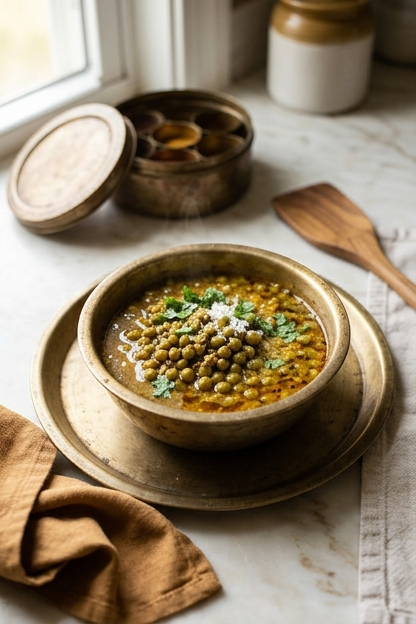
Every December growing up, the moment tuver lilva showed up at the Indian grocery store was a small celebration. My mum would buy a kilo of fresh pods, and we’d sit together in the evening shelling them, pod by pod, chatting about nothing in particular. The smell of mustard seeds crackling in hot oil, followed by the earthy sweetness of tuver lilva nu shaak hitting the pan, is one of those scents that instantly takes me back to a Gujarati winter kitchen.
This is one of those recipes I’ve been meaning to post for ages. It doesn’t need much: a handful of spices, some fresh coconut, and the lilva themselves. And the good news for those of us cooking outside India? Frozen tuvar lilva from any Indian grocery store works beautifully year-round.
Let’s make it.
What Is Tuver Lilva?
Tuver lilva (also spelled lili tuvar or tuvar na dana) are fresh green pigeon peas, harvested before they dry out into the toor dal you likely already use in dal fry or sambar. In Gujarati, “lilva” means fresh or green, and “tuver” refers to pigeon peas. Tuver lilva nu shaak simply means fresh pigeon pea curry.
Fresh lilva are only available during the Indian winter, roughly November through February. In Gujarat, their arrival marks the start of the winter vegetable season alongside valor (papdi), undhiyu, and green garlic. They carry a distinctive grassy sweetness that dried toor dal can’t replicate.
Fresh vs. Frozen: What to Buy
If you’re cooking in the US, UK, or Canada, look for frozen tuvar lilva in the freezer section of Indian grocery stores. Deep and Vadilal are the most widely available brands. Frozen works just as well as fresh in this recipe. Add them straight from the freezer, no need to thaw, and cook for an extra 2-3 minutes.
One thing I’ve noticed: frozen lilva cook a little faster than fresh because the freezing process partially breaks down the cell walls. Check them at the 12-minute mark on the stovetop.
Why You’ll Love This Shaak
- Ready in under 30 minutes from start to finish
- Naturally vegan and gluten-free
- No onion, no garlic: Jain-friendly in the traditional version (just a little green garlic for a mild seasonal flavour)
- Works with both fresh and frozen lilva
- High in plant protein and fibre: fresh pigeon peas pack more protein per cup than most vegetables
- Easy to pair with bajra rotlo or jowar roti for a nourishing winter thali
Ingredients
(Exact quantities in the recipe card below)
- Fresh or frozen tuvar lilva — the star
- Neutral oil, mustard seeds, cumin seeds, asafoetida (hing)
- Green chillies and fresh green garlic (or 1-2 garlic cloves)
- Turmeric, coriander-cumin powder (dhana-jeera), salt
- Grated fresh coconut and roasted peanut powder: both are classic Gujarati additions that add texture and a gentle richness
- Fresh coriander for garnish

How to Make Tuver Lilva Nu Shaak
Pressure Cooker Method (Faster)
- Heat oil in a pressure cooker over medium heat. Add mustard seeds and let them splutter. Add cumin seeds, asafoetida, and green chillies. Stir for 30 seconds.
- Add the tuver lilva and stir to coat in the spiced oil.
- Add turmeric, dhana-jeera, salt, and 2-3 tablespoons of water.
- Close the lid and pressure cook for 2 whistles on medium heat.
- Allow the pressure to release naturally, then open the lid. If there’s extra liquid at the bottom, cook uncovered for 1-2 minutes until it evaporates.
- Stir in grated coconut and peanut powder. Taste and adjust salt.
- Garnish with fresh coriander and serve hot.
Stovetop Method
- Heat oil in a wide kadai or pan over medium heat. Add mustard seeds and let them pop. Add cumin seeds, asafoetida, and green chillies. Stir for 30 seconds.
- Add the tuver lilva, turmeric, dhana-jeera, and salt. Stir well to combine.
- Add 3-4 tablespoons of water. Cover and cook on medium-low heat for 15-18 minutes, stirring once or twice, until the lilva are tender throughout.
- Uncover and cook for 2-3 minutes until any remaining water evaporates and the shaak looks dry and glossy.
- Add grated coconut, peanut powder, and fresh coriander. Serve immediately.
Tip from my kitchen: The first time I made this on the stovetop I used too much water and ended up with a watery shaak. Start with 3 tablespoons and resist adding more. Tuver lilva release their own moisture as they cook.

Serving Suggestions
The Millet Thali Pairing
The most traditional way to eat this shaak is with bajra rotlo or jowar roti. It’s a combination that kept generations of Gujarati families warm and well-fed through winter: plant protein and fibre from the lilva, complex carbohydrates from the millet. Simple, complete, and genuinely satisfying.
For a fuller thali, add a bowl of Gujarati dal on the side. If you want something to start, khatta meetha white dhokla is a wonderful Gujarati pairing. And if someone at the table prefers rice, Instant Pot jeera rice works beautifully too.
Variations to Try
Lili Tuvar Bataka Nu Shaak: Add 1-2 medium potatoes, diced into small cubes, along with the lilva. The potato absorbs the spices and makes the shaak more substantial. This is probably the most common home-cooked version.
Ringan Tuvar Nu Shaak: Add small cubed eggplant (brinjal) along with the lilva for a smoky, richer variation. Check out my ringan bateka nu shaak for a detailed guide to the technique.
Valor Ane Tuver Nu Shaak: Combine tuver lilva with valor (flat beans/papdi): both are in season at the same time and cook at roughly the same pace. The combination is a Surati classic.
Storage and Make-Ahead Tips
Tuver lilva nu shaak keeps well in the refrigerator for up to 3 days in an airtight container. Like most Gujarati sabzis, the flavours deepen overnight, which makes it a great dish to cook a day ahead.
For longer storage, let it cool completely and freeze in portions for up to 2 months. Reheat in a pan with a tiny splash of water to loosen it up.
Recipe

Tuver Lilva Nu Shaak (Fresh Pigeon Pea Curry)
Ingredients
Equipment
Method
- Heat oil in a pressure cooker (or kadai) over medium heat.
- Add mustard seeds. Once they splutter, add cumin seeds, asafoetida, and green chillies. Stir for 30 seconds.
- Add green garlic and stir for another 30 seconds until fragrant.
- Add tuver lilva. Stir to coat in the spiced oil.
- Add turmeric, dhana-jeera, salt, and water. Stir to combine.
- Pressure cooker: Close lid and cook for 2 whistles on medium heat. Allow pressure to release naturally. If water remains, cook uncovered for 1-2 minutes.
- Stovetop: Cover and cook on medium-low for 15-18 minutes, stirring once or twice. Uncover and cook 2-3 minutes more until the shaak looks dry and glossy.
- Add grated coconut and peanut powder. Stir through.
- Taste and adjust salt. Garnish with fresh coriander. Serve hot.
Notes
FAQs
What is tuver lilva in English?
Tuver lilva are fresh green pigeon peas, harvested before they dry out. When dried and split, the same legume becomes toor dal, used in dal fry, sambar, and dal tadka. The fresh form is sweeter and has a completely different texture.
Can I use dried toor dal instead?
No. Dried toor dal is already split and hulled, and it would turn mushy here. The texture and flavour of this shaak depends on the firmness and sweetness of fresh or frozen green pigeon peas. There’s no substitute.
Can I use frozen tuvar lilva?
Absolutely. Frozen tuvar lilva (Deep or Vadilal brands, available at most Indian grocery stores) work just as well as fresh. Add them directly from frozen, no thawing needed. They’ll cook in about 12-14 minutes on the stovetop.
Is this recipe vegan and gluten-free?
Yes, it’s naturally vegan and gluten-free. One note: some brands of asafoetida (hing) contain wheat flour as a filler. Check the label if you’re strictly gluten-free, or use a certified GF hing.
Can I make this Jain-friendly?
The traditional recipe is already onion-free. To make it fully Jain, skip the green garlic and add a tiny extra pinch of cumin instead. The rest of the recipe stays the same.
How do I know when the lilva are cooked?
Press one between your fingers: it should feel tender with no chalky or hard centre. If it still feels firm, cover and cook for 3-4 more minutes. Overcooked lilva will start to split and lose their shape, so check frequently toward the end.
Tuver lilva nu shaak is one of those recipes that proves the most seasonal, unpretentious ingredients make the most memorable meals. Whether you grew up eating this every December or you’re trying it for the first time, I hope it finds a regular spot in your winter thali.
What’s your family’s version? Do you add bataka, ringan, or keep it plain? Leave a comment below. I’d love to know.
Made this? Share a photo and tag @petitepaprika on Instagram. I love seeing your kitchen creations!
