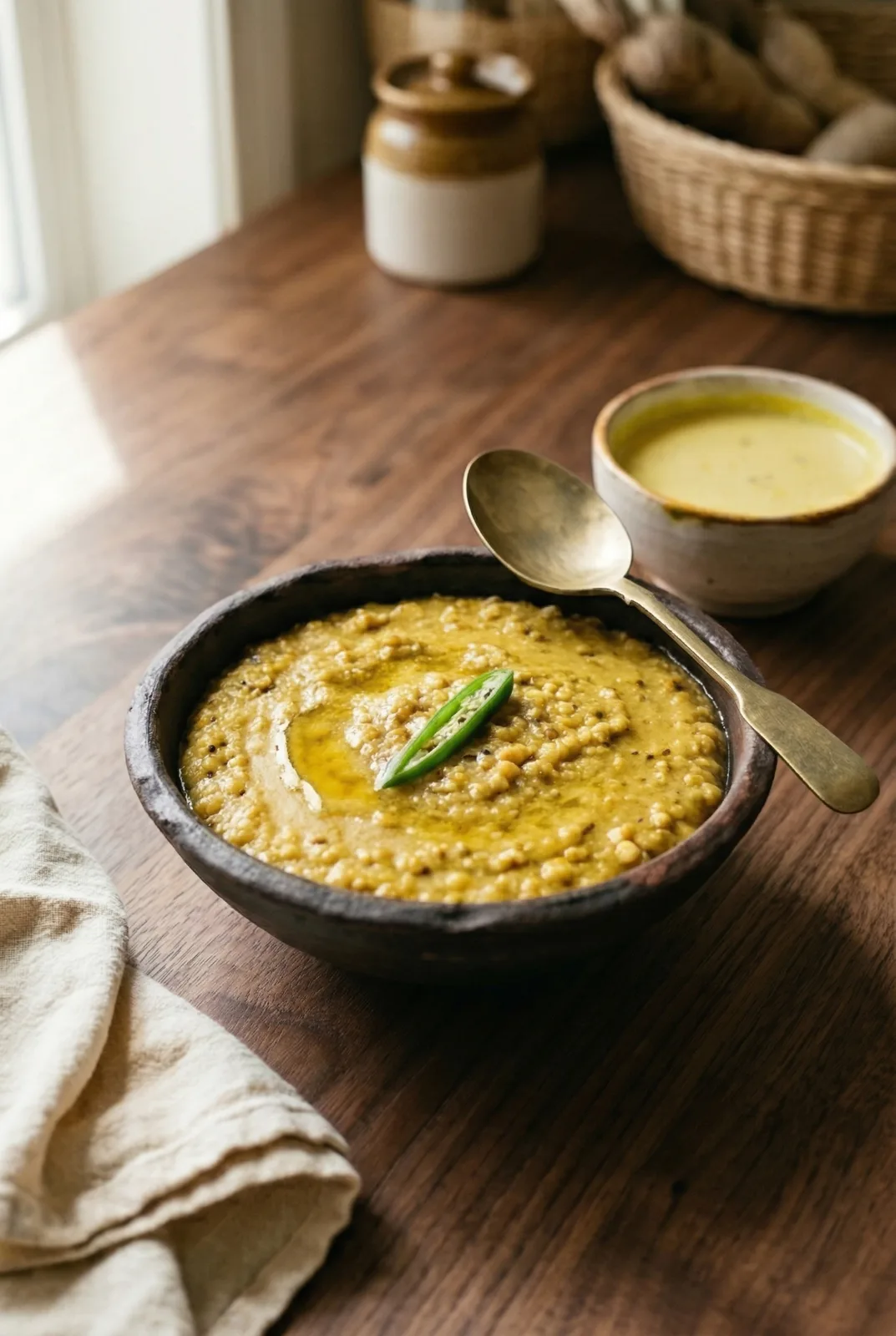
Cold evenings in December call for bajra khichdi. Not rice khichdi. The pearl millet kind: thick and earthy, piled high with a puddle of ghee that slowly melts into the bowl. I grew up eating it at my nani’s house in Ahmedabad every winter, and I still think of her kitchen whenever I crack open a bag of bajra.
This Bajra Khichdi is the classic Rajasthani version. Whole soaked bajra cooked down with yellow moong dal until it turns creamy and porridge-like. No rice. That’s the authentic way. I make it in the Instant Pot now, and it’s become one of my most-made weeknight dinners from October through February.
If you’re new to bajra, this is the perfect first recipe. And if you have a baby or toddler at home, keep reading. I’ve included a full section on how to adapt it for little ones.
What Is Bajra Khichdi?
Bajra (Pearl Millet) is one of the oldest cultivated grains in India, and one of the most underrated. In Rajasthan and Haryana, winter meals center around bajra: bajra roti, bajra raab, and this khichdi. The grain is considered “heaty” in Ayurvedic tradition, meaning it generates warmth in the body, which is exactly why it’s a cold-weather staple.
Traditional bajre ki khichdi is made without rice. The soaked millet and split moong dal cook together until thick, creamy, and almost porridge-like. It looks different from your regular dal khichdi, but the process is similar. The secret is generous ghee and a proper tadka poured over at the end.
Think of it as the Rajasthani equivalent of congee: deeply nourishing, endlessly customizable, and perfect when you want something warm without a lot of fuss. If you’ve made my jowar sabudana khichdi before, you’ll recognise the same approach: one grain, simple spices, big flavour.
Why You’ll Love This Recipe
- ✅ One pot, hands-free: the Instant Pot does all the work
- ✅ Gluten-free and vegetarian: naturally free of both
- ✅ High in iron and plant protein: great for postpartum recovery and winter wellness
- ✅ Baby and toddler friendly: easy to adapt for first millet introduction (8 months+)
- ✅ Ready in under 35 minutes (after soaking)
- ✅ Vegan-adaptable: just swap the ghee
Ingredients for Bajra Khichdi

Main Ingredients
- 1 cup whole bajra (pearl millet), soaked overnight or 8+ hours
- ½ cup yellow split moong dal (dhuli moong dal), rinsed
- 4–4.5 cups water (plus more for soaking)
- 1 tsp salt, or to taste
- ¼ tsp turmeric powder
For the Tadka (Tempering)
- 2 tbsp ghee (or oil for vegan)
- 1 tsp cumin seeds
- A generous pinch of asafoetida (hing)
- 1 tsp grated ginger (optional but recommended)
- 1–2 green chillies, slit (optional)
Ingredient Notes
- Bajra: I use whole bajra (round millet kernels), not cracked bajra flour. If using cracked bajra, reduce soaking time to 2 hours and add 2 extra minutes of pressure cooking.
- Moong dal: Yellow split moong is the traditional choice. It dissolves into the base and creates that creamy texture. You can use green split moong (chilka moong) for a heartier, slightly nuttier result.
- Ghee: Don’t be shy here. Ghee makes bajra khichdi what it is. Traditional Rajasthani cooks use a full tablespoon per serving, and the fat actually helps your body absorb the iron in the millet.
- Vegan swap: Use cold-pressed coconut oil or any neutral oil in place of ghee. The flavour is different but still delicious.
How to Make Bajra Khichdi in the Instant Pot
Step 1: Soak the Bajra
Rinse the bajra 2–3 times and cover with plenty of cold water. Soak overnight, or for at least 8 hours. The grains will swell noticeably and turn slightly lighter in colour.
Drain and rinse again before cooking.
Forgot to soak? No problem. Skip to the pressure cooker step, but add 5 extra minutes on Manual/High (total 15 minutes) and increase water to 5 cups. The texture won’t be quite as smooth, but it works.
Step 2: Pressure Cook
Add the soaked bajra, rinsed moong dal, water, salt, and turmeric to the Instant Pot liner.
Set to Manual / Pressure Cook: High, 10 minutes. Seal the vent.
Once the cooking cycle ends, allow a natural pressure release for 10 minutes, then carefully quick-release any remaining pressure.
When you open the lid, the khichdi will look a little liquidy and the bajra will be soft but intact. That’s correct.
Step 3: Mash and Stir
Using the back of a ladle or a potato masher, mash the bajra and dal vigorously for about a minute. This is the traditional technique: it breaks down some of the grains and creates that characteristic thick, creamy consistency.
Don’t skip this step. The khichdi will look too watery straight from the pot, but it thickens as you stir and mash. If you want a softer consistency, add a splash of hot water after mashing.
Texture note: Bajra khichdi is meant to be looser than rice khichdi. If yours looks like thick porridge after mashing, you’ve nailed it.
Step 4: Make the Tadka
Heat ghee in a small pan or tadka ladle over medium heat. Add the cumin seeds and let them sizzle for 20–30 seconds until fragrant. Add the asafoetida, then the ginger and green chillies if using. Stir for another 30 seconds.
Pour the tadka directly over the khichdi and stir it in.
Taste and adjust salt before serving.
Stovetop Pressure Cooker Method
Add soaked bajra, moong dal, water, salt, and turmeric to a pressure cooker. Cook on high heat for 1 whistle, then reduce to medium and cook for 4–5 more whistles. Allow pressure to release naturally. Mash, temper, and serve as above.

Serving Suggestions
In Rajasthan, bajra khichdi is almost always served with kadhi, a thin yogurt-based curry. This is my favourite combination too. The tangy kadhi cuts right through the richness of the ghee-soaked khichdi.
Other classic pairings:
- A tall glass of chaas (buttermilk) with cumin and salt
- Mango pickle, green chutney, kadhi or Fajeto on the side
- A drizzle of extra ghee and crushed jaggery (my nani’s way: sweet and savoury in one bowl)
- A simple karela nu shaak for a bitter contrast
Bajra Khichdi for Babies and Toddlers
Bajra is one of the best first millets to introduce to babies. It’s a good source of iron, calcium, and essential amino acids, all of which matter during the first year of growth.
When to introduce: Most pediatricians suggest starting millet-based foods around 8–10 months, once your baby is comfortable with single-ingredient purees. Always introduce one new ingredient at a time and watch for reactions. Check with your pediatrician before introducing any new food.
What to change for babies under 1:
- Skip the hing (asafoetida) and green chillies
- Skip salt entirely (under 1 year)
- Use only ghee or unsalted butter, not oil substitutes, for very young babies
- Cook an extra 5 minutes and mash more thoroughly for a smoother texture
- Thin with warm water or breast milk to the right consistency for their age
For toddlers (1–3 years):
- A small pinch of hing is fine
- Mild salt is okay
- Keep the green chilli out, or reduce to just half a slit chilli in the tadka for gentle flavour
My daughter had bajra khichdi with just ghee and a very soft mash at around 9 months, and she cleared her bowl. The earthy, slightly nutty flavour of bajra is mild enough that most babies take to it well.
Storage for baby portions: Portion out the unseasoned khichdi (before tadka) into small containers and refrigerate for up to 2 days. Add fresh ghee and a tiny tadka when reheating.
Nutrition Highlights
Bajra (pearl millet) is one of the most nutrient-dense grains used in Indian cooking:
- Iron: ~8 mg per 100g raw bajra, one of the highest among cereal grains (great for vegetarians managing iron levels)
- Calcium: Notably higher than wheat and rice, supporting bone health
- Magnesium: Supports muscle function and sleep
- Fibre: Keeps digestion slow and steady, good for blood sugar management
- Plant protein: ~11g per 100g raw millet
- Naturally gluten-free: safe for celiac and gluten-sensitive households
Adding moong dal boosts the amino acid profile. Together, bajra and moong make a more complete protein than either alone. And the ghee isn’t just for flavour: fat-soluble vitamins and iron absorption both improve when eaten with healthy fats.
This is a particularly good meal for postpartum recovery, winter immunity support, and introducing iron-rich foods to babies.
Tips for the Best Bajra Khichdi
- Don’t skip the soak. Overnight soaking is what makes whole bajra cook evenly and mash well. Unsoaked bajra stays gritty no matter how long you pressure cook it.
- Water ratio matters. 4 cups gives a thicker porridge. 4.5 cups gives a slightly looser, more pourable result. Bajra absorbs a lot of water as it sits. I usually go with 4.5 cups and let it thicken naturally.
- Stir and mash vigorously. The creaminess comes from breaking down the cooked grains. Spend a full minute stirring after the Instant Pot opens.
- Reheat with water. Bajra khichdi thickens significantly in the fridge. Add 2–3 tbsp water per serving and stir over low heat until loose again. It reheats beautifully.
- Store: In an airtight container in the refrigerator for up to 3 days. Freeze portions for up to 1 month.

Bajra Khichdi (Instant Pot) | Rajasthani Pearl Millet Khichdi
Ingredients
Equipment
Method
- Rinse bajra 2–3 times and soak in cold water for at least 8 hours or overnight. The grains will swell and lighten in colour.
- Drain and rinse the soaked bajra before cooking.
- Add soaked bajra, rinsed moong dal, water, turmeric, and salt to the Instant Pot liner.
- Close the lid and seal the vent. Set to Manual / Pressure Cook: High, 10 minutes.
- Once the cycle ends, allow natural pressure release for 10 minutes, then carefully quick-release remaining pressure.
- Open the lid — the khichdi will look loose and watery. This is correct.
- Use a potato masher or the back of a ladle to mash and stir vigorously for 1 full minute. The khichdi will thicken and become creamy.
- Add a splash of hot water if you prefer a looser consistency.
- Heat ghee in a small pan over medium heat. Add cumin seeds and sizzle for 20–30 seconds.
- Add asafoetida, ginger, and green chillies if using. Stir for 30 seconds.
- Pour the tadka over the khichdi, stir to combine, and taste for salt.
Notes
FAQs
Q1. Can I make bajra khichdi without soaking?
Yes, but the texture won’t be the same. If you’re short on time, add 5 extra minutes of pressure cooking time and increase water by ½ cup. The bajra will cook through but won’t mash as smoothly. You’ll still get a good result, just less creamy than the soaked version.
Q2. Is bajra khichdi good for babies?
Yes! Bajra is a good source of iron and calcium, which are important for babies in the first year. Introduce it around 8–10 months, skip salt and spices for very young babies, and mash or thin to the appropriate texture for their age. Always check with your pediatrician when introducing new foods.
Q3. What is the difference between bajra khichdi and regular khichdi?
Regular dal khichdi uses rice as the base grain. Bajra khichdi uses pearl millet instead. No rice at all. The texture is different too: bajra khichdi is looser, creamier, and more porridge-like. It also has a mild earthy flavour that’s very different from rice-based khichdi.
Q4. Can I use green moong dal instead of yellow moong dal?
Yes. Green split moong (chilka moong) works well and adds a slightly nuttier, more textured result. Whole green moong can also work but needs longer soaking (4+ hours) and may not break down as smoothly. Yellow split moong gives the creamiest result and is the most traditional.
Q5. Why does bajra khichdi look watery when it’s done cooking?
This is completely normal! Bajra khichdi is meant to look loose right out of the Instant Pot. The mashing step is what creates the thick, creamy consistency. After mashing, the khichdi will also continue to thicken as it sits for a few minutes. Don’t be tempted to cook it longer. It will over-thicken and dry out.
Q6. How do I store and reheat bajra khichdi?
Store in an airtight container in the refrigerator for up to 3 days. To reheat, add 2–3 tablespoons of water per serving and stir over low heat until it loosens. You can also microwave with a splash of water, covered, for 1–2 minutes. It freezes well for up to 1 month.
Bajra khichdi is the kind of recipe I come back to every winter without fail. Simple, deeply nourishing, and genuinely comforting. A grain that grows in dry Rajasthani heat, cooked into something that warms you from the inside out. There’s real wisdom in that.
Whether you’re making it for yourself on a tired weeknight, serving it alongside kadhi for a full Rajasthani dinner, or spooning a gentle mash for a curious baby, this recipe will not let you down.
If you’re on a millet streak, try my lemon foxtail millet rice next, or go straight for dessert with a warm bowl of millet kheer.
Are you new to bajra, or do you already cook with it regularly? Drop a comment below. I’m always curious how people are bringing millets into their kitchens.
Made this? Share a photo and tag @petitepaprika on Instagram. I love seeing your kitchen creations!
