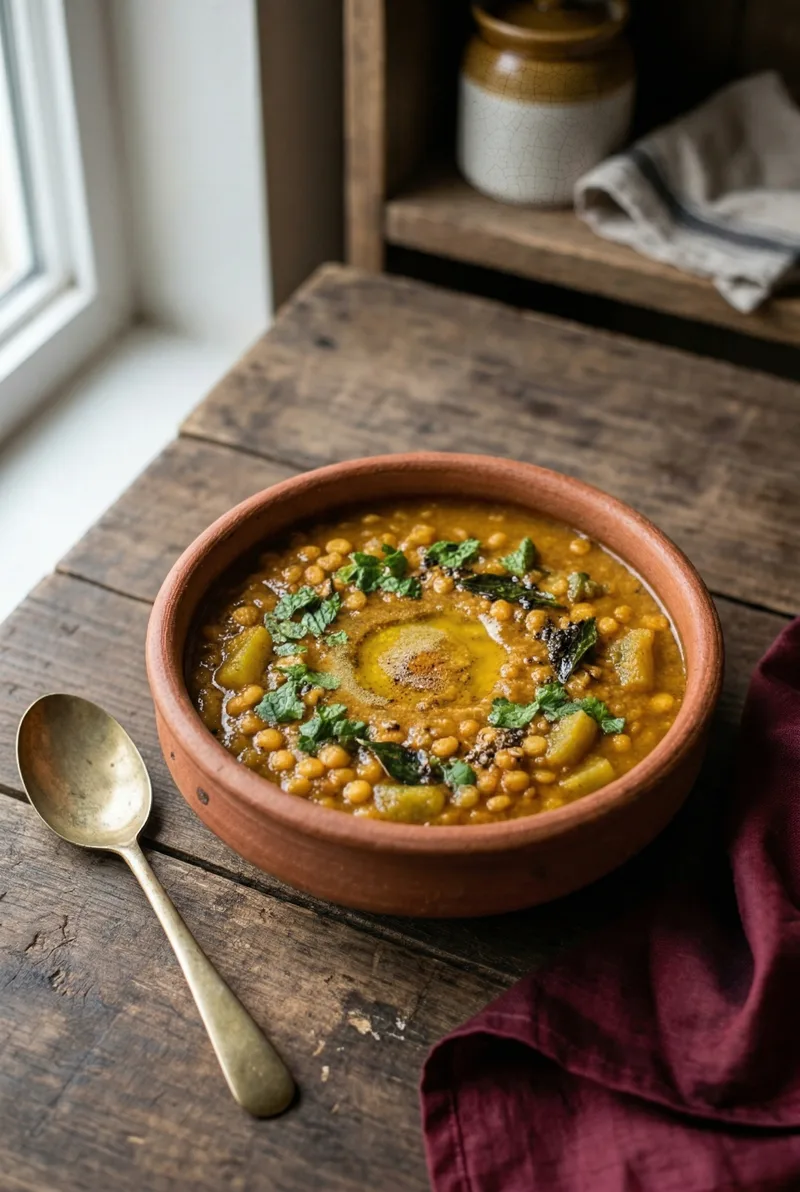
There are some recipes that don’t need an occasion. My mother-in-law makes dudhi chana dal almost every other week in summer, when bottle gourd floods the market and the fridge always has one hiding at the back. It’s not a fancy recipe. But the first time I ate it at her home, sitting on the kitchen floor while she ladled it over hot rotli, I remember thinking: how does something this simple taste this good?
The secret, I later learned, is the tempering. Hing hitting hot oil, a proper masala cooked until the oil separates, and a spoonful of tamarind and jaggery stirred in right at the end. That khatta-meetha finish is what makes this unmistakably Gujarati.
Dudhi chana dal (also called lauki chana dal in North India) is an everyday Gujarati shaak made with bottle gourd and split Bengal gram. It’s saatvik, made without onion or garlic, which means it’s naturally Jain-friendly and perfect for those days when you’re cooking light. And because it cooks in one pot in under 45 minutes, it’s become one of my go-to weeknight dinners all through shravan month.
Come make it with me. I promise, even the dudhi skeptics in your house will ask for seconds.
What is Dudhi Chana Dal?
Dudhi (also called lauki, ghia, or doodhi) is a bottle gourd, a long pale green vegetable that’s mild in flavor and incredibly high in water content. In Gujarati households it shows up in everything from khichdi to muthiya to halwa. But dudhi chana nu shaak (the traditional Gujarati name for this dish) is where dudhi truly shines.
Chana dal is split Bengal gram, a lentil that holds its shape after cooking, unlike moong dal which tends to dissolve. It adds body, protein, and an earthy richness that turns simple bottle gourd into something genuinely satisfying.
Together, cooked in a light tomato masala with the signature Gujarati touch of tamarind and jaggery, this bottle gourd chana dal is somewhere between a sabzi and a curry. Thick enough to scoop with roti, saucy enough to pour over rice.
Why You’ll Love This Dudhi Chana Dal
- Saatvik and no-onion/no-garlic, naturally Jain-friendly
- High in protein and fiber: chana dal packs around 8g protein per serving
- One pot, 45 minutes total, minimal cleanup
- Perfect for shravan month or any saatvik day
- Lunchbox-friendly: packs well, reheats beautifully
- A genuine lauki-hater converter


Dudhi Chana Dal (Authentic Gujarati Style)
Ingredients
Equipment
Method
- Rinse the chana dal under cold water until the water runs mostly clear. Soak in enough water for at least 30 minutes. Drain completely before cooking.
- Add the soaked chana dal, cubed dudhi, turmeric, salt, and 1.5 cups water to your pressure cooker. Close the lid and cook on medium heat for 3–4 whistles.
- Allow the pressure to release naturally. Open the lid and gently stir. The dal should be soft but still holding its shape, and the dudhi should be fork-tender.
- Heat oil or ghee in a kadai over medium heat. Once hot, add mustard seeds and let them pop. Add cumin seeds and hing, count to 10 until fragrant.
- Add the dried red chilli and slit green chillies. Saute for 30 seconds.
- Add the chopped tomatoes with a pinch of salt. Cook, stirring occasionally, for 6–8 minutes until the tomatoes are completely soft and the oil separates from the masala.
- Add red chilli powder and dhana-jeeru. Stir and cook for 1 more minute.
- Pour the cooked dal and dudhi into the masala. Stir well and bring to a gentle simmer on low heat for 5 minutes.
- Add tamarind pulp and jaggery. Taste and adjust for the khatta-meetha balance. Add garam masala and stir through.
- Finish with fresh coriander and serve hot.
Notes
How to Make Dudhi Chana Dal
Step 1: Soak and Pressure Cook
Rinse the chana dal under cold water until the water runs mostly clear. Soak in enough water for at least 30 minutes (up to 1 hour if you have time). Drain completely before cooking.
Add the soaked and drained chana dal, cubed dudhi, turmeric, salt, and 1.5 cups water to your pressure cooker. Close the lid and cook on medium heat for 3-4 whistles. Allow the pressure to release naturally. Open the lid and gently stir. The dal should be soft but still holding its shape, not mushy, and the dudhi should be fork-tender.
Step 2: Make the Masala
Heat oil or ghee in a kadai or medium saucepan over medium heat. Once hot, add the mustard seeds and let them pop. Add the cumin seeds and hing, and count to 10 until fragrant. Add the dried red chilli and slit green chillies and saute for 30 seconds.
Add the tomatoes with a pinch of salt. Cook, stirring occasionally, for 6-8 minutes until the tomatoes are completely soft and the oil begins to separate from the masala. This step matters: rushing here makes the dal taste raw.
Add the red chilli powder, dhana-jeeru, and stir to combine. Cook for another minute.
Step 3: Combine and Finish
Pour the cooked dal and dudhi into the masala. Stir well and bring to a gentle simmer on low heat for 5 minutes. The dal will thicken as it sits.
Add the tamarind pulp and jaggery. Taste and adjust: you’re looking for a gentle balance between sour and sweet, with the heat coming through quietly. Add garam masala and stir through. Finish with fresh coriander.
Serve hot.

Instant Pot Method
Prefer the Instant Pot? Here’s how to adapt it:
Set the Instant Pot to Saute mode. Add oil, and once hot, add mustard seeds, cumin, hing, dried red chilli, and green chillies. Let them sizzle for 30 seconds. Add tomatoes and a pinch of salt and cook, stirring, for 5-6 minutes until soft and mashable.
Add red chilli powder and dhana-jeeru. Stir for 1 minute.
Add the soaked and drained chana dal, dudhi, salt, and 1.5 cups water. Mix well. Seal the lid, set the vent to Sealing, and cook on Manual / High Pressure for 8 minutes. Allow natural pressure release.
Open the lid, add tamarind pulp, jaggery, and garam masala. Stir, taste, and adjust. Finish with coriander. Keep on Saute mode for 2-3 minutes if you’d like a thicker consistency.
Expert Tips
- Don’t skip soaking the chana dal. Unsoaked dal takes significantly longer to cook and can come out unevenly textured. Even 30 minutes makes a difference.
- Dudhi should not be mushy. If your pieces are very small, reduce the pressure cook time to 2-3 whistles. The dudhi should be fork-tender, not falling apart.
- Tamarind and jaggery at the end, always. Adding them too early can cause the dal to taste slightly bitter after pressure. Stir them in after opening the cooker.
- For Instant Pot: Always add garam masala after pressure cooking. Pressure destroys the top notes of garam masala; it’ll taste flat if added before.
- Texture check: The finished dal should be semi-thick, scoopable with roti but not stiff. It thickens further as it sits, so add a splash of water when reheating.
- Ghee makes it better. If you’re not keeping it strictly oil-based, a tablespoon of ghee in the tempering adds a depth that’s hard to replicate.
Serving Suggestions
At our home, this dal is almost always served with Gujarati rotli, the thin, soft flatbread that’s slightly different from a regular roti. But it works equally well with:
- Bhakri: the rustic millet flatbread, especially bajra or jowar bhakri in winter
- Basmati rice or jeera rice: serve the dal slightly thinner, almost like a sabzi-curry hybrid — try it with this Instant Pot Jeera Rice
- As part of a Gujarati thali: pair it with padwali roti, a small bowl of Gujrati dal, rice, rotli, and a simple kachumber
For lunchboxes, pack the dal and rice or rotli separately. The dal sits well for several hours and the flavors actually deepen by lunchtime.
If you love dal as a weeknight staple, Palak Dal is another one that never gets old in our kitchen.
Storage and Make-Ahead
- Fridge: Store in an airtight container for up to 3 days. The dal thickens on cooling. Add 2-3 tablespoons of water and reheat on the stovetop or microwave, stirring once or twice.
- Freezer: Freezes well for up to 3 months. Thaw overnight in the fridge and reheat gently. The dudhi will be slightly softer after freezing, but the flavor holds.
- Make-ahead tip: Cook the chana dal and dudhi together a day ahead and refrigerate. Make the fresh masala tempering just before serving, combine, and bring to a simmer for 5 minutes. This makes the dal taste closer to freshly made.
FAQs
Q1. Can I skip soaking the chana dal?
You can, but I’d recommend against it. Unsoaked chana dal needs significantly more time to cook through, and even with extra whistles, you may end up with dal that’s soft on the outside but still grainy inside. Thirty minutes of soaking is enough to make a real difference.
Q2. Is this recipe saatvik and Jain-friendly?
Yes. This recipe uses no onion and no garlic. It’s saatvik and suitable for everyday Jain cooking, ekadashi, and shravan month. If you’re following a completely root-vegetable-free diet, check your specific dietary guidelines, as dudhi is a ground-grown vegetable.
Q3. Can I use moong dal instead of chana dal?
Yes. Yellow moong dal is a milder, quicker-cooking substitute. Reduce the pressure cook time by 1-2 whistles and skip the soaking step. The result will be softer and slightly more soupy, but still delicious. You can also use toor dal, though it changes the flavor profile toward a more South Indian-style dish.
Q4. What other vegetables can I add?
Spinach works beautifully: stir a large handful into the finished dal and let it wilt for 2 minutes. Potatoes can be added with the dudhi before pressure cooking for a heartier version. Some families add grated raw dudhi directly into the masala for a thicker base.
Q5. Can I make this without a pressure cooker?
Yes, on the stovetop, but plan for 40-50 minutes of simmering time. Soak the chana dal for at least 1 hour, then cook covered in a heavy pot with 3 cups of water until the dal is soft. The dudhi goes in during the last 15 minutes of cooking.
Q6. Is dudhi chana dal good for weight management?
It’s a nourishing, balanced meal. Bottle gourd is low in calories and very high in water content, while chana dal has one of the lowest glycemic indexes among legumes. Together, they’re filling without being heavy. The total dish is around 220-250 kcal per serving.
More Dal Recipes You’ll Love
Dudhi chana dal is one of those recipes that reminds you how deeply satisfying simple food can be. The dal doesn’t try to be more than what it is: honest, hearty, and warm. But that Gujarati tempering, and that small spoonful of tamarind and jaggery stirred in at the end, it’s what keeps everyone coming back to the pot for more.
I make this nearly every summer, and more often during shravan month when our household goes fully saatvik. If you’ve been avoiding dudhi because it seems boring, this is the recipe that changes that.
If you try it, I’d love to know: do you go with tamarind or lemon juice? And are you a rotli family or a rice family? Leave a comment below and let me know.
Made this? Share a photo and tag @petitepaprika on Instagram — I love seeing your kitchen creations!
