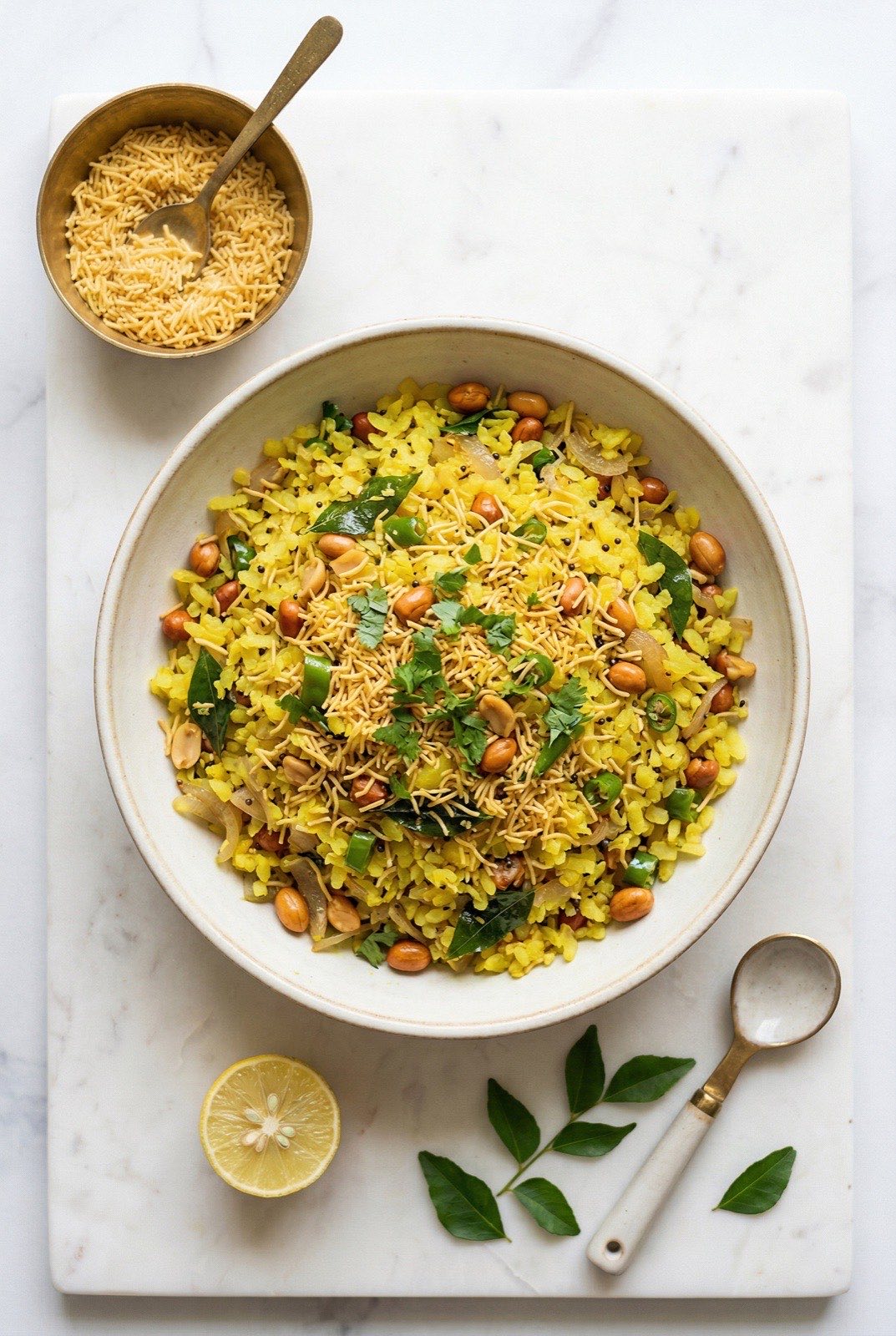

This kanda poha recipe comes down to one step that matters above all others: how you rinse the poha. Get that right, and the rest practically cooks itself. I learned this the slow way, after years of watching my mom make it back home, and then turning out a soggy pan when I moved to Mumbai.
Growing up in Gujarat, we made batata poha with a pinch of sugar and no onion. When I started cooking in a Maharashtrian city, I quickly adopted the kanda (onion) version: sharper, more savory, with mustard seeds and curry leaves that made the whole kitchen smell like breakfast was coming. This kanda poha recipe is my daily version, the Maharashtrian technique with a small Gujarati touch I cannot let go.
It comes together in 20 minutes, uses pantry staples you likely already have, and works for everyone at the table: vegan, gluten-free, and genuinely filling without being heavy.
What is Kanda Poha?
Poha (also spelled pohe in Marathi) is flattened or beaten rice, parboiled, rolled flat, and dried. It cooks almost instantly because most of the work has already been done.
Kanda poha is the Maharashtrian name for the most popular version: poha cooked with kanda (onion), mustard seeds, curry leaves, green chili, and peanuts. You will find it at every Maharashtrian breakfast table, street stall, and railway station. In Gujarat, the variation is called batata poha (with potato and a pinch of sugar). In Madhya Pradesh, Indori poha gets a totally different garnish: sev, pomegranate seeds, and fennel seeds served alongside jalebi.
All three are worth making. This recipe focuses on the Maharashtrian kanda style, with notes on the Gujarati variation I grew up eating.
Why You’ll Love This Recipe
- Ready in 20 minutes: weekday breakfast without the stress
- Naturally vegan and gluten-free (rice-based, no dairy)
- Iron-rich: a nourishing start for vegetarian diets
- One pan, minimal cleanup
- Endlessly customizable: variations below for every preference
- Kid-friendly and great for a school tiffin box
Ingredients You’ll Need

For the poha
- 2 cups thick poha (flattened rice)
- 2 tablespoons oil (neutral, like sunflower or refined groundnut)
- 1 teaspoon mustard seeds
- 8-10 curry leaves
- 2-3 green chilies, finely chopped (adjust to heat preference)
- 1 medium onion, finely chopped
- 1 medium potato, peeled and cut into very small cubes (optional: skip for a lighter version)
- 1/4 cup roasted peanuts
- 1/4 teaspoon turmeric powder
- 1 teaspoon sugar (this is the Gujarati touch: traditional Maharashtrian omits it; use or skip)
- Salt to taste
- Juice of half a lemon
For garnish
- 2 tablespoons fresh coriander (cilantro), chopped
- 2-3 tablespoons fine sev
- Shredded fresh coconut (optional)
What Kind of Poha to Use
Always use thick poha for this recipe. Thin poha absorbs water too fast and turns mushy before it reaches the pan. Thick poha holds its shape after rinsing and stays pleasantly firm once cooked.
Color is up to you. White poha is the standard and what most recipes use. Red poha (made from red rice) has a slightly nuttier flavor, higher fiber content, and a lower glycemic index. I use red poha at least half the time now: it cooks the same way, it just looks a little different in the pan.
How to Make Kanda Poha Recipe
Step 1: Rinse the poha (the most important step)
Place the poha in a colander or strainer. Run cold water over it for 8-10 seconds: just enough to moisten every flake. Shake the strainer gently. Leave it to rest for 5 minutes.
After resting, check a flake: press it gently between two fingers. It should flatten easily without crumbling and should not feel wet or sticky. That is the right texture.
Do not soak the poha in a bowl of water. Do not let water sit in the strainer. Excess moisture is the only reason poha turns mushy.
Step 2: Cook the potato (if using)
Heat oil in a wide pan over medium heat. Add the potato cubes and cook for 6-8 minutes, stirring occasionally, until just tender and lightly golden at the edges. Remove from the pan and set aside.
If you are skipping the potato (I often do on rushed mornings), start directly at Step 3.
Step 3: Build the tempering
In the same pan, heat oil if needed. Add mustard seeds. When they crackle, about 30 seconds, add the curry leaves, green chilies, and peanuts. Stir for 1 minute until the peanuts are slightly golden and fragrant.
Add the chopped onion. Cook for 3-4 minutes over medium heat until the onion softens and turns translucent. Do not brown it.
Step 4: Season and add the poha
Add turmeric powder and salt to the pan. Stir to coat the onion evenly. Add the cooked potato back in if using.
Add the rinsed poha. Add sugar if using. Stir gently to mix everything without breaking the flakes. Work with a light hand here: the poha is delicate.
Step 5: Rest and finish
Cover the pan with a lid. Cook on low flame for 2 minutes. Open the lid and stir once. Cover again and cook for 1 more minute.
Turn off the heat. Keep covered for 2 minutes before serving: the residual steam finishes the job without overcooking.
Before serving, add lemon juice and toss gently. Garnish with coriander, sev, and coconut if using. Serve immediately.

Petite Paprika Tips for Perfect Poha
- No soaking, ever. Running water for 8-10 seconds is the right method. More water equals mush.
- Use thick poha. Thin poha does not survive the tempering process intact.
- Resting time matters. The 2-minute covered rest at the end makes the poha fluffier. Do not skip it.
- Onion size matters. A large onion, finely chopped, gives better texture and sweetness than a small one.
- Peanuts must go in early. Add them with the mustard seeds so they have time to roast properly. Raw peanuts added late taste flat.
- Lemon juice goes in last. Adding it during cooking dulls the brightness. Add it right before serving.
Variations to Try
Indori Poha
The Madhya Pradesh version skips potato and onion in the base and uses fennel seeds in the tempering instead of mustard seeds. It is served topped with sev, pomegranate seeds, grated raw mango or lemon juice, and sometimes fresh coconut. Often served alongside jalebi: sweet and savory together. Add a sprinkle of chaat masala on top for authenticity.
Gujarati Batata Poha
This is what I grew up eating. Add 1 teaspoon sugar (sometimes more: my grandmother’s hand was generous), increase the potato, and reduce or skip the onion. The flavor is softer and sweeter than the Maharashtrian version. Some families in Gujarat also add a handful of green peas.
Add-In Variations
- Green peas: Add 1/4 cup along with the onion for color and sweetness
- Carrot: Grate finely and add with the onion: adds texture and nutrition
- Spinach: Add a handful of baby spinach in the last 30 seconds, toss to wilt
- Corn: Frozen sweet corn works well; add with the onion
Red Poha Version
Substitute red poha 1:1 for white poha. The rinsing and cooking method is identical. Red poha has more fiber and a slightly nuttier taste. If anything, it is slightly more forgiving because the thicker texture holds up even if slightly over-rinsed.
Health Benefits of Poha
Poha is one of the most nourishing quick breakfasts in Indian cooking.
- Iron-rich: Dry poha contains approximately 3.9mg of iron per 100g, a meaningful contribution toward daily iron needs, especially important for vegetarians. Pair it with a squeeze of lemon juice (which this recipe includes) and the vitamin C helps your body absorb that iron better.
- Light and easy to digest: The flattening process makes poha easier on digestion than whole grain rice. It is a popular choice as a first solid food for babies and a go-to during illness recovery in Indian households.
- Naturally gluten-free: Made from rice, poha contains no gluten. It is a reliable option if you are cooking for someone with gluten sensitivity.
- Sustained energy: The carbohydrate base with protein from peanuts makes it genuinely filling without the heaviness of a paratha or puri breakfast.
Serving Suggestions
Kanda poha is traditionally served with masala chai: the spiced, milky Indian tea. The savory-spiced flavor of the poha pairs perfectly with a strong, slightly sweet chai. My kadak ginger chai is exactly the right match: bold, gingery, made the way it should be.
For a full breakfast spread, add a small bowl of cucumber raita on the side. The cooling yogurt balances the heat from the chili. For another quick Indian breakfast pairing that comes together in minutes, Methi Thepla is a great addition to a weekend spread.
If you are packing poha in a school tiffin or lunch box, add the sev and lemon separately so the poha does not go soggy. Skip the coconut garnish for longer transport.

Kanda Poha Recipe (Maharashtrian Kande Pohe)
Ingredients
Equipment
Method
- Place poha in a colander or strainer. Run cold water over it for 8-10 seconds — just enough to moisten every flake.
- Shake the strainer gently to drain excess water. Leave to rest for 5 minutes.
- Check a flake by pressing between two fingers: it should flatten easily without crumbling and feel neither wet nor sticky.
- Heat oil in a wide pan over medium heat. Add potato cubes and cook for 6-8 minutes, stirring occasionally, until just tender and lightly golden at the edges.
- Remove from the pan and set aside. Skip this step if not using potato.
- In the same pan, heat oil if needed. Add mustard seeds and let them crackle, about 30 seconds.
- Add curry leaves, green chilies, and peanuts. Stir for 1 minute until the peanuts are slightly golden and fragrant.
- Add the chopped onion. Cook for 3-4 minutes over medium heat until the onion softens and turns translucent. Do not brown it.
- Add turmeric powder and salt. Stir to coat the onion evenly.
- Add the cooked potato back in if using.
- Add the rinsed poha and sugar (if using). Stir gently to combine without breaking the flakes — work with a light hand.
- Cover the pan with a lid. Cook on low flame for 2 minutes.
- Open the lid, stir once, then cover again and cook for 1 more minute.
- Turn off the heat. Keep covered for 2 minutes: the residual steam finishes cooking without overdoing it.
- Add lemon juice and toss gently. Garnish with coriander, sev, and fresh coconut if using. Serve immediately.
Notes
FAQs
Can I make kanda poha without potato?
Yes, and many people do. Omitting the potato makes it lighter and faster (skips the 8-minute sauté step). The flavor is good: the onion and peanuts carry the dish.
Is poha healthy for weight loss?
Poha is moderate in calories and reasonably high in fiber if you use red poha. The peanuts add fat and protein that keep you full longer. It is not a diet food, but as a wholesome breakfast that replaces something heavier, it works well in a balanced diet.
How do I store leftover poha?
Poha is best eaten fresh: it keeps resting in steam and the texture changes as it cools. If you have leftovers, store in an airtight container in the fridge for up to 1 day. Reheat in a pan over low heat with 1-2 teaspoons of water, covered, for 2 minutes. It will not be quite as fluffy as fresh, but it is still good.
Can I make poha ahead of time?
Not really: it is a 20-minute recipe and best made fresh. You can prep the vegetables (chop onion, potato, chilies) the night before and store in the fridge to save time in the morning.
Is poha gluten-free?
Yes. Poha is made from rice and contains no gluten. Check that your poha brand has no added wheat starch or contamination if you have celiac disease.
Why is my poha mushy?
Almost always the rinsing. Either too much water or soaking rather than running water through quickly. The fix: rinse for 8-10 seconds only, shake off excess, and let the poha rest in the strainer for 5 minutes before using.
Can I use thin poha?
Thin poha is harder to work with for this recipe because it absorbs water fast and breaks easily. If thin poha is all you have, rinse it even more briefly (4-5 seconds) and be gentle when stirring. Thick poha is strongly preferred.
Closing
Kanda poha is one of those recipes that sounds deceptively simple but has strong opinions about how it should be made, and the people who grew up eating it will notice the difference. Once you get the rinse right and learn to trust the rest time at the end, this kanda poha recipe becomes the breakfast you reach for without thinking.
Whether you make it Maharashtrian-style with onion, Gujarati-style with a touch of sugar, or throw in whatever vegetables are in your fridge, it is going to be good. The 20 minutes are real. The cleanup is minimal.
Which style did you grow up eating: kanda, batata, or Indori? Leave a comment and tell me. I love knowing which version is the family recipe.
Made this? Share a photo and tag @petitepaprika on Instagram. I love seeing your kitchen creations!
