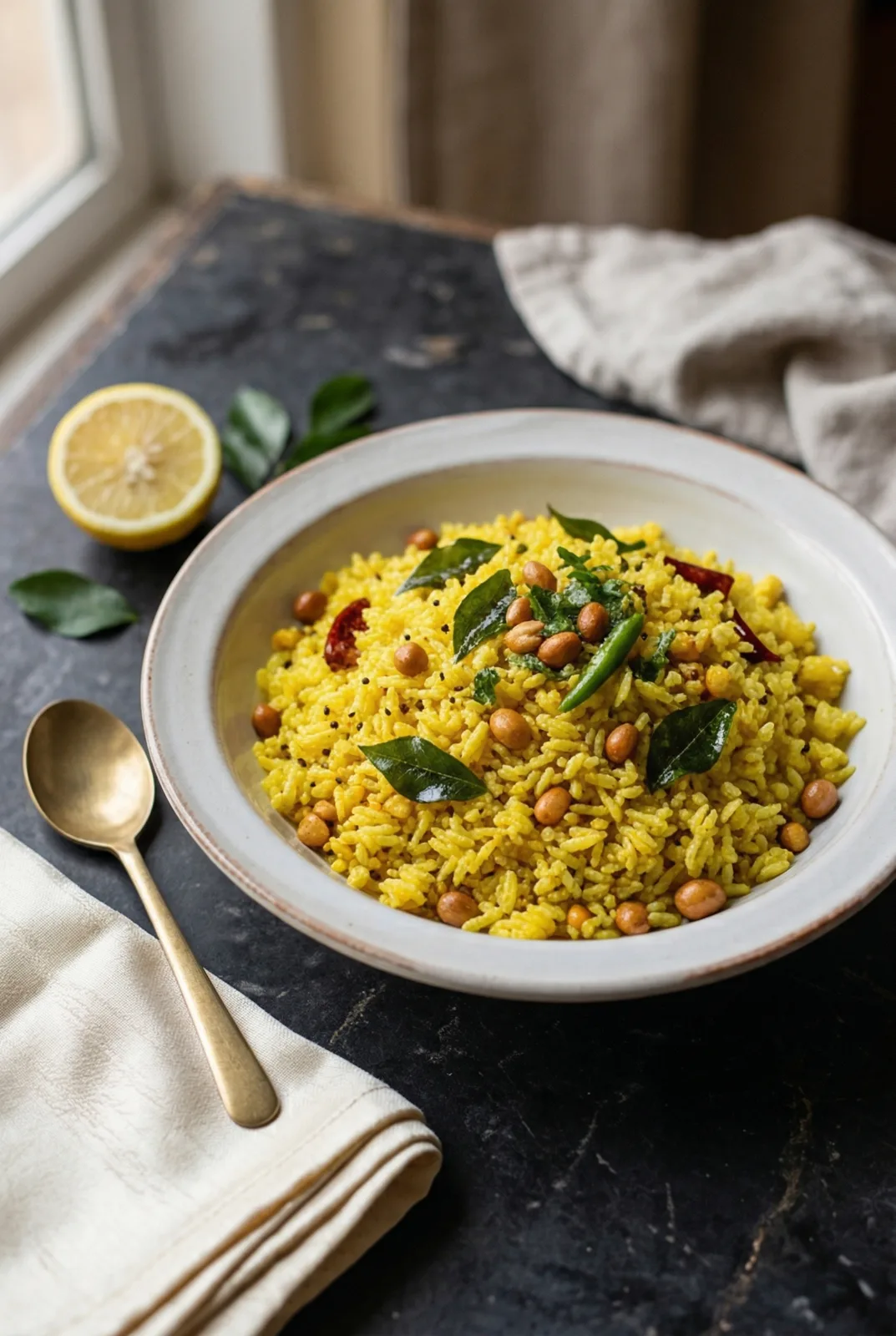
Growing up, the smell of mustard seeds hitting hot oil was the signal that something good was happening in the kitchen. That sharp, nutty pop meant tempering. And when curry leaves followed, trailing a cloud of turmeric, it usually meant one thing: lemon rice.
The first time I had lemon rice as a proper, made-with-love dish was as temple prasadam on a family trip to a Vaishnava temple in Karnataka. No onion, no garlic, just jewel-yellow rice flecked with peanuts and curry leaves. I ate two helpings and thought about it the whole drive home.
This is that recipe. A classic South Indian lemon rice without onion garlic — called Chitranna in Kannada and Elumichai Sadam in Tamil — that comes together in 20 minutes with pantry staples you likely already have. Naturally vegan, gluten-free, Jain-friendly, and Paryushan-safe, it is one of the most versatile rice dishes in Indian cooking. Make it once and it becomes your default answer for “what’s for lunch?”
What is Chitranna?
Chitranna (pronounced chih-tran-nah) is a South Indian rice dish from Karnataka, where “chitra” means “variegated” and “anna” means “rice.” The result is exactly that: rice flecked with yellow turmeric, green curry leaves, red chillies, and golden peanuts.
It has deep roots in temple cooking. Across Vaishnava temples in Karnataka and Tamil Nadu, lemon rice is one of the rice preparations offered as prasadam, which is precisely why it is made without onion or garlic. That tradition is not a compromise. It is the original. In Tamil Nadu, the same dish goes by Elumichai Sadam (elumichai = lemon), and variations appear across Andhra Pradesh, where it is eaten on Ugadi, the Telugu and Kannada New Year.
Why You’ll Love This Recipe
- ✓ No onion, no garlic — Jain-friendly, Paryushan-safe, Navratri prasadam-ready, and a true temple style lemon rice
- ✓ Ready in 20 minutes — with leftover rice, even faster
- ✓ Great hot or at room temperature — built for lunchboxes and travel
- ✓ Naturally vegan and gluten-free — no substitutions needed
- ✓ Kid-friendly — mild heat (adjustable), nutty, and a little tangy
- ✓ Works as a full meal or a side — pairs with dal, kadhi, or plain curd
Health Benefits of Lemon Rice
This dish looks simple, but every element in the tempering earns its place:
- Turmeric contains curcumin, a compound with well-documented anti-inflammatory properties
- Lemon juice provides 18–20mg of vitamin C per tablespoon, which helps your body absorb non-heme iron from plant foods — particularly useful when eaten alongside a dal
- Chana dal contributes protein and fiber to what would otherwise be a pure carb dish (roughly 8g protein per 100g cooked)
- Roasted peanuts add healthy fats and a solid hit of protein
- Curry leaves are rich in carbazole alkaloids, compounds shown to have antioxidant activity
For vegetarian and Jain households where complete protein through a single dish is the goal, the combination of chana dal, urad dal, and peanuts does a lot of the work quietly.
Ingredients

The Rice
- 2 cups cooked rice, cooled (sona masoori or long-grain; day-old refrigerated rice works best)
- ½ teaspoon turmeric powder
- 3 tablespoons fresh lemon juice, divided (about 1.5 medium lemons)
- Salt to taste
For the Tempering
- 2 tablespoons oil (peanut oil gives the best flavor; sunflower works too)
- 1 teaspoon mustard seeds
- 1 teaspoon chana dal (split chickpeas)
- 1 teaspoon urad dal (split black gram)
- 2 dried red chillies, broken in half
- 2–3 green chillies, slit lengthwise (adjust to taste)
- 1 sprig fresh curry leaves (10–12 leaves)
- ½ inch fresh ginger, finely grated
- ¼ teaspoon hing (asafoetida) — see Jain/Paryushan note below
Roasted Peanuts
- 3 tablespoons raw peanuts (skins on)
Garnish
- Fresh coriander leaves, roughly chopped
- Lemon wedges for serving
Jain & Paryushan Note: This lemon rice without onion garlic is completely Jain-friendly as written. For strict Paryushan observers, two small adjustments: skip the hing (asafoetida, which some Jains avoid during Paryushan) and skip the ginger if your practice excludes root vegetables during the festival. The rice is full-flavored either way. For a Jain-friendly millet version, see my lemon foxtail millet rice recipe.

South Indian Lemon Rice (Chitranna)
Ingredients
Equipment
Method
- If using freshly cooked rice, spread it on a wide plate or tray and cool for at least 15 minutes until the grains are separate and slightly dry. Day-old refrigerated rice can be used straight from the fridge.
- Mix turmeric and 2 tablespoons of lemon juice into the cooled rice. Toss gently with a fork or your fingers until every grain is coated in pale yellow. Set aside.
- Heat a dry pan (no oil) over medium heat. Add the peanuts in a single layer.
- Roast, stirring frequently, for 3-4 minutes until the skins blister and the peanuts smell nutty. They will continue cooking off the heat, so remove them just before they look fully done. Set aside.
- Heat oil in a wide pan or kadhai over medium heat. Add the mustard seeds, cover loosely, and wait for them to pop, about 30-45 seconds.
- Once the popping slows, add the chana dal and urad dal. Stir and fry until golden, about 1 minute.
- Add the dried red chillies, green chillies, and curry leaves. Step back slightly — the curry leaves will splutter. Stir for 30 seconds.
- Add the ginger and hing (if using). Stir for another 30 seconds until fragrant.
- Remove the pan from heat completely. Do not add lemon juice to a hot pan — it turns bitter.
- Add the turmeric rice to the pan. Pour in the remaining 1 tablespoon of lemon juice. Add the roasted peanuts and a good pinch of salt.
- Toss everything together gently until the tempering coats every grain.
- Taste and adjust with more lemon juice or salt as needed. Garnish with coriander and serve with lemon wedges.
Notes
Step-by-Step Instructions
Cook the Rice
If using freshly cooked rice, spread it on a wide plate or tray and let it cool for at least 15 minutes. You want separate, slightly dry grains, not soft and clumped. Day-old rice from the fridge is ideal and skips this step entirely.
Once cooled, mix in the turmeric and 2 tablespoons of lemon juice. Toss gently with a fork or your fingers until every grain is coated in pale yellow. Set aside.
Roast the Peanuts
Heat a dry pan (no oil) over medium heat. Add the peanuts in a single layer and roast, stirring frequently, for 3–4 minutes until the skins start to blister and the peanuts smell nutty. They will continue cooking off the heat, so pull them before they look fully done. Set aside.
Roasting separately is the right move here. Peanuts added directly to the tempering turn soft and greasy. Done separately and added at the end, they stay crunchy for hours — which matters a lot for a lunchbox.
Make the Tempering
Heat oil in a wide pan or kadhai over medium heat. Add the mustard seeds. Cover loosely and wait for them to pop, about 30–45 seconds. Do not rush this step.
Once the popping slows, add the chana dal and urad dal. Stir and fry until they turn golden, about 1 minute. Keep the heat on medium so they color evenly without burning.
Add the dried red chillies, green chillies, and curry leaves. Step back slightly: the curry leaves will splutter loudly the moment they hit the oil. Stir for 30 seconds.
Add the ginger and hing (if using). Stir for another 30 seconds until fragrant.
Combine Everything

Remove the pan from heat. This step matters: adding lemon juice to a hot pan makes it bitter. Off-heat only.
Add the turmeric rice to the pan. Pour in the remaining 1 tablespoon of lemon juice. Add the roasted peanuts and a good pinch of salt. Toss everything together gently until the tempering coats every grain.
Taste. Every lemon is different. Adjust with a squeeze more lemon juice or a pinch more salt. Garnish with coriander and serve.
Tips for the Best Lemon Rice
- Add lemon juice off the heat. This is the single most important tip. Lemon juice added to a hot pan turns sharp and bitter. Remove the pan from heat first, then add the rice and lemon together.
- Use day-old rice. Freshly cooked rice tends to clump. If that is all you have, spread it on a plate and let it cool and dry out for 15–20 minutes before using.
- Roast peanuts separately. It takes 4 extra minutes and makes a real difference in texture, especially if you are packing this for a lunchbox.
- Taste after mixing, not before. The lemon flavor distributes as it sits. Give it a minute, then taste and adjust. What seems under-lemoned right after mixing often comes into balance on its own.
- Adjust green chillies for kids. One mild green chilli or half a chilli gives a gentle warmth without real heat. The dried red chillies add color more than fire, so you can keep those.
Variations
Instant Pot Lemon Rice (One-Pot Method)
Set the Instant Pot to Sauté mode. Add oil and complete the tempering steps as described above (mustard seeds through hing). Add 1 cup rinsed long-grain rice, 1.75 cups water, turmeric, and salt. Cancel Sauté, seal the lid, and pressure cook on High for 6 minutes. Let pressure release naturally for 10 minutes, then quick-release. Fluff the rice, add lemon juice and roasted peanuts, and toss. This is the fastest route when you do not have leftover rice on hand.
Millet Version
For a higher-fiber, lower-GI version, swap the rice for foxtail millet. The tempering is identical and the result is just as tangy and satisfying. I have a full recipe for lemon foxtail millet rice that walks through the process step by step.
For Navratri or vrat days, barnyard millet (sama/samak) works beautifully in this same recipe. Try my barnyard millet lemon rice for a fasting-friendly version that uses the exact same tempering.
Serving Suggestions
Lemon rice works as a complete meal on its own or as part of a spread.
For a simple lunch: pair it with a bowl of cucumber raita and a few papad. The cool, creamy raita against the tangy, warm rice is a combination I come back to every week.
For a fuller thali: serve alongside a thin dal, some pickle, and plain curd. If you are eating this during Paryushan and keeping it completely fasting-friendly, a light sabudana dish alongside works well, like this jowar sabudana khichdi that is vrat-friendly and comes together quickly.
For a lemon rice lunchbox: pack it at room temperature. This dish holds well for 6–8 hours without refrigeration in most climates. Pack the papad separately so it stays crisp. Add a small container of curd on the side.
Storage and Make-Ahead
- Refrigerator: Store in an airtight container for up to 3–4 days. The lemon flavor mellows slightly overnight, which some people (myself included) actually prefer.
- Reheating: Sprinkle a tablespoon of water over the rice before microwaving, covered, for 1–2 minutes. This prevents it from drying out.
- Freezer: Not recommended. The rice becomes grainy and the peanuts turn soft after thawing.
- Make-ahead tip: The tempering can be made ahead and stored in the fridge for up to 2 days. When you are ready to eat, warm the tempering briefly, then toss with cold rice and fresh lemon juice. Lunch in under 5 minutes.
FAQs
Can I make lemon rice without peanuts?
Yes, and it still tastes great. If you have a nut allergy or simply do not have peanuts on hand, skip them entirely or swap with roasted cashews. Sunflower seeds also work as a nut-free option and add a nice crunch.
Can I use leftover rice for this recipe?
Day-old rice is actually preferred. Freshly cooked rice tends to be soft and sticky, which makes it harder to toss without clumping. Refrigerated leftover rice gives you the drier, separate grains that work best in this dish.
Is this recipe Jain-friendly?
Yes. This is a classic Jain lemon rice recipe: no onion, no garlic, no root vegetables (ginger is optional). If your practice avoids ginger, simply leave it out. The tempering with mustard seeds, chana dal, curry leaves, and green chilli gives the rice all the flavor it needs.
Is lemon rice suitable for Paryushan?
Mostly yes, with two simple tweaks. Skip the hing (asafoetida) if your practice avoids it during Paryushan, and skip the ginger if you are not eating root vegetables during the festival. This paryushan recipe no onion garlic is a rare find online, and it works beautifully with those adjustments.
Is this Navratri-friendly?
This version with regular rice is not a traditional Navratri fasting recipe, since rice is a staple grain rather than a fasting grain. You can make a fully Navratri-friendly version using barnyard millet (sama rice) with the exact same tempering. See the barnyard millet lemon rice recipe linked in the Variations section.
Can I make lemon rice in an Instant Pot?
Yes. See the Instant Pot variation in the Variations section above. It is a great one-pot option when you are starting from scratch rather than using leftover rice.
How do I stop lemon rice from turning bitter?
Always add the lemon juice off the heat. This is the most common reason lemon rice turns sharp or bitter. Remove the pan completely from the flame before adding the rice and lemon juice. Taste after mixing and give it a minute before deciding if it needs more lemon.
Lemon rice is one of those recipes that feels humble until you actually eat it. That first bite, with the pop of mustard seeds and the citrus brightness cutting through the savory tempering, is genuinely satisfying. It is the kind of lunch I make on days when I want something nourishing without spending much time in the kitchen.
Whether you are making it for a weekday lunchbox, as part of your Paryushan menu, or simply because you have leftover rice and 20 minutes, I hope this temple style lemon rice without onion garlic becomes a regular in your rotation.
Made this? I would love to know: do you add peanuts, or do you go nut-free? Any family twists on the tempering? Leave a comment below!
Made this? Share a photo and tag @petitepaprika on Instagram — I love seeing your kitchen creations!
