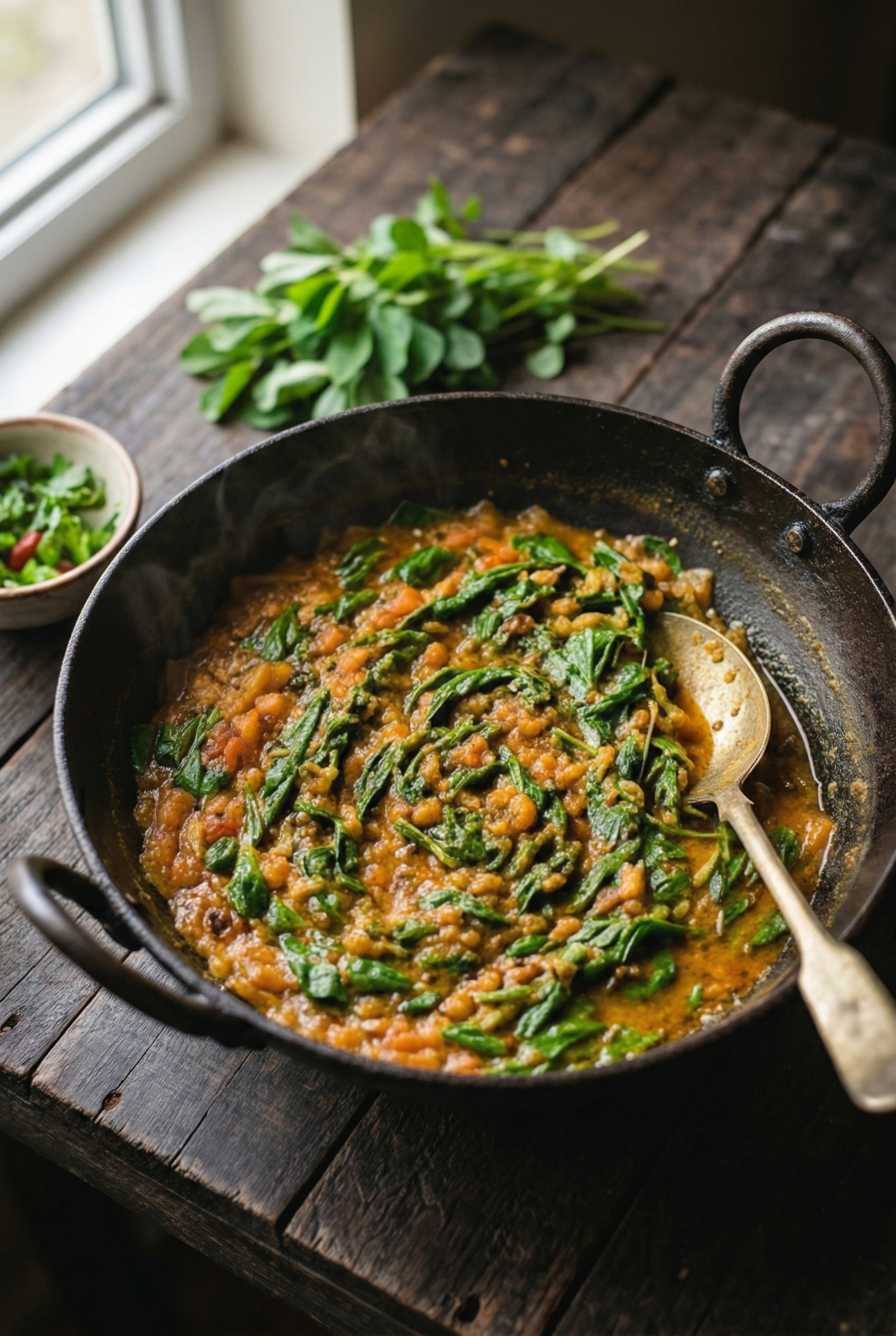
Every winter, the moment I spot fresh methi bunches at the market — that slightly damp, earthy bundle with leaves the size of a thumbnail — I know it’s time to make methi nu lotiyu. This is one of those quiet Gujarati staples that never made it to dinner parties growing up, but showed up on the table at least twice a week.
Methi nu lotiyu (also called methi nu shaak) is a dry fenugreek sabzi from Gujarati home cooking. “Lotiyu” refers to the coating — toasted besan (gram flour) tossed through the wilted methi leaves, giving the dish its characteristic slightly nutty, matte finish that sets it apart from other greens preparations. My mom used to tuck it inside thepla for my school lunchbox, and I still do the same. If you’ve been hesitant about cooking with fresh fenugreek because of the bitterness, this recipe will change that.
What is Methi Nu Lotiyu?
Methi nu lotiyu is the Gujarati name for a dry fenugreek sabzi where wilted methi leaves are finished with a coating of toasted besan (gram flour). “Lotiyu” refers to that coating — how the gram flour clings to the leaves and gives the dish its distinct nutty, matte texture. It is also called methi nu shaak in everyday Gujarati cooking.
Methi (मेथी) is fenugreek, used fresh across India — but each region has its own approach. The Gujarati version is pared back and precise: a simple tadka of mustard seeds and cumin, fresh methi leaves, and that finishing besan layer that balances bitterness and adds depth.
It is different from the North Indian version, which often adds potato (aloo methi) or onion. The result here is something deeply savory with a slight edge you’ll start to crave.
Why You’ll Love This Methi Nu Lotiyu
- Ready in 20 minutes from start to finish
- Only 6 key ingredients you likely already have
- Naturally vegan and gluten-free
- Loaded with iron, calcium, and fiber (fresh methi delivers around 6.5 mg iron per 100g, one of the best plant sources)
- The besan trick keeps bitterness in check without stripping flavor
- Works as a side dish, thepla filling, or roti wrap
Ingredients

Main:
- 2 large bunches fresh methi (fenugreek leaves), approximately 250–300g after trimming
- 1 tbsp oil (I use groundnut oil; any neutral oil works)
- 1/2 tsp mustard seeds
- 1/2 tsp cumin seeds
- 1 green chili, finely chopped (adjust to taste)
- 1/2 tsp turmeric powder
- Salt to taste
The besan layer:
- 1.5 tbsp besan (gram flour)
- 1/2 tsp red chili powder
- 1 tsp coriander-cumin powder (dhana-jeera)
- 1/2 tsp sugar (optional, but rounds out the bitter notes)
Finish:
- 1 tsp lemon juice
- A small handful of fresh coriander, roughly chopped (optional)
How to Make Methi Sabzi
Cleaning and Prepping the Methi
Methi leaves need a little attention before they go in the pan. Pull the leaves off the stems — tender stems are fine to keep, but thick woody ones turn stringy when cooked. Rinse the leaves twice in cold water to remove any grit.
Here is the key step to reduce bitterness: spread the washed leaves on a plate, sprinkle with 1/2 tsp salt, and leave them for 10 minutes. The salt draws out some of the bitter juices. After 10 minutes, squeeze the leaves gently to release the liquid, then pat them roughly dry. No need to rinse again.
Making the Sabzi
Heat oil in a pan on medium heat. Add the mustard seeds and wait until they pop, then add the cumin seeds. Add the green chili and let it sizzle for 30 seconds. Add the prepared methi leaves. They will look like a huge pile but wilt down to roughly a quarter of the volume within 2 to 3 minutes. Stir occasionally.
Once the leaves are fully wilted and any moisture has cooked off, add turmeric and salt (taste before adding — the leaves were already salted). Stir to combine.
The Besan Finish
Mix the besan, red chili powder, and dhana-jeera in a small bowl. Sprinkle this over the wilted methi, then add the sugar if using. Stir and cook on low to medium heat for another 3 to 4 minutes, stirring frequently. The besan toasts slightly and the sabzi takes on a nutty, drier texture. That is exactly what you want. Finish with lemon juice, take off the heat, and garnish with coriander.


Methi Nu Lotiyu (Gujarati Methi Nu Shaak)
Ingredients
Equipment
Method
- Pull leaves off stems, keeping tender stems. Discard thick woody stems.
- Rinse leaves twice in cold water to remove grit.
- Spread on a plate, sprinkle with 1/2 tsp salt, and rest for 10 minutes to draw out bitterness.
- Gently squeeze leaves to release liquid, then pat roughly dry. Do not rinse again.
- Heat oil in a pan on medium heat. Add mustard seeds and wait until they pop.
- Add cumin seeds, then green chili. Sizzle for 30 seconds.
- Add prepared methi leaves. Stir occasionally until fully wilted, 2-3 minutes.
- Once moisture has cooked off, add turmeric and salt (taste before adding — leaves were already salted). Stir to combine.
- Mix besan, red chili powder, and dhana-jeera in a small bowl.
- Sprinkle over wilted methi. Add sugar if using.
- Cook on low-medium heat for 3-4 minutes, stirring frequently, until besan toasts lightly and sabzi looks dry and slightly nutty.
- Finish with lemon juice. Remove from heat and garnish with fresh coriander.
Notes
Leftovers keep in an airtight container in the fridge for up to 3 days — the flavor actually improves overnight.
For batch cooking, blanch cleaned leaves in boiling water for 60 seconds, squeeze dry, and freeze in portions for up to 2 months.
Tips for Getting the Bitterness Right
Fresh methi is supposed to have a pleasant bitter edge. The goal is not to eliminate it but to calibrate it so it enhances the dish rather than overpowering it. Here is what works:
- Salt and rest method: what I described above. Works every time for a standard batch.
- Blanch for batch cooking: if you are prepping a large batch to freeze, blanch the cleaned leaves in boiling water for 60 seconds, drain, squeeze out excess water, and freeze in small portions. Blanching mellows the bitterness significantly and keeps the leaves usable for months.
- Besan is your friend: even a small amount of gram flour absorbs the residual bitter compounds during cooking. It also adds a subtle nuttiness that sets this sabzi apart from other greens dishes.
If your methi is especially bitter (older leaves or a late-season batch), extend the salt soak to 15–20 minutes and add a pinch more sugar to balance.
What to Serve with Methi Sabzi
This is one of those dishes that goes with almost everything in an Indian meal. A few favorites:
- Methi thepla or Roti: the classic pairing. Roll the sabzi inside a methi thepla or Jowar roti for the most satisfying lunchbox ever.
- Bajra or jowar roti: the slight bitterness of methi pairs beautifully with the earthiness of millet flatbreads.
- Jeera rice: for a full meal, serve alongside instant pot jeera rice and dal.
- Plain roti or phulka: never wrong.
- As a side in a Gujarati thali with dal, rice, and karela nu shaak.
Variations to Try
Aloo Methi: Add 1 medium potato, cut into small cubes, along with the tadka. Cook for 5 to 6 minutes until nearly done, then add the methi leaves. The most popular variation across India and gives the dish more body.
Methi Matar: Add 1/2 cup fresh or frozen peas when the leaves are halfway wilted. The sweetness of the peas offsets the bitterness and adds a nice pop of color.
No-Onion-Garlic Version: This recipe is already onion-free. For a fully Sattvic or Jain version, skip the green chili and add a pinch of hing (asafoetida) to the oil before the mustard seeds. The hing adds depth without any allium.
Quick Stir-Fry with Sesame: For a South Indian angle, swap the besan step for 1 tbsp sesame seeds toasted in the pan, and add a pinch of grated coconut at the end. A completely different flavour profile, and equally good.
FAQs
Can I use kasuri methi (dried fenugreek) instead of fresh?
Kasuri methi and fresh methi behave very differently. Dried kasuri methi is more concentrated, more aromatic, and less bitter. You can use it in a pinch, but this recipe is built for fresh leaves. If substituting, use about 3 tablespoons of kasuri methi for every 100g of fresh leaves, and skip the salt-and-rest step.
How do I store leftover methi sabzi?
Store in an airtight container in the refrigerator for up to 3 days. Reheat in a pan on low heat with a tiny splash of water to loosen it. It actually tastes better the next day once the flavors have melded.
Is methi sabzi good for diabetes?
Fenugreek has been studied for its potential role in blood sugar regulation, with some research suggesting it may help improve insulin sensitivity. This does not make it a treatment, but it is a nourishing choice as part of a balanced vegetarian diet. For dietary guidance specific to your situation, consult your doctor or a registered dietitian.
Can I make this ahead of time?
Yes. Clean and salt the methi leaves up to a day ahead, squeeze them dry, and refrigerate. When ready to cook, the sabzi itself takes under 10 minutes. The full cooked sabzi also refrigerates well (see storage FAQ above).
What is methi nu lotiyu and how is it different from methi nu shaak?
Methi nu lotiyu and methi nu shaak are both Gujarati names for the same style of fenugreek sabzi — the difference is specificity. “Methi nu shaak” simply means fenugreek vegetable dish. “Methi nu lotiyu” specifically refers to the version finished with a besan (gram flour) coating, which is what makes this Gujarati preparation distinct from other regional versions like aloo methi or methi bhaji.
Can I freeze methi sabzi?
You can freeze the cooked sabzi, though the texture softens a bit after thawing. For best results, freeze the blanched raw leaves instead and make the sabzi fresh when needed. Blanched leaves freeze well for up to 2 months.
Closing
Methi sabzi is one of those recipes that takes almost no effort but delivers a lot: iron from the greens, flavor from the tadka, and the particular satisfaction of eating something that is genuinely good for you. I make a batch almost every week through the winter, and somehow it never gets old.
If you have not cooked with fresh methi before, this is where to start. Let the salt do its work, trust the besan, and do not skip the lemon at the end.
Try it and let me know: do you add potato to yours, or do you keep it plain the way my mom does? Leave a comment below. I would love to hear how you make it at home.
Made this? Share a photo and tag @petitepaprika on Instagram — I love seeing your kitchen creations!
