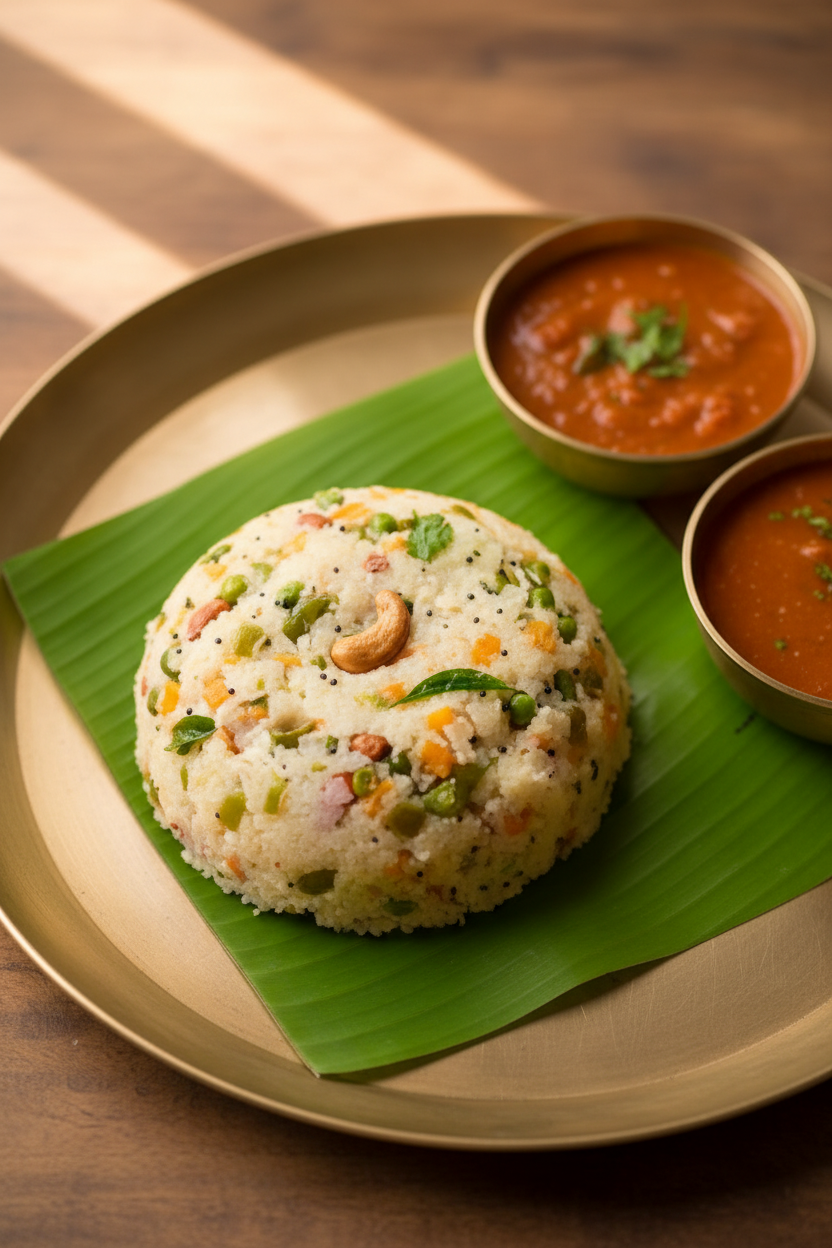
Every Monday morning growing up, there was one smell that meant we were going to make it out of the house on time: mustard seeds hitting hot oil, followed by the sharp crackle of curry leaves. My mom’s vegetable upma was on the stove, and breakfast was exactly fifteen minutes away.
I’ll be honest: as a kid, I wasn’t always thrilled. Upma has a reputation among Indian children (and plenty of adults) as the boring breakfast. But my mom’s version — loaded with bright green peas, sweet carrots, and a splash of tangy buttermilk stirred in at the end — was anything but. It’s the recipe I reach for now on mornings when I need something warm, filling, and on the table fast.
This vegetable rava upma comes together in about 20 minutes, uses pantry staples, and is deeply comforting. I’ve also added a millet swap tip for anyone who wants to make it even more nourishing. Let’s make it together.
What Is Vegetable Upma?
Upma is a savory porridge-style dish made from dry-roasted semolina (called rava or sooji in Hindi, suji in Bengali). It has deep roots in South Indian cuisine: you’ll find it on breakfast tables across Karnataka, Tamil Nadu, Andhra Pradesh, and Maharashtra, but it’s eaten all over India today.
The word “upma” comes from uppu (salt) + mavu (flour) in Tamil, which describes the base well: salted, cooked semolina. What makes each family’s upma unique is the tempering, the vegetables, the ratio of water to rava. Those small inherited decisions add up to something that tastes like home.
I think of it as a weekday breakfast that genuinely fills you up, unlike toast or a smoothie that leaves you hungry by 10 a.m.
Why Rava Upma Belongs on Your Breakfast Table
Semolina often gets overlooked in favor of oats or millet, but it’s a surprisingly nourishing base:
- Protein: ~6g per serving, which keeps you full through the morning
- Iron: contains non-heme iron, absorption boosted by the tang of buttermilk
- B vitamins: thiamine and folate for energy metabolism
- Low in fat: the fat comes from the small amount of oil used in tempering
- Easy to make nut-free and vegetarian
- Adding vegetables boosts fiber by 2–4g per serving
For a higher-fiber, lower-GI version, see the foxtail millet upma swap in the variations section below. You can also check out my roundup of iron-rich vegetarian recipes for more breakfast ideas that pack a nutritional punch.
Ingredients for Vegetable Upma
The Secret: Buttermilk
A splash of buttermilk stirred in at the very end transforms this dish. It replaces the traditional squeeze of lemon with a deeper, creamier tang and gives the upma a soft, luscious finish that I find completely addictive.
Choosing the Right Rava
Use fine semolina, sold as Bombay rava, upma rava, or sooji. It’s different from coarse semolina (bansi rava) or broken wheat (dalia). The fine grain absorbs moisture evenly and gives you fluffy, non-sticky upma. I use MTR or Swad brand; both work beautifully.
Which Vegetables Work Best
I almost always add:
- Carrots: grated or finely diced; they soften perfectly and add sweetness
- Green peas: frozen works great, no need to thaw
- French beans: finely chopped for a nice bite
Optional additions: capsicum or bell pepper for color, potato diced small to make it heartier, corn for kid-friendly sweetness, or tomato for tang (reduce water slightly if using).

How to Make Vegetable Upma
Serves 2–3 | Prep: 5 min | Cook: 15 min | Total: 20 min
Step 1: Dry Roast the Rava
Heat a heavy pan over medium flame. Add 1 cup rava and dry roast, stirring constantly, for 3–4 minutes until it smells nutty and turns just slightly golden. Transfer to a plate and set aside.
Why this matters: Roasting removes moisture and coats the granules so they don’t clump when liquid hits them. Skip this step and you’ll get sticky, gluey upma. If you’ve bought pre-roasted rava, give it a 1-minute dry toast anyway — it wakes up the flavor.
Step 2: Prepare the Tempering
In the same pan, heat 2 tablespoons of oil (or ghee) over medium heat. Add mustard seeds and wait for them to splutter. Add urad dal and chana dal and toast until lightly golden, about 30 seconds. Add curry leaves, green chili, and grated ginger: stand back, the curry leaves will crackle. Add a pinch of hing if using.
Add sliced onion and sauté until translucent, about 2–3 minutes.
Step 3: Sauté the Vegetables
Add carrots, green peas, and beans. Sauté for 2–3 minutes. The vegetables should be half-cooked: they’ll finish cooking with the rava. Season with salt to taste.
Step 4: Add Liquid and Cook
Liquid ratio: 1 cup rava to 2.5 cups water plus 0.5 cup thick buttermilk. This gives a beautiful tang and softer texture.
Pour in hot water (pre-boiled is best): this prevents lumps. Stir immediately and continuously as you pour. Bring to a boil, then reduce heat to low.
Add the roasted rava in a slow, steady stream, stirring as you go. The mixture will thicken quickly. Keep stirring for 1–2 minutes until the rava absorbs all the liquid.
Turn off the heat. Stir in the buttermilk until fully incorporated. Cover the pan and let it rest for 2 minutes. Fluff with a fork and serve hot.

Tips for Fluffy, Lump-Free Upma
- Always roast the rava: even for 1 minute if you’re in a rush
- Use hot or boiling water: cold water causes lumps and uneven cooking
- Add rava slowly: pour in a thin stream while stirring continuously
- Don’t rush the rest: the 2-minute covered rest lets steam finish the cooking and noticeably improves the texture
- Kid-friendly trick: add a small pinch of sugar to balance the heat, reduce chili to half, and stir in a teaspoon of ghee before serving
Serving Suggestions
We always serve upma with:
- Coconut chutney: the classic South Indian pairing; the cool chutney against warm upma is perfect
- Mango pickle for a punch of flavor
- A drizzle of ghee on top, optional but my husband would say non-negotiable
- A side of mixed veg cutlet if you want to make it a bigger spread
Variations to Try
Oats Upma: Swap rava 1:1 with rolled oats. Follow the same tempering method; reduce water to 2 cups (oats absorb less). Great for a higher-fiber start.
Foxtail Millet Upma: Replace rava with foxtail millet rava (available at Indian grocery stores or online). Use a 1:2.5 water ratio. Earthier flavor, higher in iron and fiber than semolina. If you love millet recipes, try my lemon foxtail millet rice next.
Tomato Upma: Add 1 diced tomato after the onion and sauté until mushy. Reduce water by 1/4 cup. Tangy and vibrant.
Semiya (Vermicelli) Upma: Swap rava with thin roasted vermicelli. Follow the same tempering; reduce water to 1.5 cups. Ready in 10 minutes.
Storage and Make-Ahead
- Refrigerate: Store in an airtight container for up to 2 days. Reheat in a pan with a splash of water to loosen.
- Pre-roast the rava: Roasted rava keeps in an airtight jar for up to 4 weeks at room temperature. Once done, your upma comes together in 12 minutes flat.
- Not freezer-friendly: Upma’s texture becomes dense and watery after freezing. Best enjoyed fresh or within 2 days.

Vegetable Upma Recipe
Ingredients
Equipment
Method
- Heat a heavy pan over medium flame. Add 1 cup rava and dry roast, stirring constantly, for 3–4 minutes until it smells nutty and turns just slightly golden.
- Transfer roasted rava to a plate and set aside.
- In the same pan, heat 2 tablespoons of oil over medium heat. Add mustard seeds and wait for them to splutter.
- Add urad dal and chana dal. Toast for about 30 seconds until lightly golden.
- Add curry leaves, green chili, and grated ginger. Stir for 10–15 seconds (curry leaves will crackle).
- Add a pinch of hing if using. Add sliced onion and sauté until translucent, about 2–3 minutes.
- Add carrots, green peas, and beans. Sauté for 2–3 minutes until half-cooked.
- Season with salt to taste.
- Pour in 2.5 cups of hot water. Stir immediately and continuously. Bring to a boil, then reduce heat to low.
- Add the roasted rava in a slow, steady stream while stirring continuously. The mixture will thicken quickly.
- Stir for 1–2 minutes until the rava absorbs all the liquid.
- Turn off the heat. Stir in the buttermilk until fully incorporated.
- Cover the pan and rest for 2 minutes. Fluff with a fork.
- Serve hot with coconut chutney and a squeeze of lime.
Notes
FAQs
Why is my upma sticky or lumpy?
Two common causes: rava wasn’t roasted properly, or you added cold water instead of hot. Dry roasting coats the granules so they don’t clump, and hot water ensures even, quick absorption. Always add rava in a slow stream while stirring.
Can I make upma without onion and garlic?
Yes: simply skip the onion. The tempering (mustard seeds, dal, curry leaves, ginger) carries plenty of flavor on its own. This also makes it suitable for Jain cooking when hing is omitted.
Is vegetable upma vegan?
Not with buttermilk. To make it vegan, skip the buttermilk and use water with a squeeze of lime at the end. Use oil rather than ghee in the tempering.
Is upma gluten-free?
No: rava is made from wheat (durum semolina). For a gluten-free version, use jowar (sorghum) rava or foxtail millet rava. The cooking method is the same; adjust water to a 1:2.5 ratio.
Can I make upma in an Instant Pot?
Yes. Use the Sauté function for all tempering steps. Add water and rava, stir, then seal and pressure cook on High for 1 minute. Quick release. Open, fluff, and serve. The texture is slightly softer but works well for a hands-off morning.
Can I add more vegetables or protein?
Absolutely. Add paneer cubes (sauté with vegetables until slightly golden), scrambled tofu for a protein boost, or any finely chopped vegetable you have on hand. Spinach wilted in at the end works beautifully.
Vegetable upma is one of those recipes that proves simple and nourishing don’t have to be at odds. Twenty minutes, one pan, and a handful of pantry staples — a breakfast that actually keeps you going until lunch.
Whether this is your first time making it or you’re recreating a childhood memory like I am, I hope it tastes exactly the way you want it to. If you’re exploring more Indian breakfast ideas, my methi thepla is another weekday staple that pairs beautifully with upma for a full spread.
Did you grow up eating upma? What’s your family’s secret — extra curry leaves, a handful of cashews, a swirl of buttermilk? Tell me in the comments below!
Made this? Share a photo and tag @petitepaprika on Instagram — I love seeing your kitchen creations!
