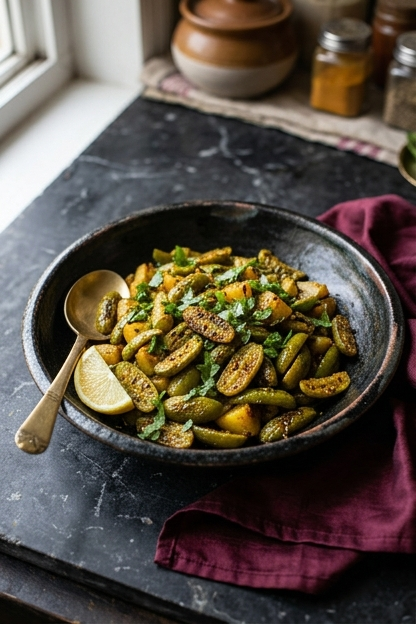
I can always tell when my mum is making tindora nu shaak. It starts with the sound: mustard seeds hitting hot oil and popping like tiny firecrackers. Then the smell of hing blooming in that same oil travels down the hallway. By the time I reach the kitchen, the tindora is already in the pan, sizzling away, and I know we’re having a proper Gujarati dinner tonight.
This is one of those dishes that every Gujarati family makes at least twice a week. It’s quick, nourishing, and the kind of sabzi that pairs perfectly with dal and rotli. If you’ve never cooked with tindora before, this recipe is the best place to start.
What Is Tindora? (And Why Gujaratis Call Tindora Nu Shaak)
Tindora (also called ivy gourd) is a small, green, finger-shaped vegetable that looks like a tiny cucumber. It belongs to the gourd family and is popular across India, though almost every region has its own name for it.
The word shaak in Gujarati simply means “vegetable dish” or “sabzi.” So tindora nu shaak translates directly to “ivy gourd stir fry, Gujarati style.” In our home, shaak is the cornerstone of the meal: whatever else is on the table, there’s always a shaak.
What Is Tindora Called Across India?
This vegetable travels under many names depending on where you are:
- Gujarat: Tindora, Tindori, or Giloda
- Hindi belt (North India): Kundru, Tindori, or Tendli
- Maharashtra: Tendli or Tondli
- Tamil Nadu: Kovakkai
- Andhra Pradesh / Telangana: Dondakaya
- Kerala: Kovakka
- English: Ivy gourd or scarlet gourd
If you’ve searched for dondakaya vepudu or kovakkai stir fry before, you’ve been looking for essentially the same vegetable, just prepared in a different regional style.
How to Choose and Store Fresh Tindora
The most important thing when buying tindora: look for firm, deep green vegetables with no soft spots. Avoid any that are starting to turn red or orange inside. That means they’re overripe, and they’ll be mushy and slightly bitter once cooked. I always press each piece lightly at the Indian grocery store. If it gives too much, I put it back.
Size matters too. Smaller to medium tindora (about the size of your thumb) will be more tender and have fewer seeds. Very large ones take longer to cook and have a tougher skin.
Storage: Keep tindora in a paper bag or breathable container in the refrigerator. They’ll stay fresh for up to a week. You can also freeze sliced tindora for up to two months. Thaw completely and pat dry before cooking, as they’ll release more moisture than fresh.
Health Benefits of Ivy Gourd
Tindora is one of those quietly nourishing vegetables that doesn’t get nearly enough credit. Here’s why it deserves a regular spot in your weekly meals:
- Blood sugar support: Ivy gourd contains compounds including pectin and triterpenoids linked to slowing glucose absorption and supporting healthy blood sugar levels. It’s been used in Ayurvedic medicine for this purpose for centuries, and more recent research supports these properties.
- Low calorie, high fiber: Approximately 20 calories per 100g, with a good amount of dietary fiber that supports digestion and keeps you full.
- Rich in vitamin C and vitamin A: Both support immunity and skin health.
- Iron and calcium: Useful in a vegetarian diet where these minerals can be harder to get in adequate amounts.
- Gluten-free and vegan: Naturally, as with all vegetable sabzis.
If you or someone in your family is managing blood sugar levels, tindora is a vegetable worth adding to the weekly rotation. It’s one of the most diabetic-friendly vegetables in traditional Indian cooking. Research published on ResearchGate on ivy gourd’s antidiabetic properties supports what Ayurvedic practitioners have known for centuries.
Ingredients for Tindora Nu Shaak

Here’s what you’ll need, with a few notes on each:
Tindora (250-300g / about 3 cups sliced): This is enough for 2-3 servings as part of a full Gujarati meal. Double the recipe if you’re meal prepping.
Oil (1.5 tbsp): Groundnut oil is the most authentic choice for Gujarati cooking. It has a slightly nutty flavor that suits this sabzi. A neutral oil like sunflower also works fine.
Mustard seeds (1 tsp): Non-negotiable. This is the base of almost every Gujarati tempering. Wait for them to pop fully before adding anything else.
Hing / asafoetida (a generous pinch): Also non-negotiable in our kitchen. Hing adds a savory depth that’s hard to replicate. If you genuinely can’t use it, a tiny bit of garlic in the tempering is the closest substitute.
Turmeric (1/4 tsp): Gives the tindora that characteristic golden color and adds to the anti-inflammatory profile of the dish.
Red chili powder (1/2 tsp): Adjust to your heat preference. I use Kashmiri for a milder, deeper red color, or a standard red chili for more heat.
Dhana jeeru / coriander-cumin powder (1 tsp): This spice blend is the backbone of Gujarati cooking. If you only have separate coriander and cumin powder, use 1/2 tsp of each.
Jaggery (1 tsp, grated): A classic in Gujarati cooking. It doesn’t make the dish sweet. It rounds out the heat and acid. You can substitute a small pinch of sugar, but jaggery has a more complex flavor.
Lemon juice (1 tsp): Adds the sour note that balances the jaggery. Amchur (dried mango powder) is also a great substitute.


Tindora Nu Shaak (Gujarati Ivy Gourd Stir Fry)
Ingredients
Equipment
Method
- Wash the tindora and pat completely dry. Any moisture on the surface will cause them to steam instead of fry, making them soft rather than slightly crisp.
- Trim both ends. Slice each piece thinly lengthwise into 3-4 strips. The thinner the cut, the more evenly they’ll cook. For a quicker cook, you can also slice them into thin rounds.
- Heat the oil in a heavy-bottomed pan over medium heat. The pan should be properly hot before the seeds go in.
- Add the mustard seeds. Let them pop fully. This takes about 30-40 seconds. Don’t rush this step: undercooked mustard seeds taste raw and sharp.
- Add the hing immediately after the seeds have popped. It will sizzle for 2-3 seconds. Then add the turmeric.
- Add the sliced tindora and stir to coat in the tempered oil. Season with salt.
- Add the red chili powder and dhana jeeru. Stir well.
- Cover the pan and cook on medium-low heat for 12-15 minutes, stirring every 3-4 minutes. The tindora will release a little moisture and cook in its own steam. Do not add water.
- Check for doneness: the tindora should be tender but still have a slight bite. Press a piece against the side of the pan. It should yield easily but not turn to mush. If it’s still firm at the 15-minute mark, cover and cook for another 3-5 minutes.
- Add the jaggery and lemon juice. Stir to combine and cook uncovered for 1-2 minutes to let the flavors come together.
- Taste and adjust salt, chili, or lemon as needed. Finish with fresh coriander.
Notes
Tindora Nu Shaak Variations
Once you’ve made the classic version, these three variations are worth trying:
Khatti Meethi Tindora (Sweet and Sour)
This is the version my nani made on special occasions. Increase the jaggery to 1 tablespoon and add a small piece of kokum (or 1/2 tsp tamarind paste) along with the spices. Finish with a pinch of amchur as well as the lemon. The balance of sweet, sour, and spicy is very distinctly Gujarati.
For more Gujarati sabzi ideas, the karela nu shaak is another classic from our kitchen, bitter gourd cooked in exactly the same style.
Tindora Bataka Nu Shaak (Tindora with Potato)
Add 1 medium potato, peeled and cut into small cubes, along with the tindora in step 6. Because potato takes longer to cook, increase the covered cooking time to 18-20 minutes and check both vegetables before finishing. This version is more filling and works well as a light main with rotli.
Simple Coconut Stir Fry
Skip the jaggery and lemon. After the tindora is cooked, add 2 tablespoons of freshly grated coconut and a few curry leaves. Stir briefly and serve. This is a South Indian-leaning preparation and makes a lighter version that pairs well with sambar and rice.
Serving Suggestions: Building a Gujarati Thali
Tindora nu shaak is never the main event. It’s part of a whole meal. In a Gujarati household, a weeknight thali usually includes:
- Rotli or chapati: the classic pairing
- Mag ni chutti dal (split moong dal with a tadka of ghee and mustard seeds): pairs beautifully with tindora
- Steamed rice for a full thali
- Chaas (spiced buttermilk): aids digestion and balances the heat
- Kachumber (a quick chopped cucumber, tomato, and onion salad with lemon)
- Papad: one piece, roasted or fried
The shaak sits alongside the dal as the vegetable element. You eat it by scooping it with pieces of rotli, or mixing a little into your dal-rice. Both are correct.
For a hearty rice base to go with this meal, try this instant pot jeera rice. It comes together while the shaak cooks.
Make-Ahead and Storage
Refrigerator: Store in an airtight container for up to 3 days. Reheat in a pan over medium heat with a small drizzle of oil to revive the texture. Avoid microwaving if possible. It softens the tindora.
Freezer: Cool completely before freezing. Store flat in a freezer bag for up to 2 months. Thaw on the counter for 20-30 minutes, then reheat in a pan. The texture will be slightly softer than fresh but the flavor holds well.
Meal prep note: If you’re cooking for the week, slice and prep the tindora up to 2 days ahead and store raw in the fridge. The actual cooking takes under 20 minutes, so having the prep done makes weeknight cooking very easy.
Frequently Asked Questions
Q1. Is tindora good for diabetics?
Yes. Ivy gourd is considered one of the more diabetic-friendly vegetables in traditional Indian cooking. It’s low in calories, low on the glycemic index, and contains compounds (including pectin and triterpenoids) associated with blood sugar regulation. If you’re managing blood sugar, it’s worth including regularly in your meals, though always consult your doctor about specific dietary choices.
Q2. Where can I buy tindora / ivy gourd?
In the US, UK, and Canada, tindora is most reliably found at Indian grocery stores. Some South Asian grocery stores (Sri Lankan, Bangladeshi) also stock it. In larger cities, H-Mart or international supermarkets occasionally carry it. In India, it’s available at most vegetable vendors year-round.
Q3. What is the difference between tindora and tendli?
They are the same vegetable. Tindora is the Hindi/Gujarati name, tendli is the Marathi name. Kovakkai (Tamil), dondakaya (Telugu), and giloda (also Gujarati) all refer to the same thing: ivy gourd (Coccinia grandis).
Q4. Why is my tindora mushy?
Two common reasons: either the pan was not hot enough to start (so the tindora steamed instead of frying), or you added water during cooking. This is a dry stir fry. No water needed. Make sure to pat the tindora completely dry before it goes into the pan, and keep the heat at medium, not low.
Q5. Can I make tindora nu shaak without hing?
Yes. If you’re avoiding hing (asafoetida), you can substitute with a very small amount of minced garlic added after the mustard seeds pop. The flavor profile will shift slightly from traditional Gujarati, but it will still be delicious. Some people also simply leave it out. The other spices carry the dish.
Q6. Can I use frozen tindora?
Yes, with a caveat. Frozen tindora will have a slightly softer texture than fresh because freezing breaks down cell walls. Thaw completely and pat very dry before cooking. The flavor is the same, and it works perfectly well for this recipe.
Tindora nu shaak is the kind of recipe you’ll make once and then find yourself returning to every week. It’s fast, nourishing, and one of the most satisfying vegetable dishes in the Gujarati kitchen: simple enough for a Tuesday night, familiar enough to feel like home.
If you try the khatti meethi variation, I think you’ll be hooked. That extra jaggery and kokum takes the whole dish somewhere special.
Try it this week and let me know how it goes! Leave a comment below and tell me: do you prefer the classic version, or do you always add potato to your tindora?
Made this? Share a photo and tag @petitepaprika on Instagram. I love seeing your kitchen creations!
